


Macrophages and the maintenance of homeostasis
- PMID: 32934339
- PMCID: PMC7491045
- DOI: 10.1038/s41423-020-00541-3
Macrophages and the maintenance of homeostasis
Abstract
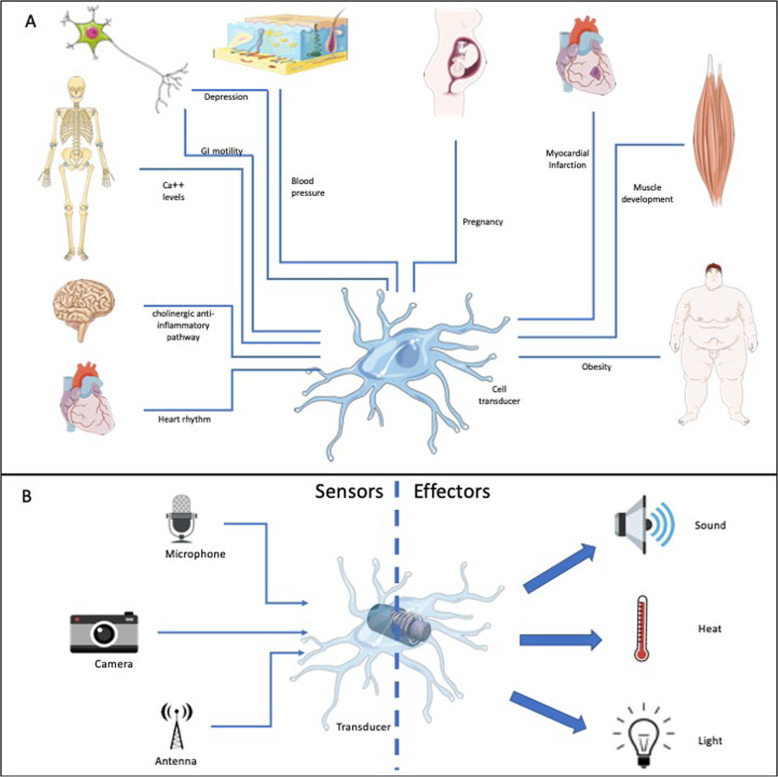
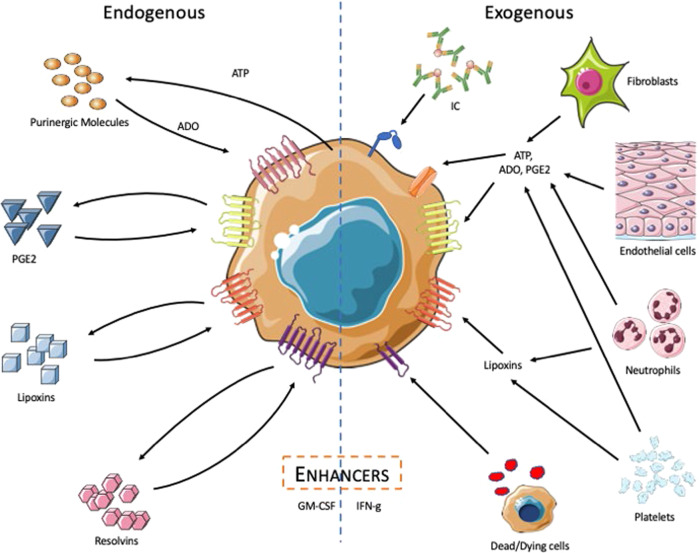
There have been many chapters written about macrophage polarization. These chapters generally focus on the role of macrophages in orchestrating immune responses by highlighting the T-cell-derived cytokines that shape these polarizing responses. This bias toward immunity is understandable, given the importance of macrophages to host defense. However, macrophages are ubiquitous and are involved in many different cellular processes, and describing them as immune cells is undoubtedly an oversimplification. It disregards their important roles in development, tissue remodeling, wound healing, angiogenesis, and metabolism, to name just a few processes. In this chapter, we propose that macrophages function as transducers in the body. According to Wikipedia, "A transducer is a device that converts energy from one form to another." The word transducer is a term used to describe both the "sensor," which can interpret a wide range of energy forms, and the "actuator," which can switch voltages or currents to affect the environment. Macrophages are able to sense a seemingly endless variety of inputs from their environment and transduce these inputs into a variety of different response outcomes. Thus, rather than functioning as immune cells, they should be considered more broadly as cellular transducers that interpret microenvironmental changes and actuate vital tissue responses. In this chapter, we will describe some of the sensory stimuli that macrophages perceive and the responses they make to these stimuli to achieve their prime directive, which is the maintenance of homeostasis.
Keywords: Macrophages; cytokines; development; inflammation; polarization.
Conflict of interest statement
The authors declare no competing interests.
Figures
References
-
- Metchnikoff, E. Lectures on the Comparative Pathology (Kegan Paul, London, 1893).
-
- Metchnikoff, E. The Immunity in Infective Diseases. p.591 (Oxford Univ. Press, 1907).
-
- Biswas, S. K. & Mantovani, A. Orchestration of metabolism by macrophages. Cell Metab. 15, 432–437 (2012). - PubMed
-
- Ganz, T. Macrophages and iron metabolism. Microbiol. Spectr. 4, 10.1128/microbiolspec.MCHD-0037-2016 (2016). - PubMed
Publication types
MeSH terms
LinkOut - more resources
Full Text Sources
