


Use of antimicrobial mouthwashes (gargling) and nasal sprays by healthcare workers to protect them when treating patients with suspected or confirmed COVID-19 infection
- PMID: 32936949
- PMCID: PMC8202127
- DOI: 10.1002/14651858.CD013626.pub2
Use of antimicrobial mouthwashes (gargling) and nasal sprays by healthcare workers to protect them when treating patients with suspected or confirmed COVID-19 infection
Abstract
Background: COVID-19 infection poses a serious risk to patients and - due to its contagious nature - to those healthcare workers (HCWs) treating them. If the mouth and nose of HCWs are irrigated with antimicrobial solutions, this may help reduce the risk of active infection being passed from infected patients to HCWs through droplet transmission or direct contact. However, the use of such antimicrobial solutions may be associated with harms related to the toxicity of the solutions themselves, or alterations in the natural microbial flora of the mouth or nose. Understanding these possible side effects is particularly important when the HCWs are otherwise fit and well.
Objectives: To assess the benefits and harms of antimicrobial mouthwashes and nasal sprays used by healthcare workers (HCWs) to protect themselves when treating patients with suspected or confirmed COVID-19 infection.
Search methods: Information Specialists from Cochrane ENT and Cochrane Oral Health searched the Central Register of Controlled Trials (CENTRAL 2020, Issue 6); Ovid MEDLINE; Ovid Embase and additional sources for published and unpublished trials. The date of the search was 1 June 2020. SELECTION CRITERIA: This is a question that urgently requires evidence, however at the present time we did not anticipate finding many completed randomised controlled trials (RCTs). We therefore planned to include the following types of studies: RCTs; quasi-RCTs; non-randomised controlled trials; prospective cohort studies; retrospective cohort studies; cross-sectional studies; controlled before-and-after studies. We set no minimum duration for the studies. We sought studies comparing any antimicrobial mouthwash and/or nasal spray (alone or in combination) at any concentration, delivered to HCWs, with or without the same intervention being given to the patients with COVID-19.
Data collection and analysis: We used standard Cochrane methodological procedures. Our primary outcomes were: 1) incidence of symptomatic or test-positive COVID-19 infection in HCWs; 2) significant adverse event: anosmia (or disturbance in sense of smell). Our secondary outcomes were: 3) viral content of aerosol, when present (if intervention administered to patients); 4) other adverse events: changes in microbiome in oral cavity, nasal cavity, oro- or nasopharynx; 5) other adverse events: allergy, irritation/burning of nasal, oral or oropharyngeal mucosa (e.g. erosions, ulcers, bleeding), long-term staining of mucous membranes or teeth, accidental ingestion. We planned to use GRADE to assess the certainty of the evidence for each outcome.
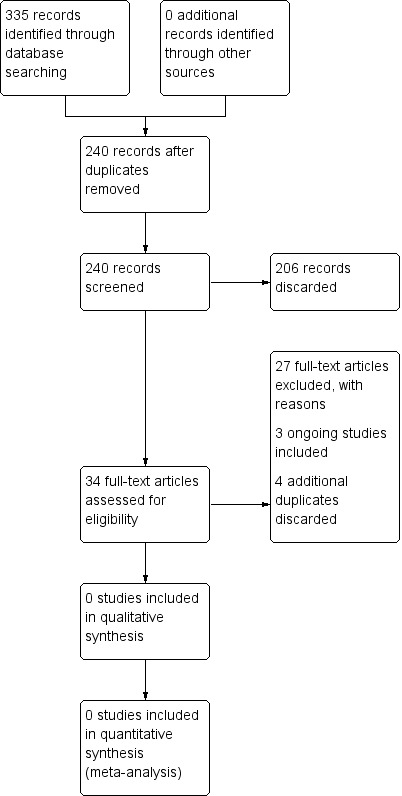
Main results: We found no completed studies to include in this review. We identified three ongoing studies (including two RCTs), which aim to enrol nearly 700 participants. The interventions included in these trials are povidone iodine, nitric oxide and GLS-1200 oral spray (the constituent of this spray is unclear and may not be antimicrobial in nature). AUTHORS' CONCLUSIONS: We identified no studies for inclusion in this review. This is not surprising given the relatively recent emergence of COVID-19 infection. It is promising that the question posed in this review is being addressed by two RCTs and a non-randomised study. We are concerned that only one of the ongoing studies specifically states that it will evaluate adverse events and it is not clear if this will include changes in the sense of smell or to the oral and nasal microbiota, and any consequences thereof. Very few interventions have large and dramatic effect sizes. If a positive treatment effect is demonstrated when studies are available for inclusion in this review, it may not be large. In these circumstances in particular, where those receiving the intervention are otherwise fit and well, it may be a challenge to weigh up the benefits against the harms if the latter are of uncertain frequency and severity.
Trial registration: ClinicalTrials.gov NCT04364802.
Copyright © 2020 The Cochrane Collaboration. Published by John Wiley & Sons, Ltd.
Conflict of interest statement
Martin J Burton: none known. Janet E Clarkson: none known. Beatriz Goulao: none known. Anne‐Marie Glenny: none known. Andrew McBain: Andrew McBain conducts research and advises companies in the areas of antimicrobials, microbiome and microbial control. Anne GM Schilder: in her roles of Director of NIHR UCLH BRC Hearing Theme and National Specialty Lead of NIHR CRN ENT, Professor Schilder advises companies in the hearing field about design and delivery of clinical trials. Her evidENT research team at UCL receives support from various funders, including NIHR, EU Horizon 2020 and Wellcome. Katie E Webster: none known. Helen V Worthington: none known.
Professors Martin Burton, Anne Schilder, Janet Clarkson and Anne‐Marie Glenny are Co‐ordinating Editors for Cochrane ENT and Cochrane Oral Health but had no role in the editorial sign‐off process for these reviews.
Figures
Update of
References
References to studies excluded from this review
ACTRN12620000470998p {published data only}
-
- ACTRN12620000470998p, Firebrick Pharma Pty Ltd. Virucidal pilot study of Nasodine® antiseptic nasal spray (povidone-iodine 0.5%) in people with COVID-19 and confirmed nasal shedding of SARS-CoV-2 virus. https://anzctr.org.au/ACTRN12620000470998.aspx (first received 14 April 2020).
AMPoL (NCT04409873) {published data only}
-
- NCT04409873. Antiseptic mouthwash / pre-procedural rinse on SARS-CoV-2 load (COVID-19) [Effect of antiseptic mouthwash/gargling solutions and pre-procedural rinse on SARS-CoV-2 load (COVID-19)]. https://clinicaltrials.gov/show/NCT04409873 (first received 1 June 2020). [13795348] [13795348]
BBCovid (NCT04352959) {published data only}
-
- NCT04352959, Claude Bernard University. COVID-19: nasal and salivary detection of the SARS-CoV-2 virus after antiviral mouthrinses [COVID-19: nasal and salivary detection of the SARS-CoV-2 virus after antiviral mouthrinses: double-blind, randomized, placebo-controlled clinical study]. https://clinicaltrials.gov/show/NCT04352959 (first received 20 April 2020).
Carrouel 2020 {published data only}
-
- Carrouel F, Conte MP, Fisher J, Goncalves LS, Dussart C, Llodra JC, et al. COVID-19: a recommendation to examine the effect of mouthrinses with beta-cyclodextrin combined with Citrox in preventing infection and progression. Journal of Clinical Medicine 2020;9(4):1126. [EMBASE: 2004172371] - PMC - PubMed
Challacombe 2020 {published data only}
-
- Challacombe SJ, Kirk-Bayley J, Sunkaraneni VS, Combes J. Povidone iodine. British Dental Journal 2020;228(9):656-7. [13794816] [13794816] - PubMed
ChiCTR2000030539 {published data only}
-
- ChiCTR2000030539, Guangzhou Eight People's Hospital. Study for clinical oral characteristics of patients with novel coronavirus pneumonia (COVID-19) and effect of 3% hydrogen peroxide gargle on the intraoral novel coronavirus. http://apps.who.int/trialsearch/Trial2.aspx?TrialID=ChiCTR2000030539 (first received 6 March 2020). 13102961
Dexter 2020 {published data only}
ELVIS‐COVID‐19 (NCT04382131) {published data only}
-
- NCT04382131. Hypertonic saline nasal irrigation and gargling in suspected or confirmed COVID-19 [Hypertonic saline nasal irrigation and gargling with hypertonic saline for suspected or confirmed COVID-19: pragmatic web-based Bayesian adaptive randomised controlled trial]. https://clinicaltrials.gov/show/NCT04382131 (first received 11 May 2020). [13572925] [13572925]
GARGLES (NCT04341688) {published data only}
-
- NCT04341688. A clinical trial of gargling agents in reducing intraoral viral load among COVID-19 patients [A quadruple blind, randomized controlled trial of gargling agents in reducing intraoral viral load among laboratory confirmed coronavirus (COVID-19) patients: GARGLES STUDY]. https://clinicaltrials.gov/show/NCT04341688 (first received 10 April 2020). [CENTRAL: CN-02091544] - PMC - PubMed
GARGLESb (NCT04410159) {published data only}
-
- NCT04410159. Povidone-iodine vs essential oil vs tap water gargling for COVID-19 patients [A pilot, open-labelled, randomised controlled trial of povidone-iodine vs essential oil and tap water gargling for COVID-19 patients]. https://clinicaltrials.gov/show/NCT04410159 (first received 1 June 2020). [13795384] [13795384]
Ham 2020 {published data only}
Hamid 2020 {published data only}
Henwood 2020 {published data only}
KILLER (NCT04371965) {published data only}
-
- NCT04371965, Poitiers University Hospital. Povidone iodine mouthwash, gargle, and nasal spray to reduce naso-pharyngeal viral load in patients with COVID-19. https://clinicaltrials.gov/show/NCT04371965 (first received 1 May 2020).
KONS‐COVID‐19 (NCT04357990) {published data only}
-
- NCT04357990, Kerecis Ltd. Kerecis oral and nasal spray for treating the symptoms of COVID-19 [Use of a medical device, Kerecis oral and nasal spray, for treating the symptoms of COVID-19 via application to the naso- and oropharyngeal mucosa]. https://clinicaltrials.gov/show/NCT04357990 (first received 22 April 2020).
Leboulanger 2020 {published data only}
-
- Leboulanger N, Sagardoy T, Akkari M, Ayari-Khalfallah S, Celerier C, Fayoux P, et al. COVID-19 and ENT pediatric otolaryngology during the COVID-19 pandemic. Guidelines of the French Association of Pediatric Otorhinolaryngology (AFOP) and French Society of Otorhinolaryngology (SFORL). European Annals of Otorhinolaryngology, Head and Neck Diseases 2020;137(3):177-81. [PMID: ] - PMC - PubMed
Loftus 2020 {published data only}
Mady 2020 {published data only}
-
- Mady LJ, Kubik MW, Baddour K, Snyderman CH, Rowan NR. Consideration of povidone-iodine as a public health intervention for COVID-19: utilization as "Personal Protective Equipment" for frontline providers exposed in high-risk head and neck and skull base oncology care. Oral Oncology 2020;105:104724. [DOI: 10.1016/j.oraloncology.2020.104724] [EMBASE: 2005613363] - DOI - PMC - PubMed
Maguire 2020 {published data only}
NCT04344236 {published data only}
-
- NCT04344236. Gargling and nasal rinses to reduce oro- and nasopharyngeal viral load in patients with COVID-19 [A phase II, randomized, open-label, single-institution study of the effects of povidone iodine oral gargles and nasal rinses on viral load in patients with COVID-19]. https://clinicaltrials.gov/show/NCT04344236 (first received 14 April 2020). [CENTRAL: CN-02091597]
NCT04347538 {published data only}
-
- NCT04347538. Impact of nasal saline irrigations on viral load in patients with COVID-19. https://clinicaltrials.gov/show/NCT04347538 (first received 15 April 2020). [13336295] [13336295]
NCT04347954 {published data only}
-
- NCT04347954. PVP-I nasal sprays and SARS-CoV-2 nasopharyngeal titers (for COVID-19) [Effect of PVP-I nasal sprays vs normal saline nasal sprays on SARS-CoV-2 nasopharyngeal titers]. https://clinicaltrials.gov/show/NCT04347954 (first received 15 April 2020). [CENTRAL: CN-02091692]
NCT04382040 {published data only}
-
- NCT04382040. A phase II, controlled clinical study designed to evaluate the effect of ArtemiC in patients diagnosed with COVID-19. https://clinicaltrials.gov/show/NCT04382040 (first received May 11 2020). [13572949] [13572949]
Parhar 2020 {published data only}
PICO (ISRCTN13447477) {published data only}
-
- ISRCTN13447477. A pilot study of the ability of povidone-iodine (PVP-I) 0.5% aqueous solution oral/nasal spray and mouthwash to kill the SARS-CoV-2 virus in people with COVID-19. http://isrctn.com/ISRCTN13447477 (first received 22 May 2020). [13775679] [13775679]
Ramalingam 2020 {published data only}
SINUS WASH (NCT04393792) {published data only}
-
- NCT04393792. SINUS WASH pilot study in adults testing positive for COVID-19 [Can a sinus rinse and mouth wash reduce viral load in COVID-19 positive individuals and their co-residents?]. https://clinicaltrials.gov/show/NCT04393792 (first received 19 May 2020). [13689892] [13689892]
References to ongoing studies
NCT04408183 {published data only}
-
- NCT04408183. GLS-1200 topical nasal spray to prevent SARS-CoV-2 infection (COVID-19) in health care personnel [Efficacy, safety, and tolerability of GLS-1200 topical nasal spray in the prevention of incident confirmed, symptomatic SARS-CoV-2 infection in healthcare personnel]. https://clinicaltrials.gov/ct2/show/NCT04408183 (first received 29 May 2020).
NOCOVID (NCT04337918) {published data only}
-
- NCT04337918. Nitric oxide releasing solutions to prevent and treat mild/moderate COVID-19 infection [Multi-center, randomized, controlled, phase II clinical efficacy study evaluating nitric oxide releasing solution treatment for the prevention and treatment of COVID-19 in healthcare workers and individuals at risk of infection]. https://clinicaltrials.gov/show/NCT04337918 (first received 8 April 2020). [CENTRAL: CN-02091456]
PIIPPI (NCT04364802) {published data only}
-
- NCT04364802, Alexandra Kejner. COVID-19: povidone-iodine intranasal prophylaxis in front-line healthcare personnel and inpatients [Povidone-iodine intranasal for prophylaxis in front-line health-care personnel and inpatients during the Sars-CoV-2 pandemic]. https://clinicaltrials.gov/ct2/show/NCT04364802 (first received 28 April 2020).
Additional references
Beigel 2020
Bernstein 1990
-
- Bernstein D, Schiff G, Echler G, Prince A, Feller M, Briner W. In vitro virucidal effectiveness of a 0.12%-chlorhexidine gluconate mouthrinse. Journal of Dental Research 1990;69:874-6. - PubMed
Bidra 2020
Burton 2020a
-
- Burton MJ, Clarkson JE, Gaulao B, Glenny A-M, McBain A, Schilder AGM, et al. Antimicrobial mouthwashes (gargling) and nasal sprays administered to patients with suspected or confirmed COVID-19 infection to improve patient outcomes and to protect healthcare workers treating them. Cochrane Database of Systematic Reviews 2020, Issue 5. Art. No: CD013627. [DOI: 10.1002/14651858.CD013627] - DOI - PMC - PubMed
Burton 2020b
-
- Burton MJ, Clarkson JE, Gaulao B, Glenny A-M, McBain A, Schilder AGM, et al. Antimicrobial mouthwashes (gargling) and nasal sprays to protect healthcare workers when undertaking aerosol-generating procedures (AGPs) on patients without suspected or confirmed COVID-19 infection. Cochrane Database of Systematic Reviews 2020, Issue 5. Art. No: CD013628. [DOI: 10.1002/14651858.CD013628] - DOI - PMC - PubMed
Covidence [Computer program]
-
- Covidence. Melbourne, Australia: Veritas Health Innovation, accessed 4 May 2020. Available at covidence.org.
Eccles 2010
-
- Eccles R, Meier C, Jawad M, Weinmüllner R, Grassauer A, Prieschl-Grassauer E. Efficacy and safety of an antiviral Iota-Carrageenan nasal spray: a randomized, double-blind, placebo-controlled exploratory study in volunteers with early symptoms of the common cold. Respiratory Research 2010;11:108. - PMC - PubMed
Eccles 2015
Eggers 2015
Eggers 2018
Fazekas 2012
-
- Fazekas T, Eickhoff P, Pruckner N, Vollnhofer G, Fischmeister G, Diakos C, et al. Lessons learned from a double-blind randomised placebo-controlled study with a iota-carrageenan nasal spray as medical device in children with acute symptoms of common cold. BMC Complementary and Alternative Medicine 2012;12:147. - PMC - PubMed
Goodall 2014
Handbook 2019
-
- Higgins JPT, Thomas J, Chandler J, Cumpston M, Li T, Page MJ, et al (editors). Cochrane Handbook for Systematic Reviews of Interventions version 6.0 (updated July 2019). Cochrane, 2019. Available from www.training.cochrane.org/handbook.
Higgins 2011
-
- Higgins JPT, Green S (editors). Cochrane Handbook for Systematic Reviews of Interventions Version 5.1.0 [updated March 2011]. The Cochrane Collaboration, 2011. Available from handbook.cochrane.org.
Horby 2020
-
- RECOVERY Collaborative Group, Horby P, Lim WS, Emberson JR, Mafham M, Bell JL, et al. Dexamethasone in hospitalized patients with Covid-19 - preliminary report. New England Journal of Medicine 2020 Jul 17 [Epub ahead of print]. [DOI: 10.1056/NEJMoa2021436] - DOI
Ide 2016
Kariwa 2006
Kilian 2016
-
- Kilian M, Chapple ILC, Hannig M, Marsh PD, Meuric V, Pedersen AM, et al. The oral microbiome - an update for oral healthcare professionals. British Dental Journal 2016;221(10):657-66. - PubMed
Kitamura 2007
-
- Kitamura T, Satomura K, Kawamura T, Yamada S, Takashima K, Suganuma N, et al. Can we prevent influenza-like illnesses by gargling? Internal Medicine 2007;46(18):1623-4. - PubMed
Ludwig 2013
Man 2017
Menni 2020
Satomura 2005
-
- Satomura K, Kitamura T, Kawamura T, Shimbo T, Watanabe M, Kamei M, et al. Prevention of upper respiratory tract infections by gargling: a randomized trial. American Journal of Preventive Medicine 2005;29:302-7. - PubMed
Publication types
MeSH terms
Substances
Associated data
LinkOut - more resources
Full Text Sources
Medical
Research Materials
Miscellaneous
