


Adenosine A2a Receptor Stimulation Attenuates Ischemia-Reperfusion Injury and Improves Survival in A Porcine Model of DCD Liver Transplantation
- PMID: 32938013
- PMCID: PMC7555737
- DOI: 10.3390/ijms21186747
Adenosine A2a Receptor Stimulation Attenuates Ischemia-Reperfusion Injury and Improves Survival in A Porcine Model of DCD Liver Transplantation
Abstract
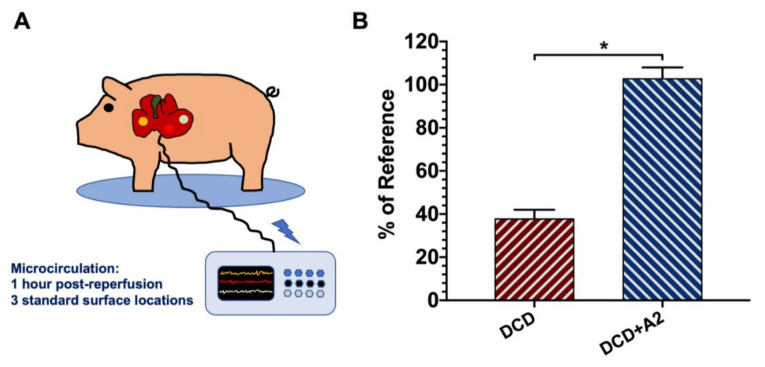
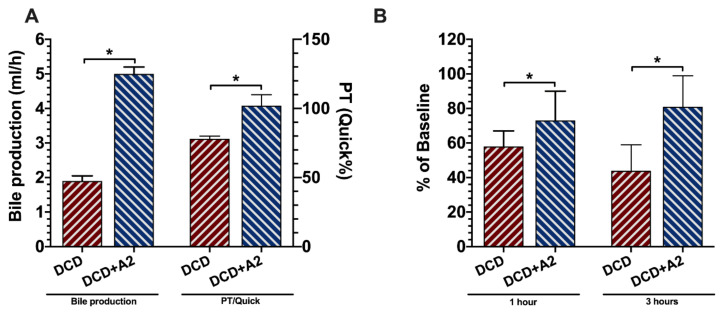
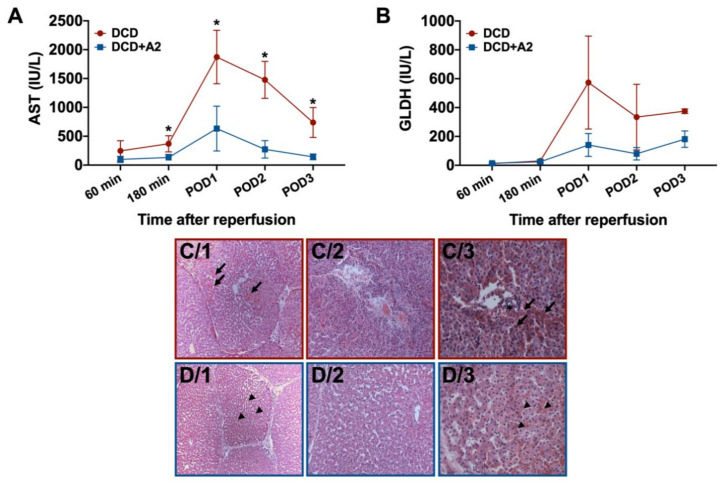
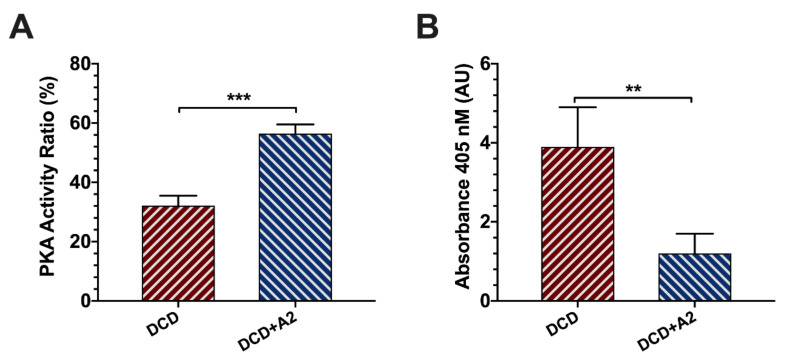
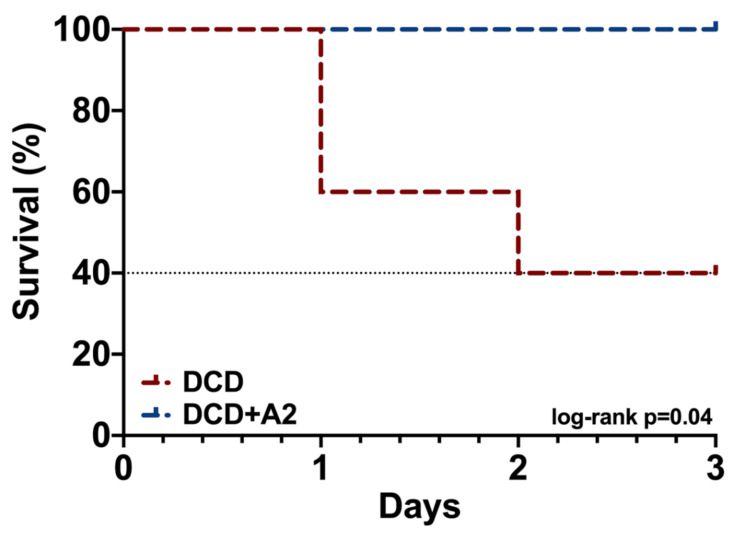
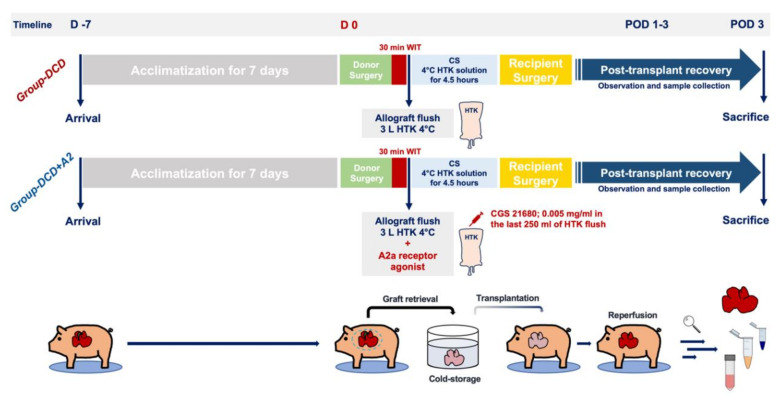
Orthotopic liver transplantation (OLT) using allografts from donation after circulatory death (DCD) is potentially associated with compromised clinical outcomes due to ischemia-reperfusion injury (IRI)-induced organ damage and graft-related complications. The aim of this study was to provide in vivo data on the effects of adenosine A2a receptor stimulation in a clinically relevant large animal model of DCD liver transplantation. Cardiac arrest was induced in German Landrace pigs (n = 10; 20-25 kg). After 30 min of warm ischemia, the donor liver was retrieved following a cold flush with 3 L of histidine-tryptophan-ketoglutarate-HTK solution. Animals of the treatment group (n = 5/group) received a standard dose of the selective adenosine receptor agonist CGS 21680 added to the cold flush. All grafts were stored for 4.5 h at 4 °C in HTK-solution before OLT. Hepatocellular injury, apoptosis, protein kinase A-PKA activity, graft microcirculation, liver function, and animal survival were assessed. Compared to untreated livers, adenosine A2a receptor stimulation resulted in improved tissue microcirculation (103% ± 5% vs. 38% ± 4% compared to baseline; p < 0.05), accelerated functional recovery of the graft (indocyanine green-plasma disappearance rate (ICG-PDR) of 75% ± 18% vs. 40% ± 30% after 3 h), increased PKA activity ratio (56% ± 3% vs. 32% ± 3%; p < 0.001 after 1 h), and consequently reduced tissue necrosis and apoptosis. The potent protective effects were clinically manifested in significantly improved survival in the treatment group after 72 h (100% vs. 40%; p = 0.04). The ex vivo administration of adenosine A2a receptor agonist during the back-table flush mitigates IRI-mediated tissue damage and improves functional graft recovery and survival in a large animal model of DCD liver transplantation.
Keywords: adenosine A2a agonist; donation after circulatory death; hepatoprotection; liver transplantation; microcirculation; porcine model; reperfusion injury; survival.
Conflict of interest statement
The authors declare no conflict of interest.
Figures
References
-
- Czigany Z., Bleilevens C., Beckers C., Stoppe C., Mohring M., Fulop A., Szijarto A., Lurje G., Neumann U.P., Tolba R.H. Limb remote ischemic conditioning of the recipient protects the liver in a rat model of arterialized orthotopic liver transplantation. PLoS ONE. 2018;13:e0195507. doi: 10.1371/journal.pone.0195507. - DOI - PMC - PubMed
-
- Czigany Z., Scherer M.N., Pratschke J., Guba M., Nadalin S., Mehrabi A., Berlakovich G., Rogiers X., Pirenne J., Lerut J., et al. Technical Aspects of Orthotopic Liver Transplantation-a Survey-Based Study Within the Eurotransplant, Swisstransplant, Scandiatransplant, and British Transplantation Society Networks. J. Gastrointest. Surg. Off. J. Soc. Surg. Aliment. Tract. 2018 doi: 10.1007/s11605-018-3915-6. - DOI - PubMed
-
- Czigany Z., Schoning W., Ulmer T.F., Bednarsch J., Amygdalos I., Cramer T., Rogiers X., Popescu I., Botea F., Fronek J., et al. Hypothermic oxygenated machine perfusion (HOPE) for orthotopic liver transplantation of human liver allografts from extended criteria donors (ECD) in donation after brain death (DBD): A prospective multicentre randomised controlled trial (HOPE ECD-DBD) BMJ Open. 2017;7:e017558. doi: 10.1136/bmjopen-2017-017558. - DOI - PMC - PubMed
MeSH terms
Substances
Grants and funding
LinkOut - more resources
Full Text Sources
Medical
Research Materials
Miscellaneous
