


Increased frequency of intentional weight loss associated with reduced mortality: a prospective cohort analysis
- PMID: 32938465
- PMCID: PMC7495833
- DOI: 10.1186/s12916-020-01716-5
Increased frequency of intentional weight loss associated with reduced mortality: a prospective cohort analysis
Abstract
Background: Due to the high prevalence of obesity and the difficulty in maintaining weight loss, repeated bouts of weight loss are a common occurrence. However, there are inconsistencies in epidemiological studies regarding repetitive weight fluctuations being associated with increased risk of mortality. Therefore, the purpose of this prospective cohort analysis was to determine the long-term association of the frequency of weight loss attempts on mortality.
Methods: This prospective cohort study used data collected from adult AARP members living in 6 states (California, Florida, Louisiana, New Jersey, North Carolina, or Pennsylvania) or 2 metropolitan areas (Atlanta, Georgia, or Detroit, Michigan) and participating in the National Institutes of Health-AARP Diet and Health Study between 2004 and 2006. Self-reported data were analyzed for 161,738 middle-aged adults. During an average 7 years of follow-up, 21,194 deaths were recorded. Hazard ratios of all-cause, cardiovascular, and cancer mortality were estimated adjusting for demographic, lifestyle, and behavioral risk factors.
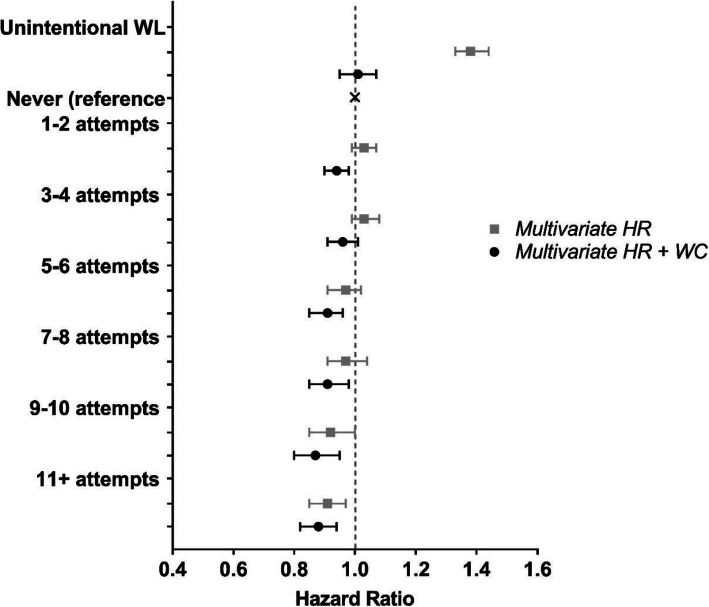
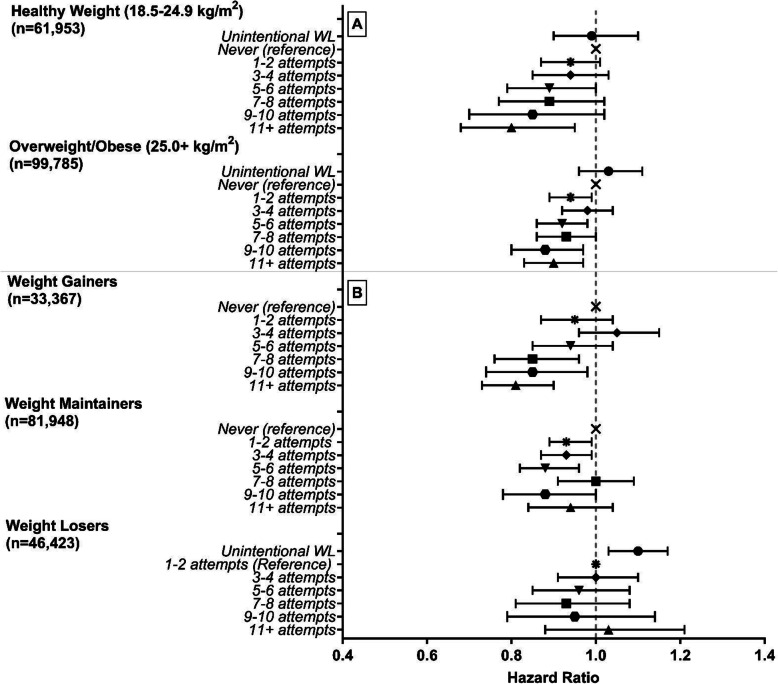
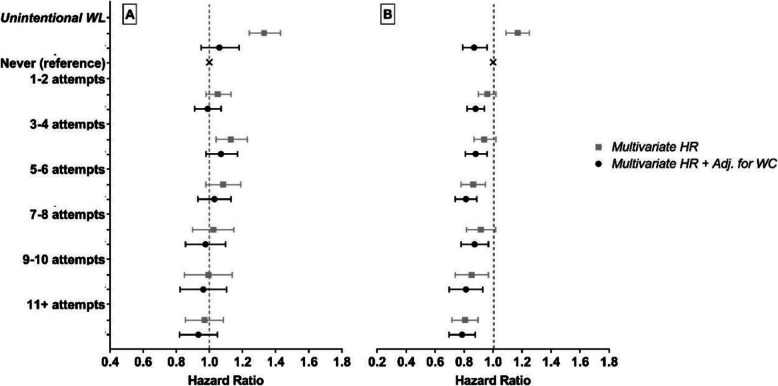
Results: Increased frequency of weight loss attempts of at least five pounds was associated with lower mortality (ptrend < 0.010). Multivariate hazard ratios (95% confidence intervals) for all-cause death among individuals who successfully attempted weight loss compared with those who did not make any attempts were 0.94 (0.90-0.98) for 1-2 attempts, 0.96 (0.91-1.01) for 3-4 attempts, 0.91 (0.85-0.96) for 5-6 attempts, 0.91 (0.85-0.98) for 7-8 attempts, 0.87 (0.80-0.95) for 9-10 attempts, and 0.88 (0.82-0.94) for 11+ attempts. Similar results were noted for men and women, participants with healthy weight and overweight/obesity, and even among those who gained weight over time. Protective associations were also observed for deaths due to cardiovascular disease and cancer.
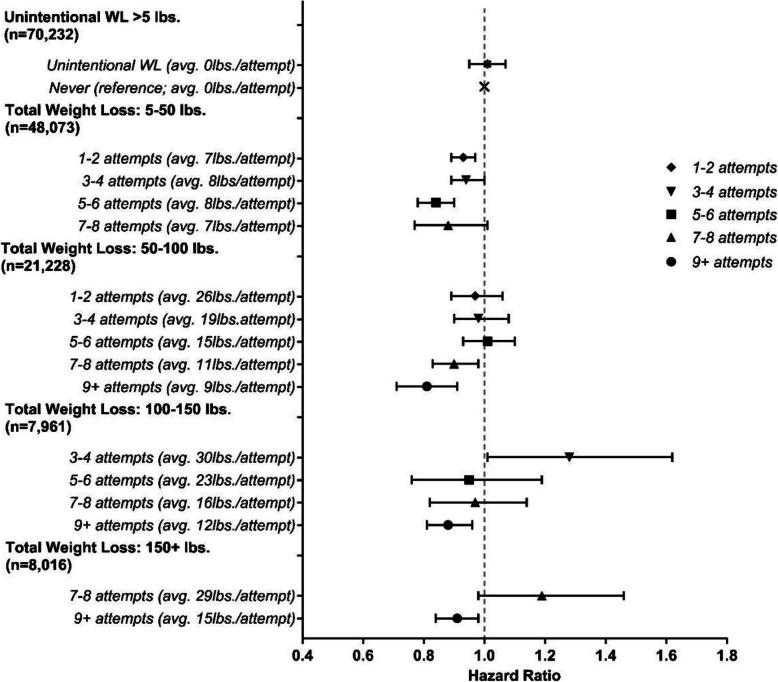
Conclusions: Increased frequency of intentionally losing at least five pounds in mid-life was associated with a lower risk of future death. Repeated attempts with moderate amounts of weight loss may provide benefit in terms of longevity.
Trial registration number: ClinicalTrials.gov number, NCT00340015.
Keywords: Mortality; Obesity; Prospective cohort; Weight loss.
Conflict of interest statement
None
Figures
References
-
- Blissmer B, Riebe D, Dye G, Ruggiero L, Greene G, Caldwell M. Health-related quality of life following a clinical weight loss intervention among overweight and obese adults: intervention and 24 month follow-up effects. Health Qual Life Out. 2006;4(1):43. doi: 10.1186/1477-7525-4-43. - DOI - PMC - PubMed
-
- Van Gaal LF, Mertens IL, Ballaux D. What is the relationship between risk factor reduction and degree of weight loss? European Heart J Supplements. 2005;7(suppl_L):L21–LL6. doi: 10.1093/eurheartj/sui082. - DOI
