Larger Nephron Size and Nephrosclerosis Predict Progressive CKD and Mortality after Radical Nephrectomy for Tumor and Independent of Kidney Function
- PMID: 32938650
- PMCID: PMC7608955
- DOI: 10.1681/ASN.2020040449
Larger Nephron Size and Nephrosclerosis Predict Progressive CKD and Mortality after Radical Nephrectomy for Tumor and Independent of Kidney Function
Abstract
Background: Nephron hypertrophy and nephrosclerosis may be important determinants of CKD and mortality. However, studies of outcomes associated with these microstructural features have been limited to small tissue specimens from patients selected for either good kidney health or known kidney disease.
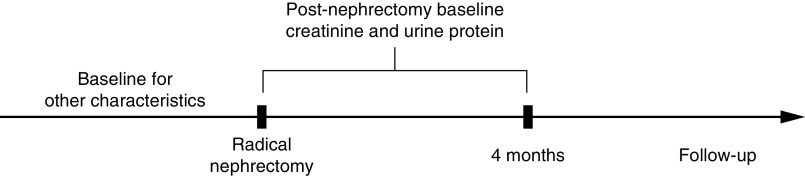
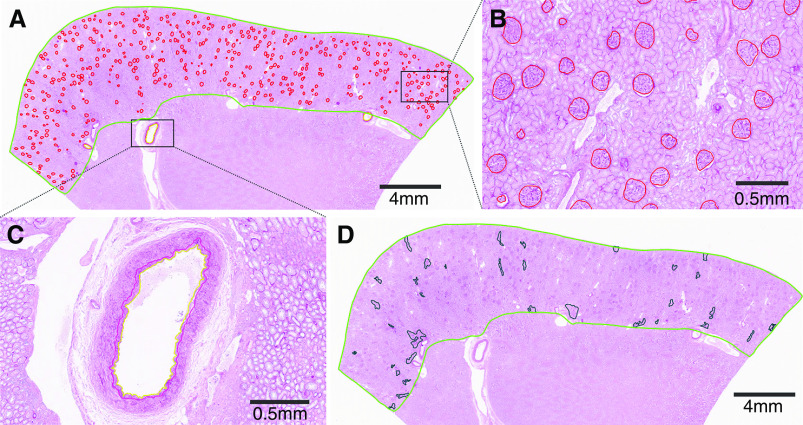
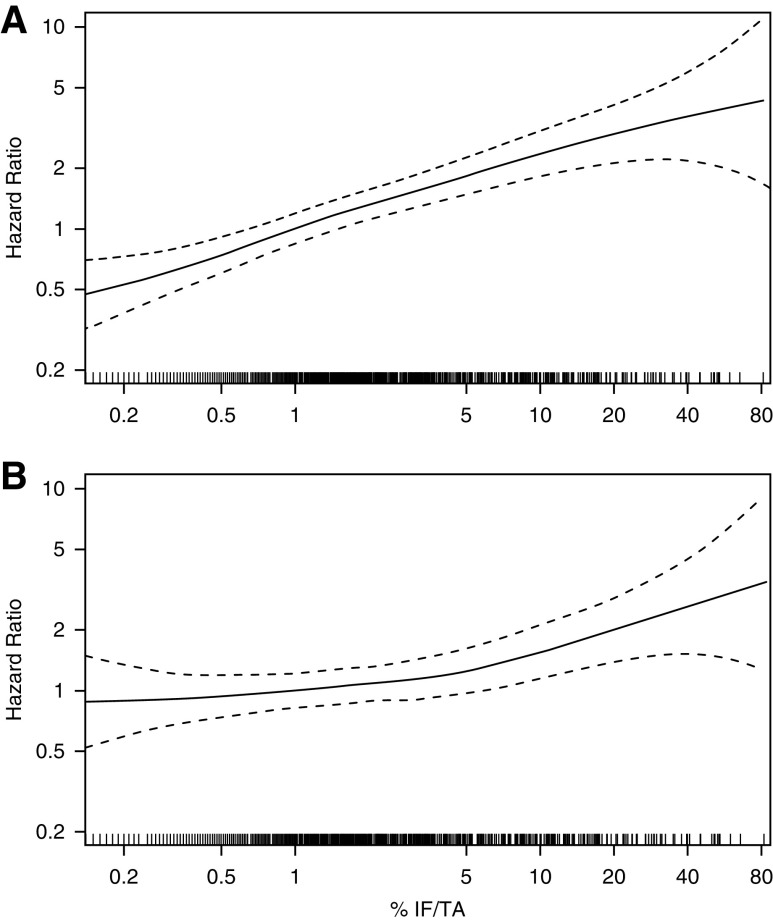
Methods: To determine whether microstructural features are predictive of progressive CKD and mortality outcomes, we studied patients who underwent a radical nephrectomy for a tumor. Large wedge sections of renal parenchyma distal to the tumor were stained and scanned into high-resolution images; we annotated the cortex and all glomeruli to calculate glomerular volume, cortex volume per glomerulus, and percentage of globally sclerotic glomeruli. Morphometric measurements also included percentages of artery luminal stenosis and interstitial fibrosis/tubular atrophy (IF/TA) of the cortex. At follow-up visits every 6-12 months, we determined which patients experienced progressive CKD (defined as dialysis, kidney transplantation, or a 40% decline from postnephrectomy eGFR). Cox models for these outcomes were adjusted for age, sex, body mass index, hypertension, diabetes, smoking, eGFR, and proteinuria.
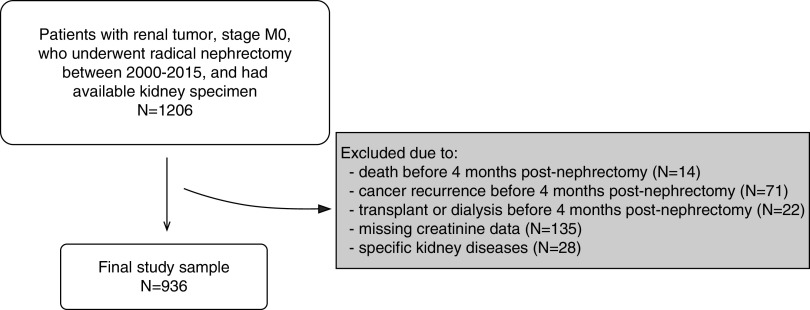
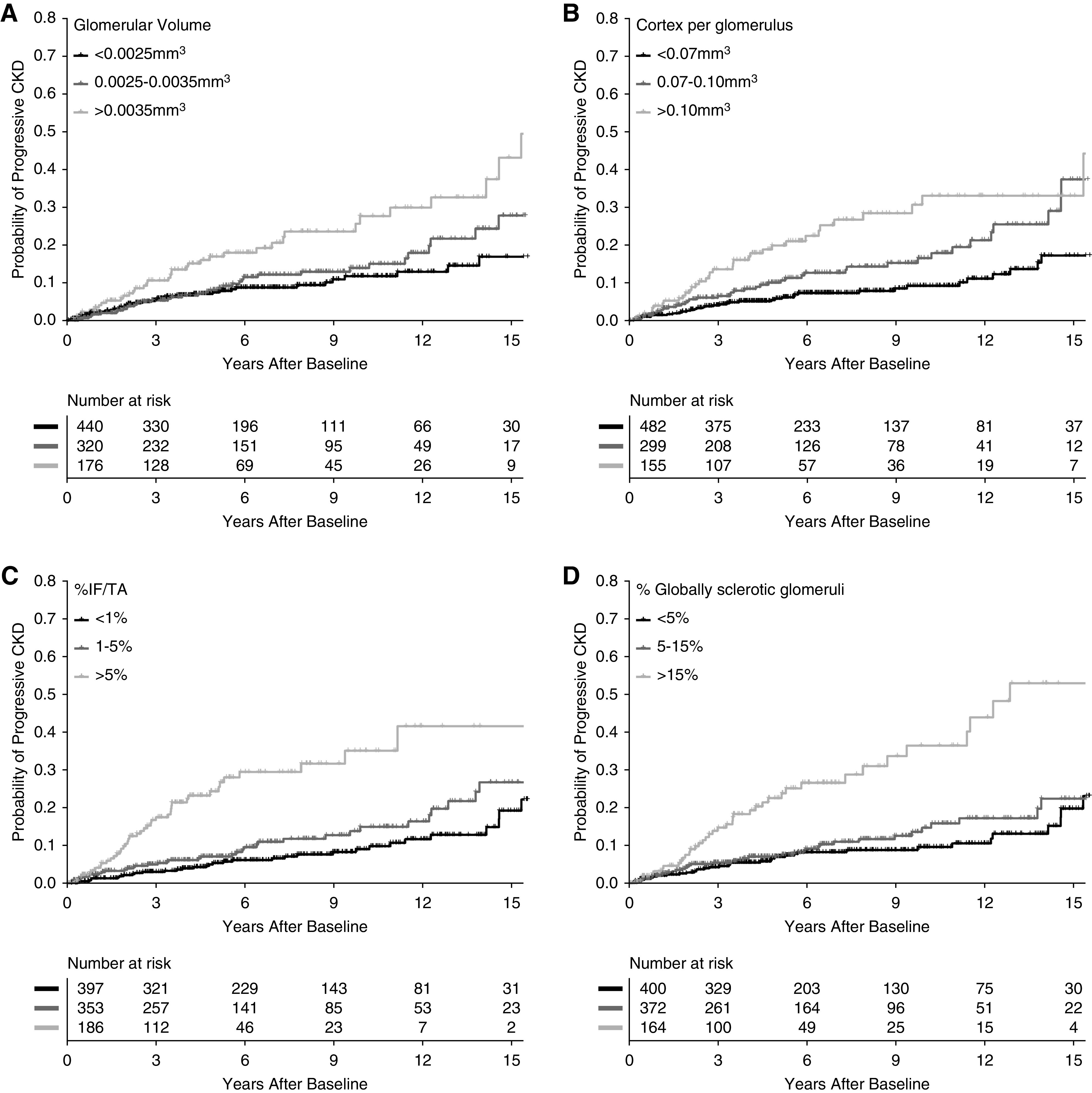
Results: Among 936 patients (mean age, 64 years; postnephrectomy baseline eGFR, 48 ml/min per 1.73 m2), 117 progressive CKD events, 183 noncancer deaths, and 116 cancer deaths occurred during a median follow-up of 6.4 years. Larger glomerular volume, larger cortex per glomerulus, and higher percentage of globally sclerotic glomeruli or IF/TA predicted progressive CKD. Higher percentage IF/TA also predicted noncancer mortality. Microstructural features did not predict cancer mortality or recurrence.
Conclusions: After a radical nephrectomy, larger nephrons and nephrosclerosis predicted progressive CKD, and IF/TA predicted noncancer mortality. Morphometric analysis of renal parenchyma can predict noncancer clinical events in patients long after their radical nephrectomy.
Keywords: Nephrectomy; glomerulosclerosis; glomerulus; interstitial fibrosis; kidney biopsy; mortality risk; nephron; progression of chronic renal failure.
Copyright © 2020 by the American Society of Nephrology.
Figures
Comment in
-
Can Total Nephron Number Predict Progressive CKD after Radical Nephrectomy?J Am Soc Nephrol. 2021 Feb;32(2):517. doi: 10.1681/ASN.2020111585. Epub 2020 Dec 17. J Am Soc Nephrol. 2021. PMID: 34103379 Free PMC article. No abstract available.
-
Authors' Reply.J Am Soc Nephrol. 2021 Feb;32(2):517-518. doi: 10.1681/ASN.2020111615. Epub 2020 Dec 17. J Am Soc Nephrol. 2021. PMID: 34103392 Free PMC article. No abstract available.
References
-
- Gautam G, Lifshitz D, Shikanov S, Moore JM, Eggener SE, Shalhav AL, et al. : Histopathological predictors of renal function decrease after laparoscopic radical nephrectomy. J Urol 184: 1872–1876, 2010. - PubMed
-
- Salvatore SP, Cha EK, Rosoff JS, Seshan SV: Nonneoplastic renal cortical scarring at tumor nephrectomy predicts decline in kidney function. Arch Pathol Lab Med 137: 531–540, 2013. - PubMed
-
- Brandina R, Moreira Leite KR, Gregório EP, Fernandes KBP, Srougi M: Histologic abnormalities in non-neoplastic renal parenchyma and the risk of chronic kidney disease following radical nephrectomy. Urology 100: 158–162, 2017. - PubMed
Publication types
MeSH terms
Grants and funding
LinkOut - more resources
Full Text Sources
Medical
Research Materials
Miscellaneous