


The burden of healthcare-associated infection in Ethiopia: a systematic review and meta-analysis
- PMID: 32939151
- PMCID: PMC7487565
- DOI: 10.1186/s41182-020-00263-2
The burden of healthcare-associated infection in Ethiopia: a systematic review and meta-analysis
Abstract
Background: Different primary studies in Ethiopia showed the burden of nosocomial infection across geographical setting and variant period. However, the national level of burden and types of healthcare-associated infections were unknown. Hence, this systematic review and meta-analysis estimated the overall nationwide burden and types of healthcare-associated infections in Ethiopia.
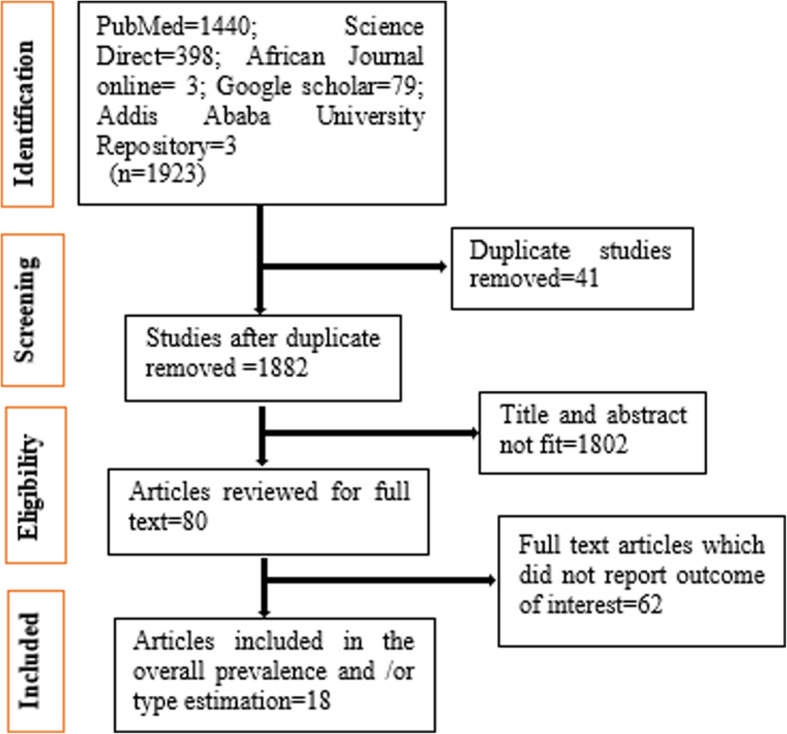
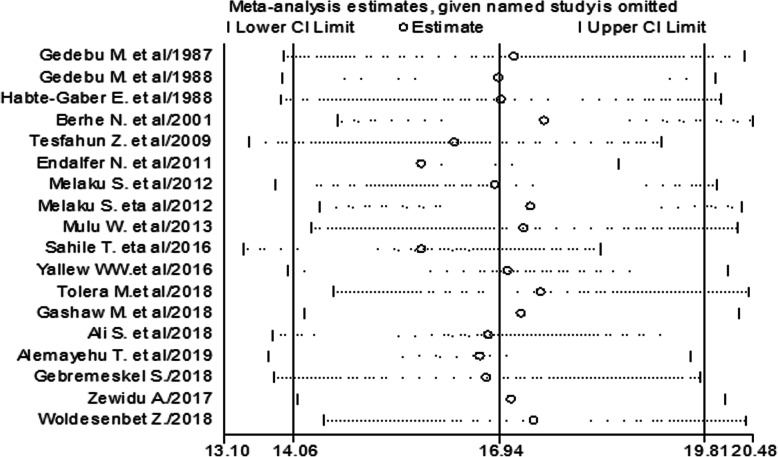
Methods: We searched PubMed, Science Direct, Google Scholar, African Journal Online, and Addis Ababa University repository by date April 7, 2020. To assess publication bias, Egger's test regression analysis was applied. Weight-inverse random-effect model meta-analysis was used. Subgroup analysis was conducted based on ward type, study region, study design, sample size and diagnostic method, ward type, and study participants.
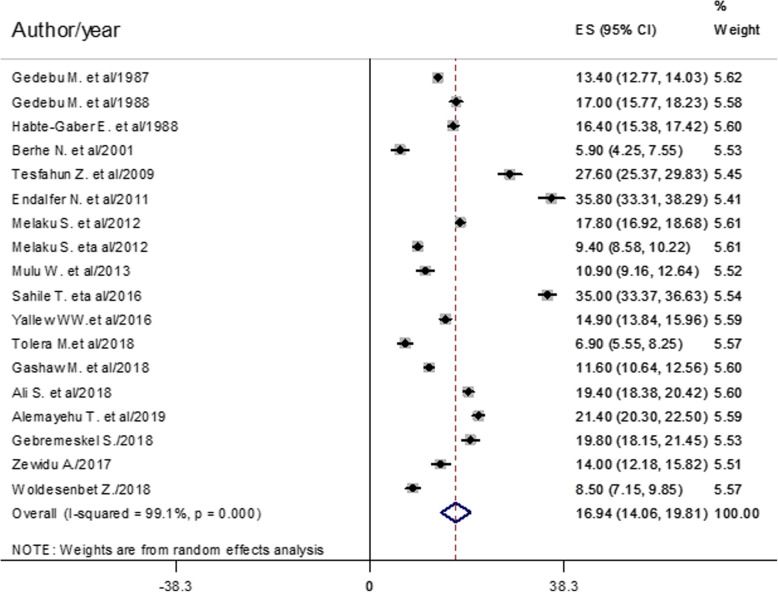
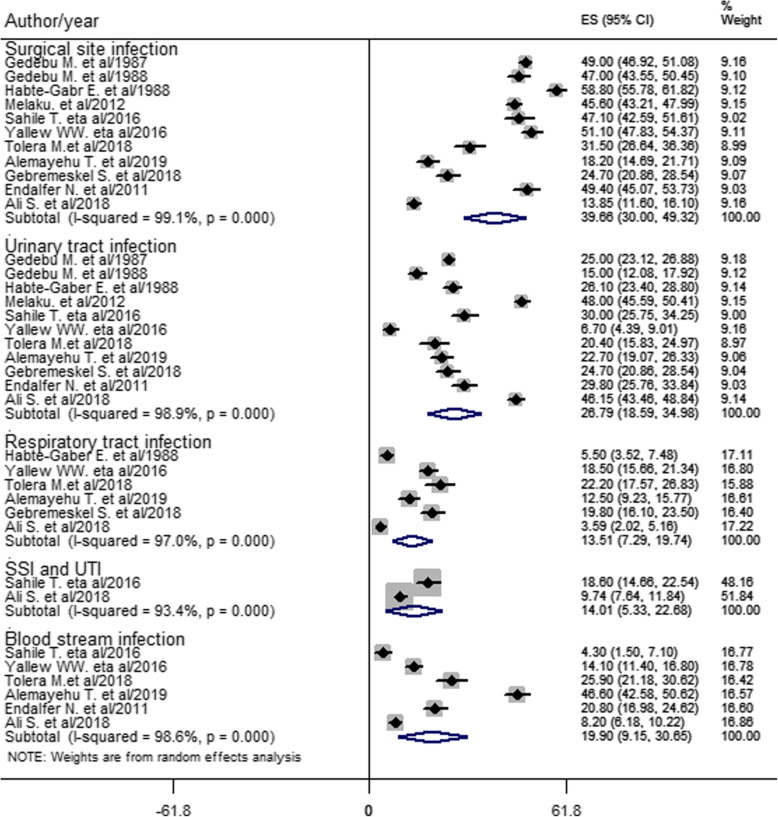
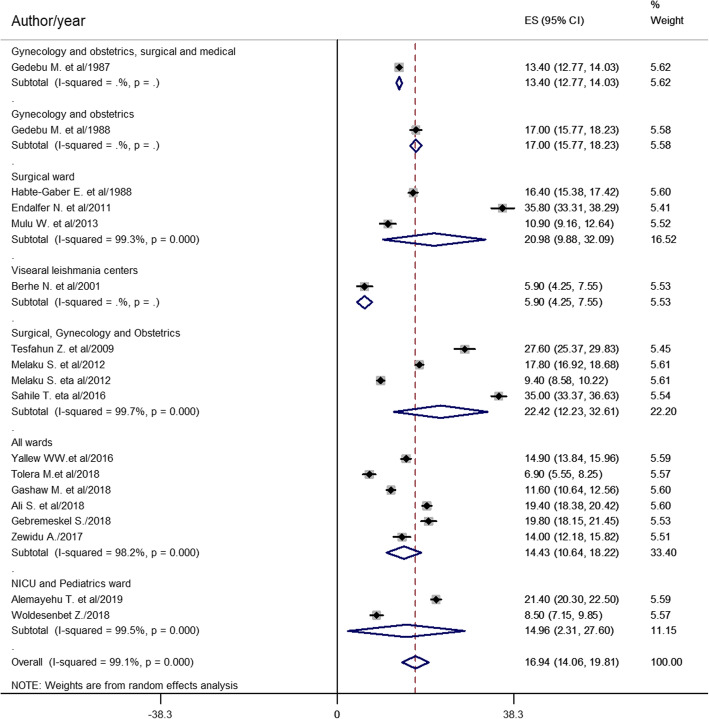
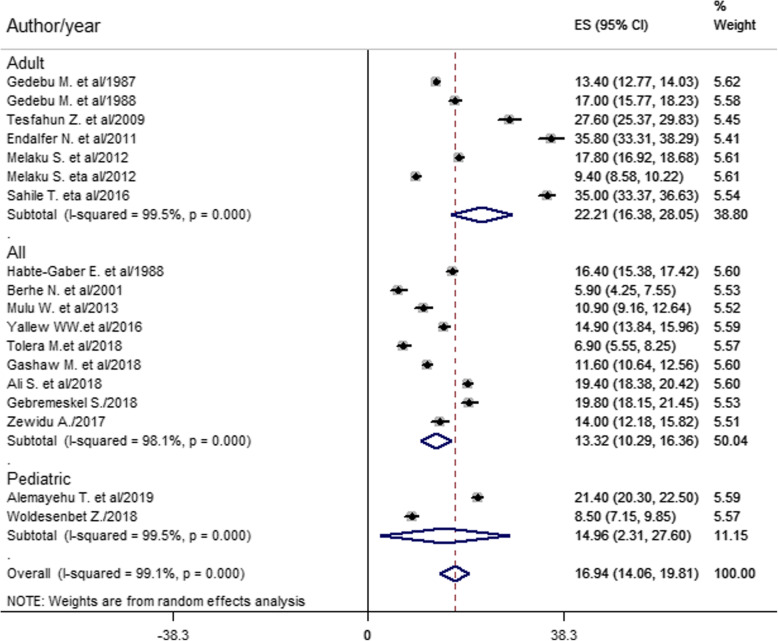
Results: A total of 18 studies with 13,821 patients participated in the overall prevalence estimation. The pooled prevalence of healthcare-associated infection was 16.96% (95% CI 14.10-19.82). Specifically, surgical site infection (39.66%), urinary tract infection (27.69%), bloodstream infection (19.9%), dual infections (SSI and UTI) (14.01%), and respiratory tract (13.51%) were the commonest types of healthcare-associated infection. In subgroup analysis, the highest overall prevalence was observed as surgical, gynecology, and obstetrics ward (22.42%).
Conclusions: The national prevalence of healthcare-associated infection remains high. The most common type of HCAI was surgical site infection, followed by urinary tract infection, bloodstream infection, SSI and UTI, and respiratory tract infection. The overall prevalence was highest in surgical, gynecology, and obstetrics ward. Hence, infection prevention and control should be a priority agenda in healthcare with due emphasis for surgical patients.
Keywords: Burden; Ethiopia; Healthcare-associated infection; Meta-analysis.
© The Author(s) 2020.
Conflict of interest statement
Competing interestsThe authors declared that they have no competing interests.
Figures
References
-
- What are healthcare-associated infections? [Internet]. [cited 01 Feb 2020]. Available from: https://apic.org/monthly_alerts/what-are-healthcare-associated-infections/.
-
- Infections caught in the hospital [Internet]. [cited 02 Feb 2020]. Available from: https://www.healthline.com/health/hospital-acquired-nosocomial-infections.
-
- Health care-associated infections FACT SHEET [Internet]. [cited 02 Feb 2020]. Available from: https://www.who.int/gpsc/country_work/gpsc_ccisc_fact_sheet_en.pdf.
-
- Mbim EN, Mboto CI, BEJMRJI A. A review of nosocomial infections in sub-Saharan Africa. 2016. pp. 1–11.
-
- Mpinda-Joseph P, Anand Paramadhas BD, Reyes G, Maruatona MB, Chise M, Monokwane-Thupiso BB, et al. Healthcare-associated infections including neonatal bloodstream infections in a leading tertiary hospital in Botswana. Hospital Practice. 2019;47(4):203–210. - PubMed
Publication types
LinkOut - more resources
Full Text Sources
Miscellaneous