


High-performance extended-gate ion-sensitive field-effect transistors with multi-gate structure for transparent, flexible, and wearable biosensors
- PMID: 32939162
- PMCID: PMC7476522
- DOI: 10.1080/14686996.2020.1775477
High-performance extended-gate ion-sensitive field-effect transistors with multi-gate structure for transparent, flexible, and wearable biosensors
Abstract
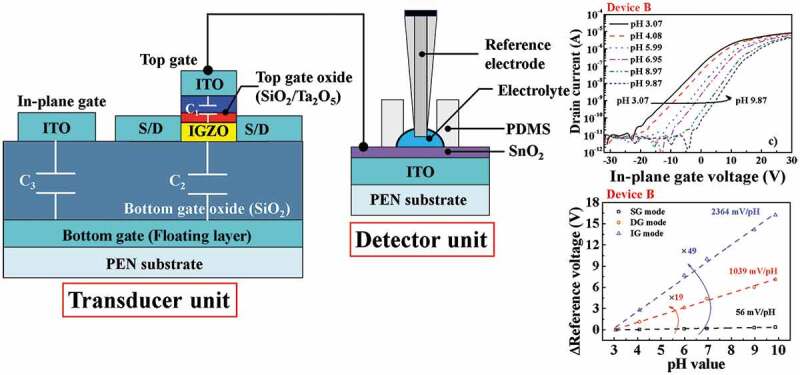
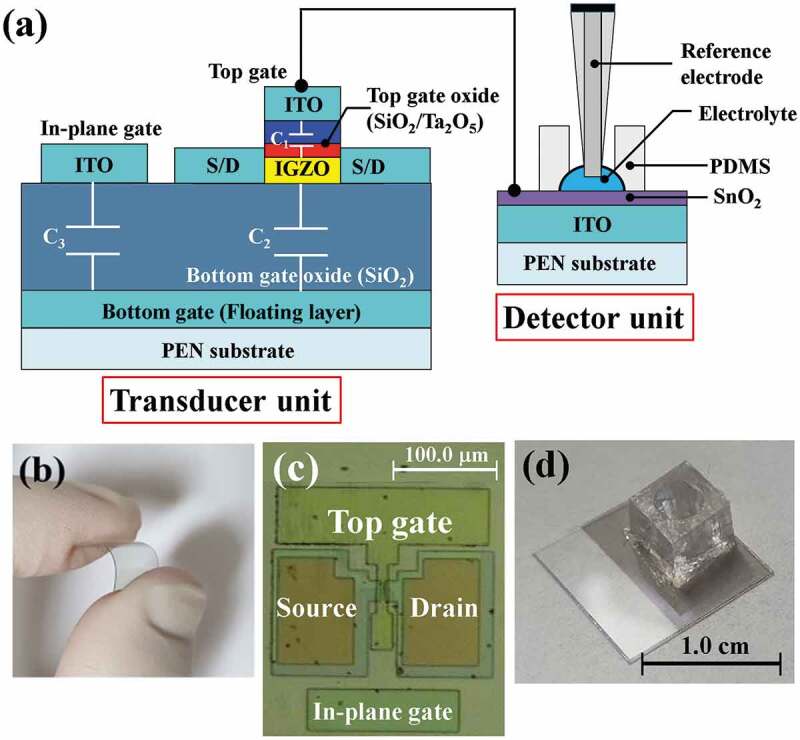
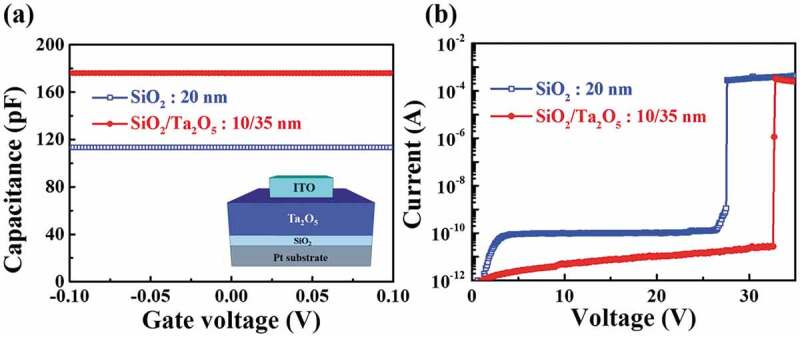
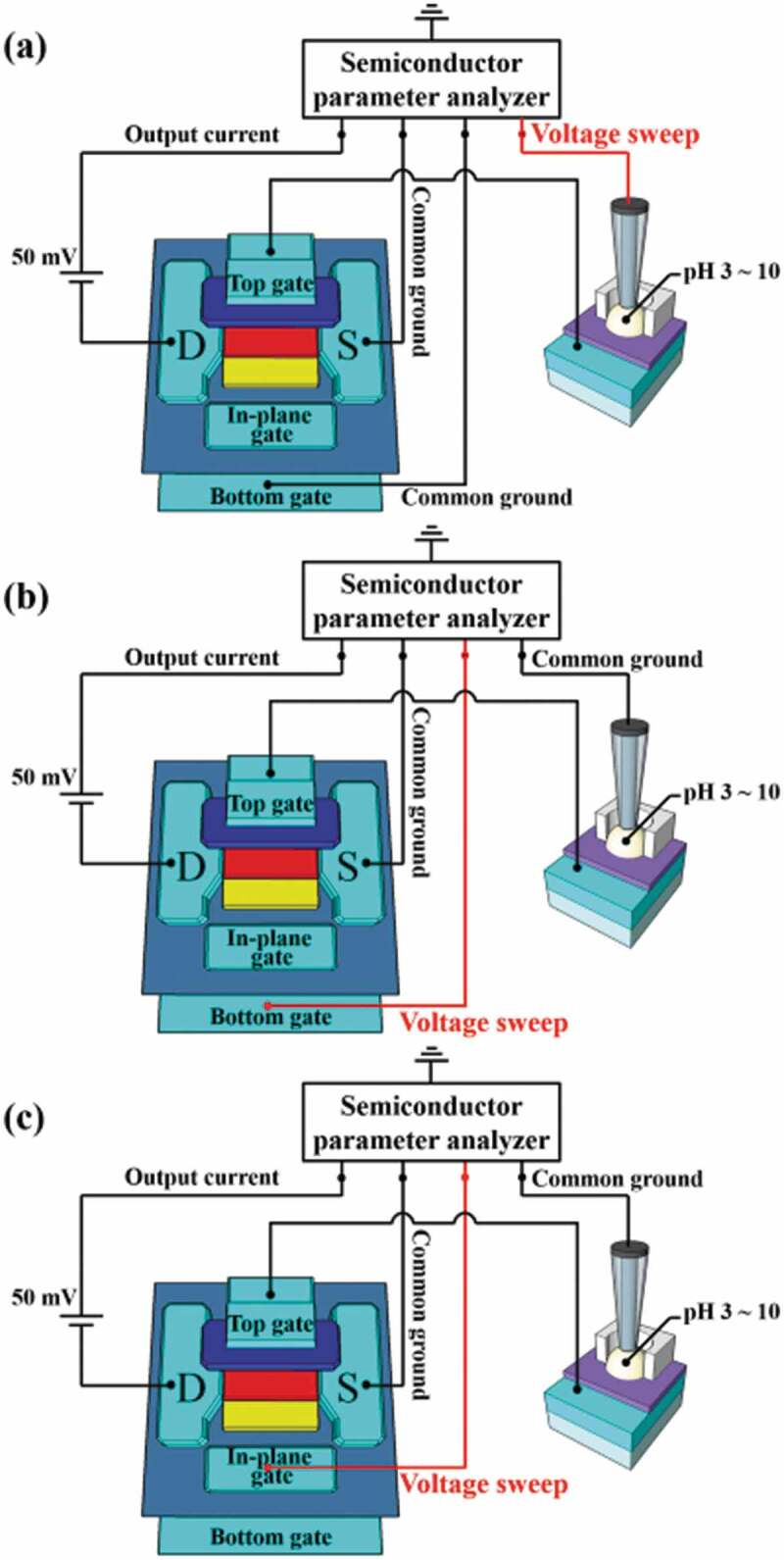
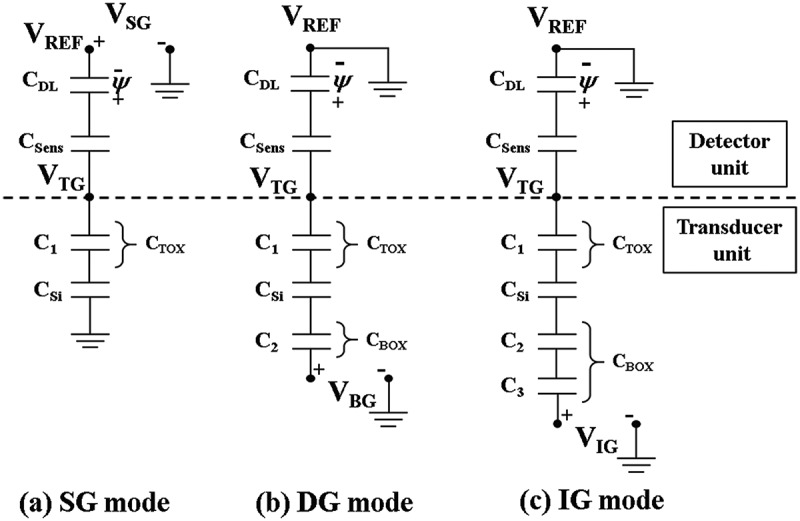
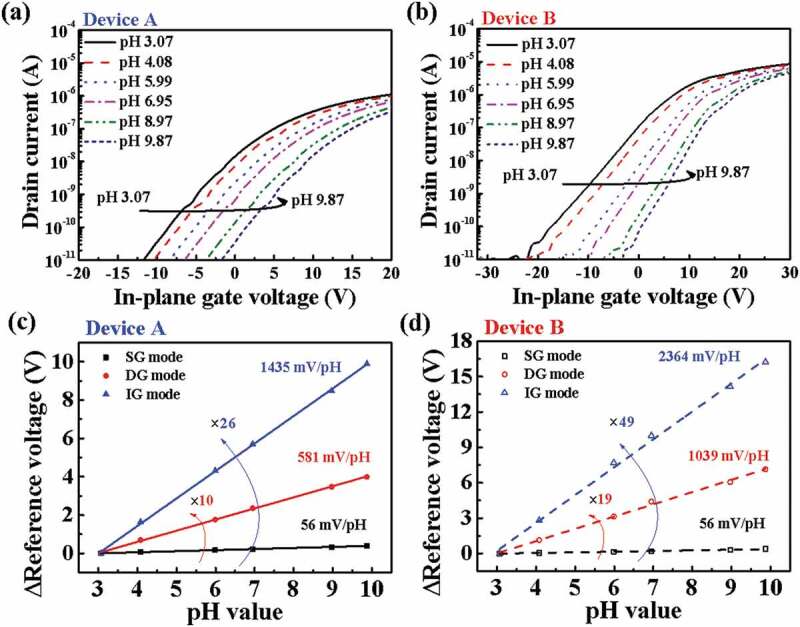
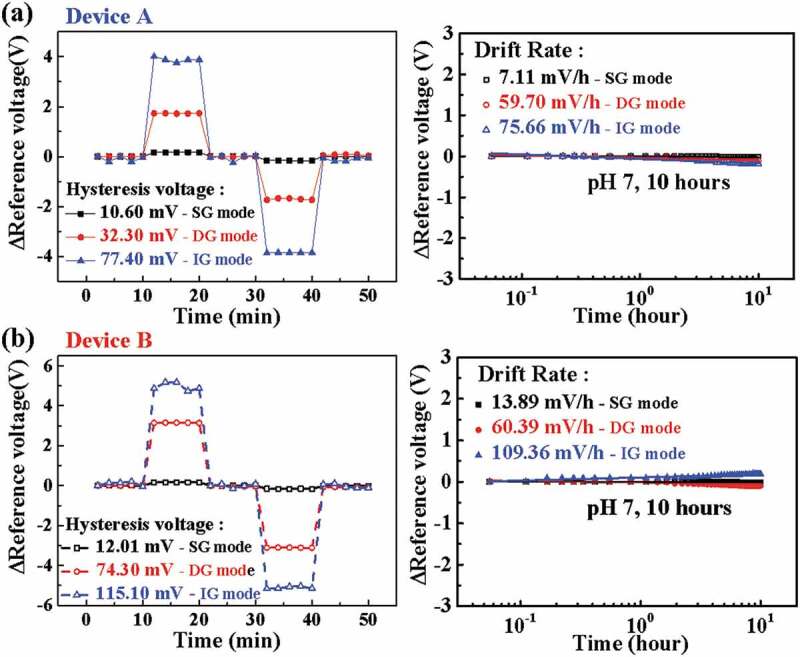
In this study, we developed a high-performance extended-gate ion-sensitive field-effect transistor (EG-ISFET) sensor on a flexible polyethylene naphthalate (PEN) substrate. The EG-ISFET sensor comprises a tin dioxide (SnO2) extended gate, which acts as a detector, and an amorphous indium-gallium-zinc-oxide (a-IGZO) thin-film transistor (TFT) for a transducer. In order to self-amplify the sensitivity of the pH sensors, we designed a uniquely-structured a-IGZO TFT transducer with a high-k engineered top gate insulator consisting of a silicon dioxide/tantalum pentoxide (SiO2/Ta2O5) stack, a floating layer under the channel, and a control gate coplanar with the channel. The SiO2/Ta2O5 stacked top gate insulator and in-plane control gate significantly contribute to capacitive coupling, enabling the amplification of sensitivity to be enlarged compared to conventional dual-gate transducers. For a pH sensing method suitable for EG-ISFET sensors, we propose an in-plane control gate (IG) sensing mode, instead of conventional single-gate (SG) or dual-gate (DG) sensing modes. As a result, a pH sensitivity of 2364 mV/pH was achieved at room temperature - this is significantly superior to the Nernstian limit (59.15 mV/pH at room temperature). In addition, we found that non-ideal behavior was improved in hysteresis and drift measurements. Therefore, the proposed transparent EGISFFET sensor with an IG sensing mode is expected to become a promising platform for flexible and wearable biosensing applications.
Keywords: 102 Porous / Nanoporous / Nanostructured materials; 208 Sensors and actuators; 306 Thin film / Coatings; Extended-gate ion-sensitive field-effect transistor; capacitive coupling; flexible; high-k engineered gate oxide; in-plane control gate; polyethylene naphthalate.
© 2020 The Author(s). Published by National Institute for Materials Science in partnership with Taylor & Francis Group.
Conflict of interest statement
No potential conflict of interest was reported by the authors.
Figures
References
-
- Flinck M, Kramer SH, Pedersen SF.. Roles of pH in control of cell proliferation. Acta Physiol. 2018;223(3):e13068. - PubMed
-
- Boron WF. Regulation of intracellular pH. Adv Physiol Educ. 2004;28(4):160–179. - PubMed
-
- Ronkainen NJ, Halsall HB, Heineman WR. Electrochemical biosensors. Chem Soc Rev. 2010;39(5):1747–1763. - PubMed
-
- Chen K-I, Li B-R, Chen Y-T. Silicon nanowire field-effect transistor-based biosensors for biomedical diagnosis and cellular recording investigation. Nano Today. 2011;6(2):131–154.
LinkOut - more resources
Full Text Sources
Other Literature Sources
Research Materials
