


Total shoulder arthroplasty with an anterior-offset humeral head in patients with a B2 glenoid
- PMID: 32939499
- PMCID: PMC7478997
- DOI: 10.1016/j.jseint.2020.02.001
Total shoulder arthroplasty with an anterior-offset humeral head in patients with a B2 glenoid
Abstract
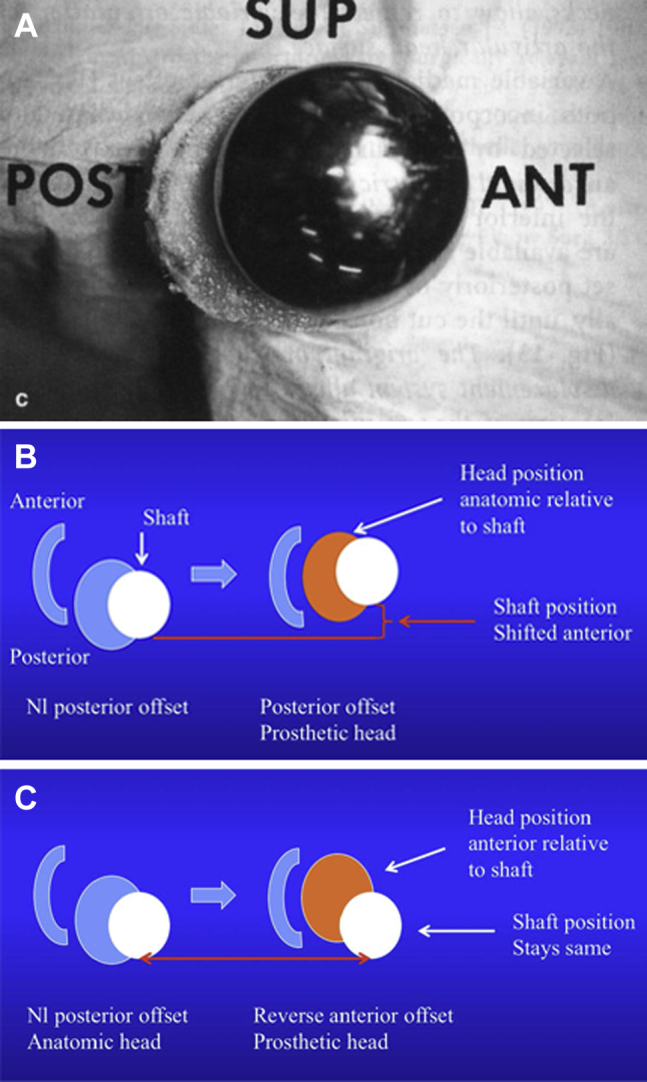
Background: To address severe posterior subluxation associated with the Walch B2 glenoid deformity, the eccentricity of the prosthetic humeral head can be reversed, allowing the humerus to remain in a relatively posterior position while the prosthetic humeral head remains well-centered on the glenoid. This study describes the short-term outcomes after anatomic total shoulder arthroplasty (TSA) using this technique.
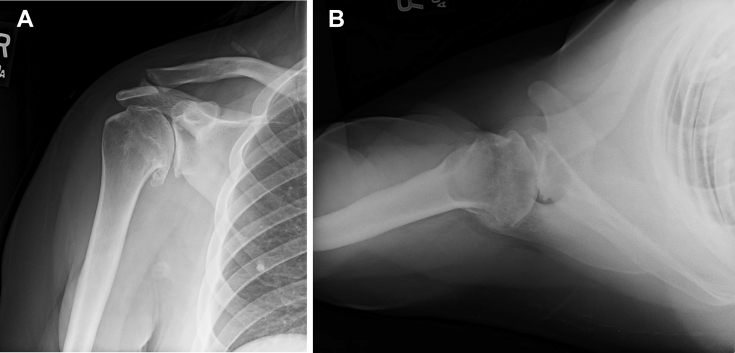
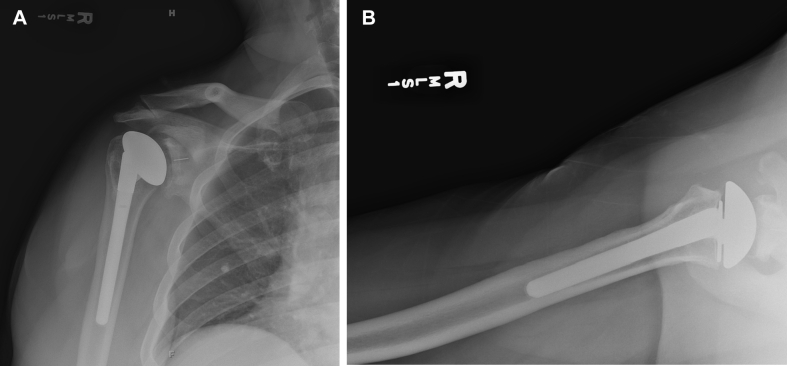
Methods: We retrospectively reviewed a consecutive series of patients with a B2 glenoid who underwent TSA with the prosthetic eccentric humeral head rotated anteriorly for excessive posterior subluxation noted intraoperatively. Medical records were reviewed for visual analog scale (VAS), American Shoulder and Elbow Surgeons Standardized Shoulder Assessment Form (ASES), and Simple Shoulder Test (SST) scores. Final radiographs were analyzed for instability, lesser tuberosity osteotomy healing, and glenoid loosening.
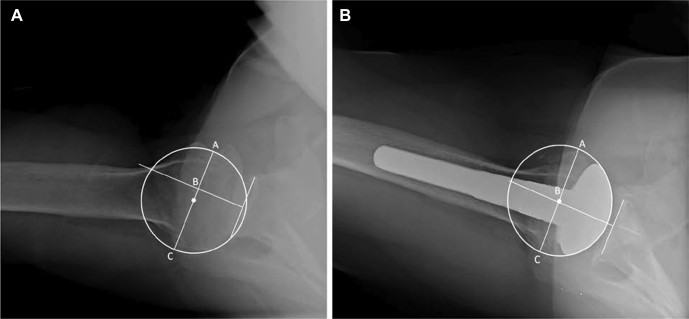
Results: Twenty patients were included with outcome scores at a mean of 48 months. Mean VAS (P < .0001), ASES (P < .0001), and SST (P < .0001) scores improved significantly. Using the Lazarus classification for glenoid loosening, 5 patients had grade 1 lucency and 2 had grade 2 lucency at a mean of 24 months' follow-up. The remaining 13 patients had no glenoid lucencies. Radiographic decentering was reduced from a mean of 9.9% ± 5.7% preoperatively to 0.5% ± 3.0% postoperatively (P < .001). There were no cases of lesser tuberosity repair failures or revision surgery.
Conclusion: TSA in patients with a B2 glenoid with a reversed, anterior-offset humeral head to address residual posterior subluxation resulted in excellent functional outcomes at short-term follow-up with improvement in humeral head centering. Early radiographic follow-up suggests low risks of progressive glenoid lucencies and component loosening.
Keywords: B2 glenoid; Shoulder arthroplasty; glenohumeral osteoarthritis; shoulder subluxation.
© 2020 The Authors.
Figures
References
-
- Edwards T.B., Labriola J.E., Stanley R.J., O'Connor D.P., Elkousy H.A., Gartsman G.M. Radiographic comparison of pegged and keeled glenoid components using modern cementing techniques: a prospective randomized study. J Shoulder Elbow Surg. 2010;19:251–257. doi: 10.1016/j.jse.2009.10.013. - DOI - PubMed
LinkOut - more resources
Full Text Sources
Research Materials