


Physician management of thyroid cancer patients' worry
- PMID: 32939685
- PMCID: PMC7960572
- DOI: 10.1007/s11764-020-00937-0
Physician management of thyroid cancer patients' worry
Abstract
Purpose: The purpose of this study is to understand physician management of thyroid cancer-related worry.
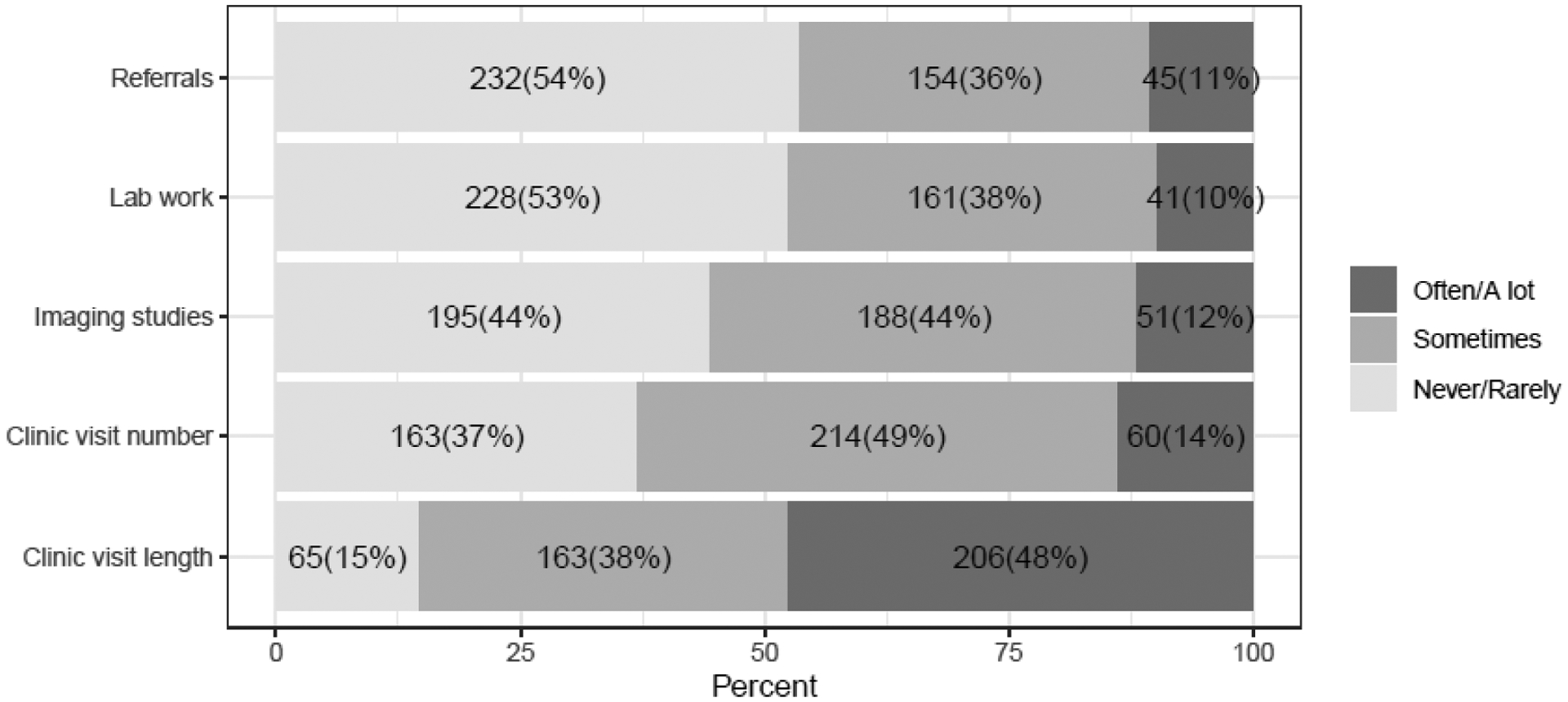
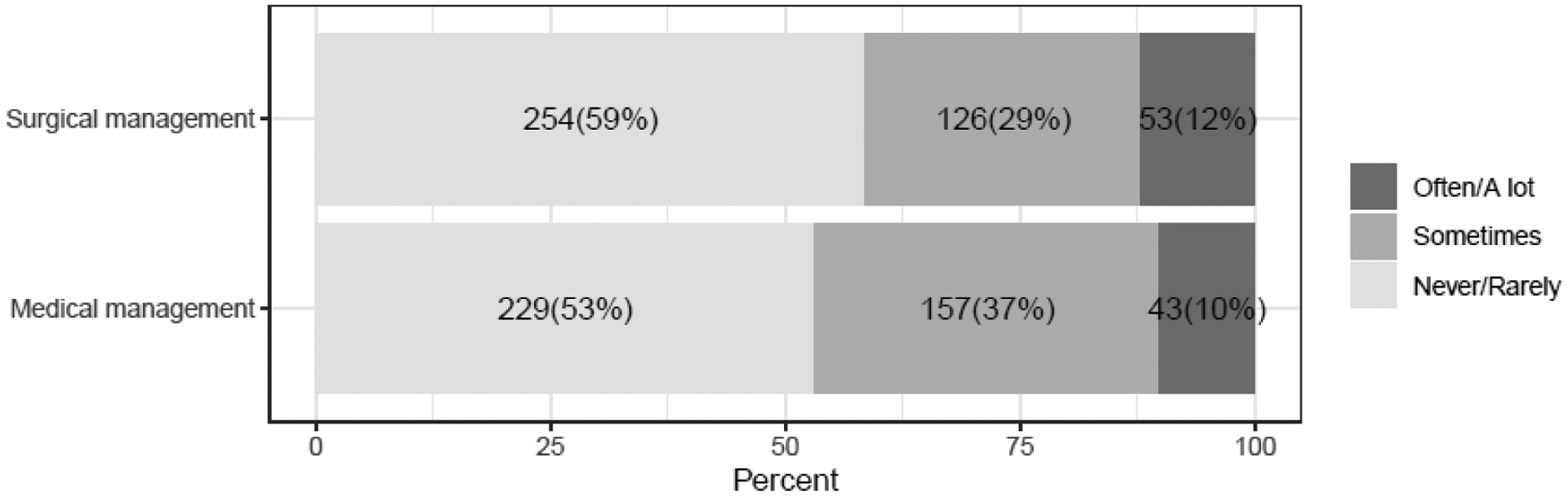
Methods: Endocrinologists, general surgeons, and otolaryngologists identified by Surveillance, Epidemiology, and End Results (SEER) patients were surveyed 2018-2019 (response rate 69% (448/654)) and asked to rate in general their patients' worry at diagnosis and actions they take for worried patients. Multivariable-weighted logistic regressions were conducted to determine physician characteristics associated with reporting thyroid cancer as "good cancer" and with encouraging patients to seek help managing worry outside the physician-patient relationship.
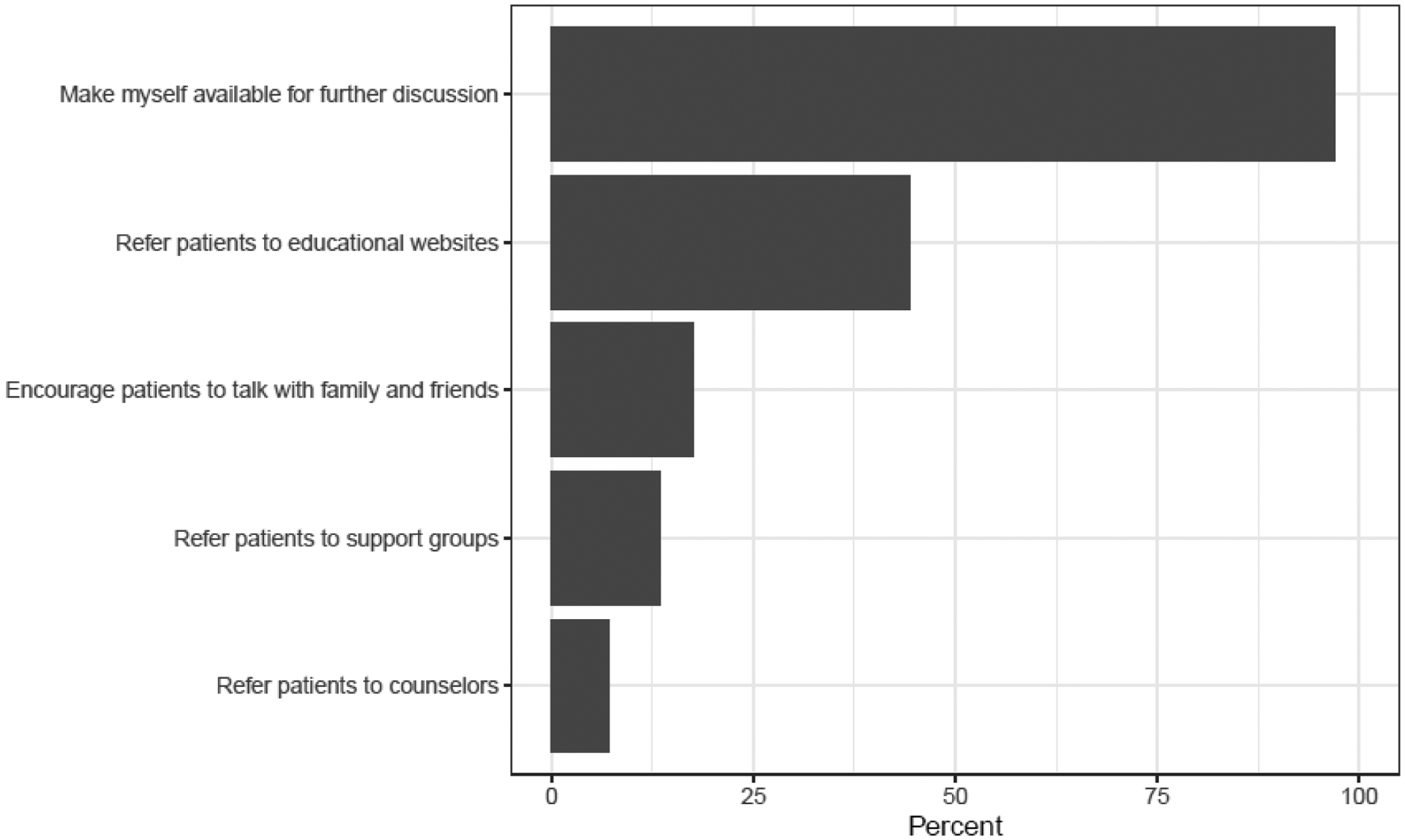
Results: Physicians reported their patients as quite/very worried (65%), somewhat worried (27%), and a little/not worried (8%) at diagnosis. Half of the physicians tell patients their thyroid cancer is a "good cancer." Otolaryngology (odds ratio (OR) 1.87, 95% confidence interval (CI) 1.08-3.21, versus endocrinology), private practice (OR 2.48, 95% CI 1.32-4.68, versus academic setting), and Los Angeles (OR 2.24, 95% CI 1.45-3.46, versus Georgia) were associated with using "good cancer." If patients are worried, 97% of physicians make themselves available for discussion, 44% refer to educational websites, 18% encourage communication with family/friends, 13% refer to support groups, and 7% refer to counselors. Physicians who perceived patients being quite/very worried were less likely to use "good cancer" (OR 0.54, 95% CI 0.35-0.84) and more likely to encourage patients to seek help outside the physician-patient relationship (OR 1.82, 95% CI 1.17-2.82).
Implications for cancer survivors: Physicians perceive patient worry as common and address it with various approaches, with some approaches of unclear benefit. Efforts are needed to develop tailored interventions targeting survivors' psychosocial needs.
Keywords: Good cancer; Oncology; Population-based; Survey; Thyroid cancer; Worry.
Conflict of interest statement
Figures
References
-
- NIH National Cancer Institute. Surveillance, Epidemiology, and End Results Program. Cancer Stat Facts: Thyroid Cancer. https://seer.cancer.gov/statfacts/html/thyro.html. Accessed November 30 2019.
Publication types
MeSH terms
Grants and funding
LinkOut - more resources
Full Text Sources
Medical
