


The association between body dysmorphic symptoms and suicidality among adolescents and young adults: a genetically informative study
- PMID: 32940195
- PMCID: PMC9157307
- DOI: 10.1017/S0033291720002998
The association between body dysmorphic symptoms and suicidality among adolescents and young adults: a genetically informative study
Abstract
Background: Previous research indicates that body dysmorphic disorder (BDD) is associated with risk of suicidality. However, studies have relied on small and/or specialist samples and largely focussed on adults, despite these difficulties commonly emerging in youth. Furthermore, the aetiology of the relationship remains unknown.
Methods: Two independent twin samples were identified through the Child and Adolescent Twin Study in Sweden, at ages 18 (N = 6027) and 24 (N = 3454). Participants completed a self-report measure of BDD symptom severity. Young people and parents completed items assessing suicidal ideation/behaviours. Logistic regression models tested the association of suicidality outcomes with: (a) probable BDD, classified using an empirically derived cut-off; and (b) continuous scores of BDD symptoms. Bivariate genetic models examined the aetiology of the association between BDD symptoms and suicidality at both ages.
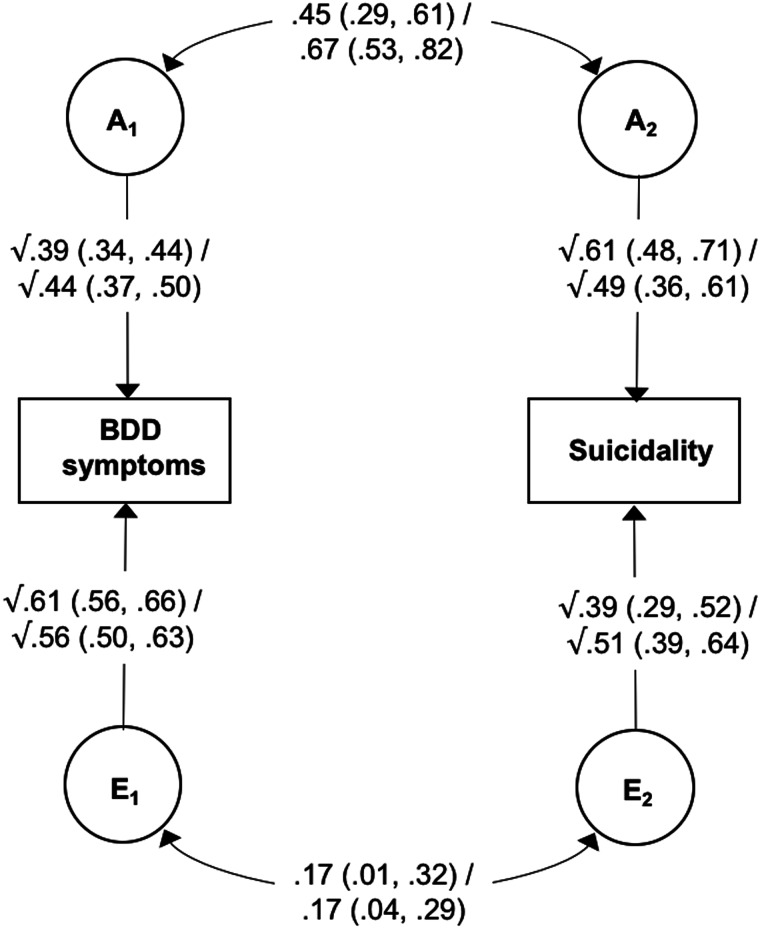
Results: Suicidal ideation and behaviours were common among those with probable BDD at both ages. BDD symptoms, measured continuously, were linked with all aspects of suicidality, and associations generally remained significant after adjusting for depressive and anxiety symptoms. Genetic factors accounted for most of the covariance between BDD symptoms and suicidality (72.9 and 77.7% at ages 18 and 24, respectively), but with significant non-shared environmental influences (27.1 and 22.3% at ages 18 and 24, respectively).
Conclusions: BDD symptoms are associated with a substantial risk of suicidal ideation and behaviours in late adolescence and early adulthood. This relationship is largely explained by common genetic liability, but non-shared environmental effects are also significant and could provide opportunities for prevention among those at high-risk.
Keywords: adolescence; body dysmorphic disorder; genetics; suicidal ideation; suicide attempts; twin design.
Conflict of interest statement
Lorena Fernández de la Cruz receives royalties for contributing articles to UpToDate, Wolters Kluwer Health. David Mataix-Cols receives royalties for contributing articles to UpToDate, Wolters Kluwer Health and for editorial work from Elsevier. The remaining authors have no potential conflicts of interest.
Figures
References
-
- Althoff, R. R., Hudziak, J. J., Willemsen, G., Hudziak, V., Bartels, M., & Boomsma, D. I. (2012). Genetic and environmental contributions to self-reported thoughts of self-harm and suicide. American Journal of Medical Genetics Part B: Neuropsychiatric Genetics, 159(1), 120–127. doi: 10.1002/ajmg.b.32010 - DOI - PMC - PubMed
-
- American Psychiatric Association. (2013). Diagnostic and statistical manual of mental disorders (5th ed.). Arlington, VA: American Psychiatric Publishing.
MeSH terms
Grants and funding
LinkOut - more resources
Full Text Sources
Medical
