


Social anxiety in young people: A prevalence study in seven countries
- PMID: 32941482
- PMCID: PMC7498107
- DOI: 10.1371/journal.pone.0239133
Social anxiety in young people: A prevalence study in seven countries
Abstract
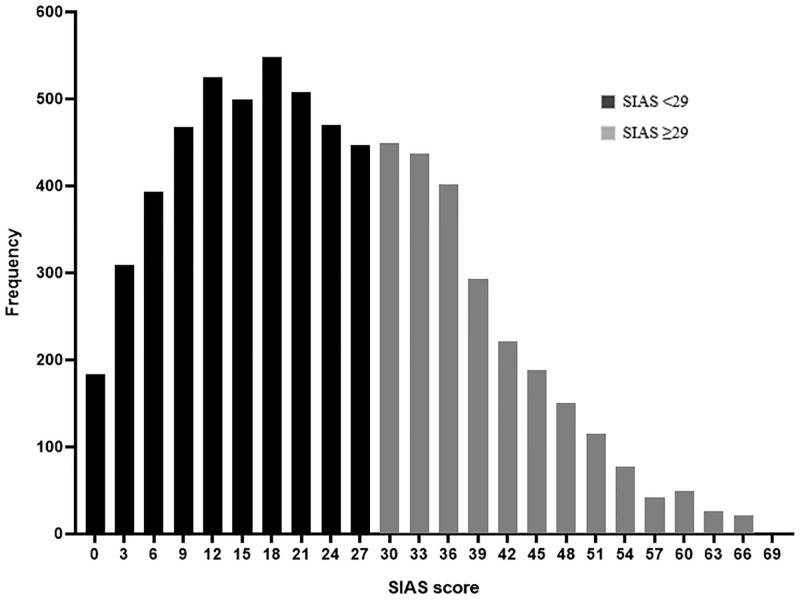
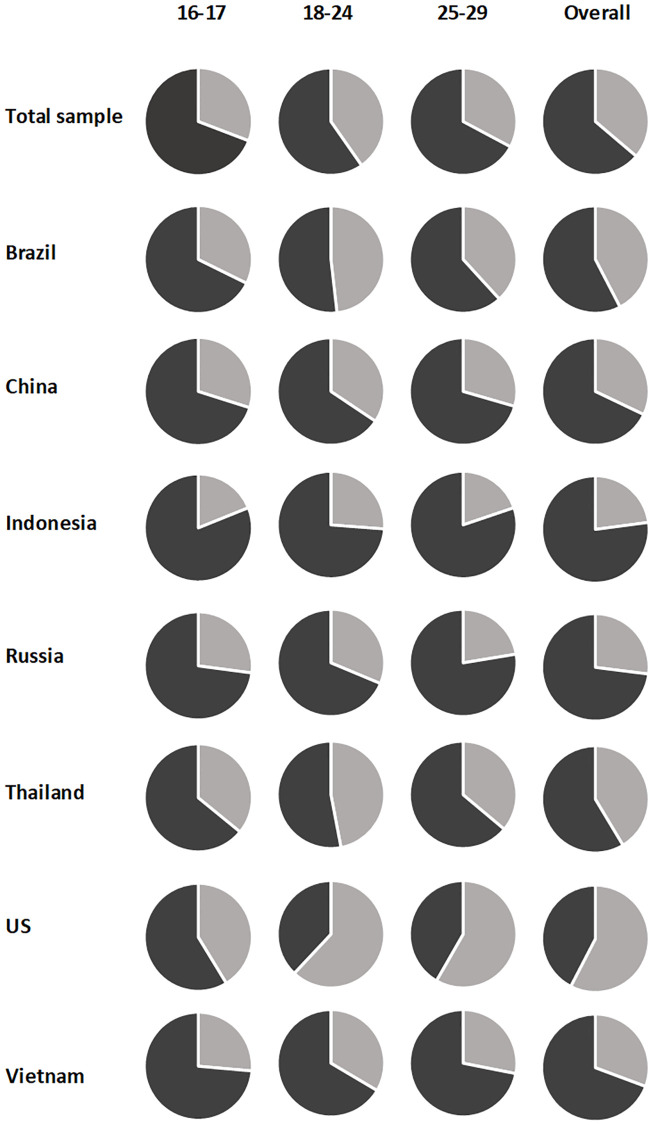
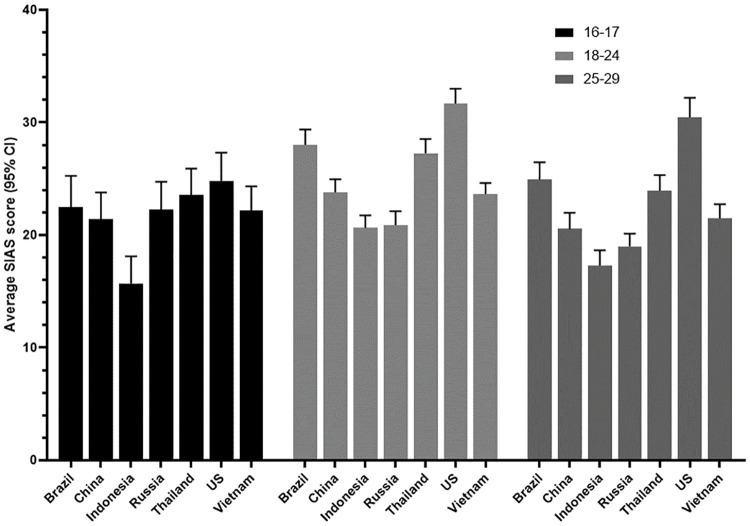
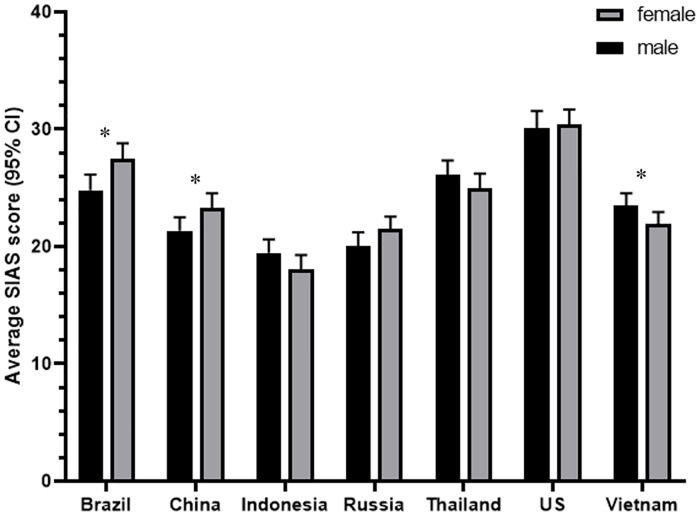
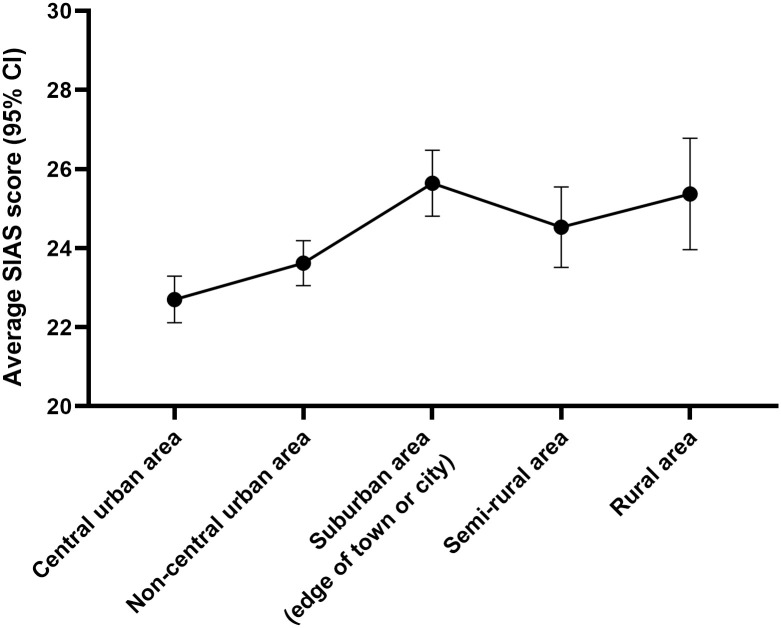
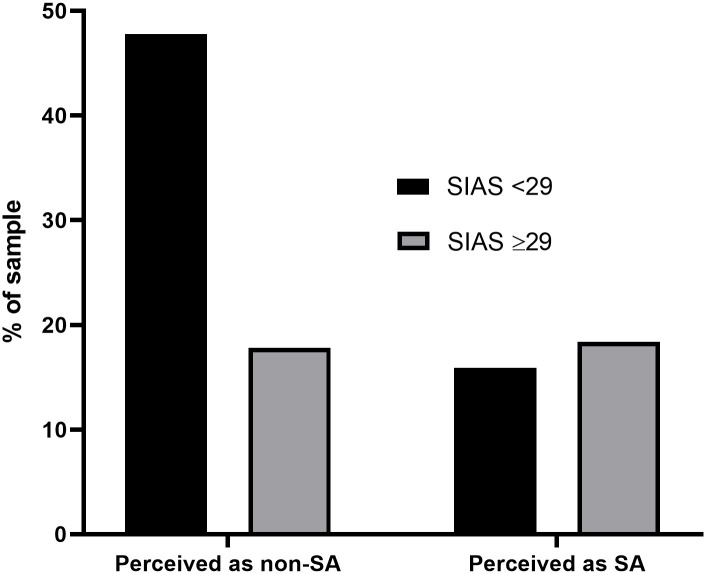
Social anxiety is a fast-growing phenomenon which is thought to disproportionately affect young people. In this study, we explore the prevalence of social anxiety around the world using a self-report survey of 6,825 individuals (male = 3,342, female = 3,428, other = 55), aged 16-29 years (M = 22.84, SD = 3.97), from seven countries selected for their cultural and economic diversity: Brazil, China, Indonesia, Russia, Thailand, US, and Vietnam. The respondents completed the Social Interaction Anxiety Scale (SIAS). The global prevalence of social anxiety was found to be significantly higher than previously reported, with more than 1 in 3 (36%) respondents meeting the threshold criteria for having Social Anxiety Disorder (SAD). Prevalence and severity of social anxiety symptoms did not differ between sexes but varied as a function of age, country, work status, level of education, and whether an individual lived in an urban or rural location. Additionally, 1 in 6 (18%) perceived themselves as not having social anxiety, yet still met or exceeded the threshold for SAD. The data indicate that social anxiety is a concern for young adults around the world, many of whom do not recognise the difficulties they may experience. A large number of young people may be experiencing substantial disruptions in functioning and well-being which may be ameliorable with appropriate education and intervention.
Conflict of interest statement
I have read the journal's policy and the authors of this manuscript have the following competing interests: Unilever funds the lead author's research fellowship at Dalhousie University's Resilience Research Centre, though in no way have they directed this research, its analysis or the reporting or results.
Figures
References
-
- National Collaborating Centre for Mental Health (UK). Social Anxiety Disorder: Recognition, assessment and treatment. Leicester, UK: British Psychological Society; 2013. Report No.: NICE Clinical Guidelines, No. 159. https://www.ncbi.nlm.nih.gov/books/NBK327674/ - PubMed
-
- American Psychiatric Association. Diagnostic and statistical manual of mental disorders. 5th ed Washington, DC: Author; 2013.
MeSH terms
LinkOut - more resources
Full Text Sources
Miscellaneous
