


Clinical, laboratory and radiological characteristics and outcomes of novel coronavirus (SARS-CoV-2) infection in humans: A systematic review and series of meta-analyses
- PMID: 32941548
- PMCID: PMC7498028
- DOI: 10.1371/journal.pone.0239235
Clinical, laboratory and radiological characteristics and outcomes of novel coronavirus (SARS-CoV-2) infection in humans: A systematic review and series of meta-analyses
Abstract
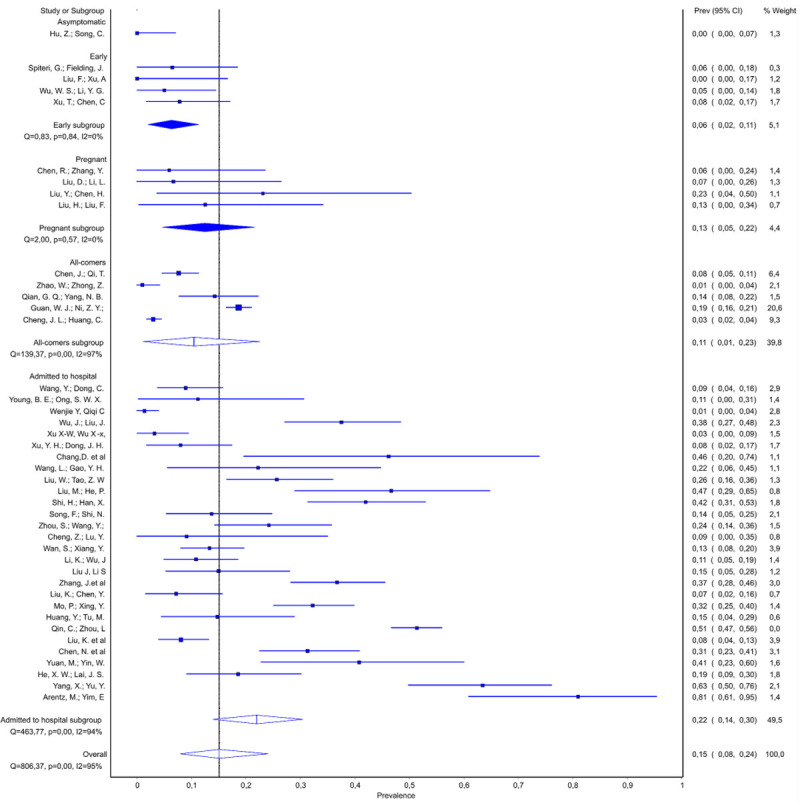
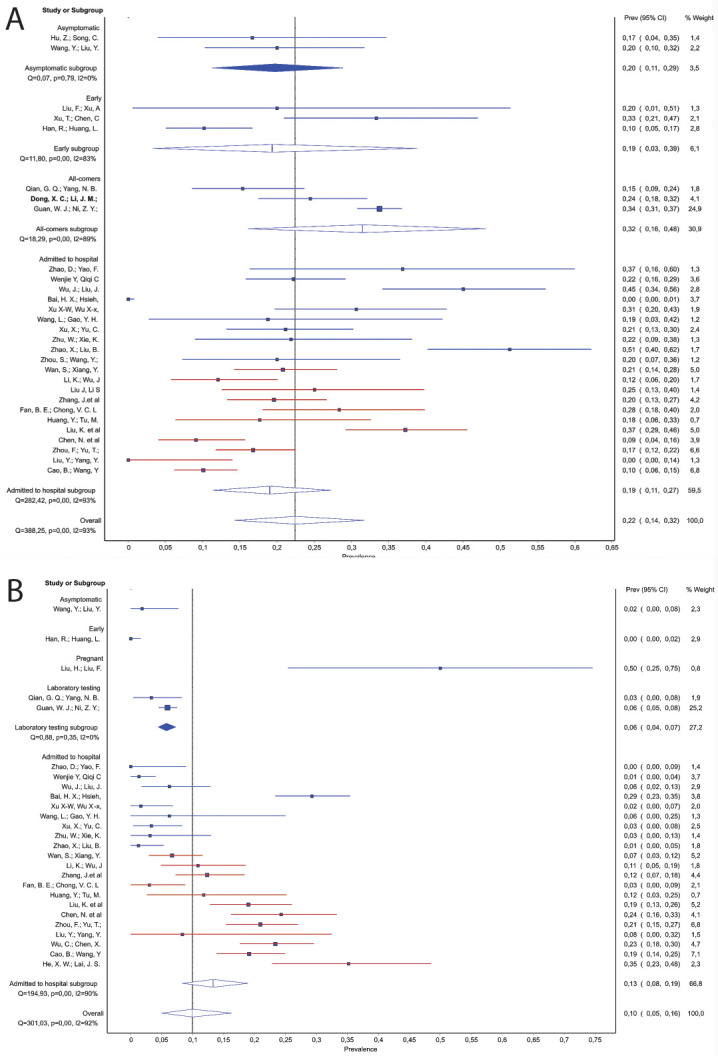
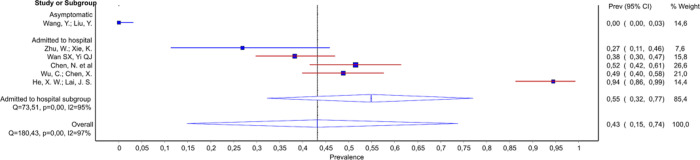
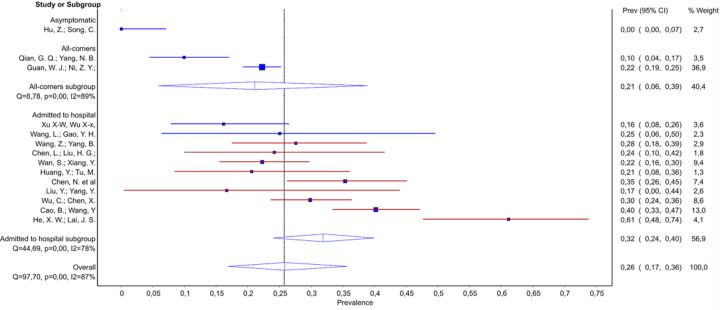
New evidence on the COVID-19 pandemic is being published daily. Ongoing high-quality assessment of this literature is therefore needed to enable clinical practice to be evidence-based. This review builds on a previous scoping review and aimed to identify associations between disease severity and various clinical, laboratory and radiological characteristics. We searched MEDLINE, CENTRAL, EMBASE, Scopus and LILACS for studies published between January 1, 2019 and March 22, 2020. Clinical studies including ≥10 patients with confirmed COVID-19 of any study design were eligible. Two investigators independently extracted data and assessed risk of bias. A quality effects model was used for the meta-analyses. Subgroup analysis and meta-regression identified sources of heterogeneity. For hospitalized patients, studies were ordered by overall disease severity of each population and this order was used as the modifier variable in meta-regression. Overall, 86 studies (n = 91,621) contributed data to the meta-analyses. Severe disease was strongly associated with fever, cough, dyspnea, pneumonia, any computed tomography findings, any ground glass opacity, lymphocytopenia, elevated C-reactive protein, elevated alanine aminotransferase, elevated aspartate aminotransferase, older age and male sex. These variables typically increased in prevalence by 30-73% from mild/early disease through to moderate/severe disease. Among hospitalized patients, 30-78% of heterogeneity was explained by severity of disease. Elevated white blood cell count was strongly associated with more severe disease among moderate/severe hospitalized patients. Elevated lymphocytes, low platelets, interleukin-6, erythrocyte sedimentation rate and D-dimers showed potential associations, while fatigue, gastrointestinal symptoms, consolidation and septal thickening showed non-linear association patterns. Headache and sore throat were associated with the presence of disease, but not with more severe disease. In COVID-19, more severe disease is strongly associated with several clinical, laboratory and radiological characteristics. Symptoms and other variables in early/mild disease appear non-specific and highly heterogeneous. Clinical Trial Registration: PROSPERO CRD42020170623.
Conflict of interest statement
We have read the journal's policy and the authors of this manuscript have the following potential competing interests: CH is employed by Swanscoe Communications Ltd, a medical writing company, and has previously provided medical writing support for medical and pharmaceutical projects, unrelated to the current work. CH has previously provided medical writing support for projects funded by Amgen, AstraZeneca, Novartis, Sobi and Takeda, unrelated to the current work. This does not alter our adherence to PLOS ONE policies on conflicts of interest. All other authors declare that no competing interests exist.


References
-
- World Health Organization (2020) Naming the coronavirus disease (COVID-19) and the virus that causes it.
Publication types
MeSH terms
Substances
LinkOut - more resources
Full Text Sources
Research Materials
Miscellaneous
