


Organophosphorus Flame Retardants: A Global Review of Indoor Contamination and Human Exposure in Europe and Epidemiological Evidence
- PMID: 32942622
- PMCID: PMC7558007
- DOI: 10.3390/ijerph17186713
Organophosphorus Flame Retardants: A Global Review of Indoor Contamination and Human Exposure in Europe and Epidemiological Evidence
Abstract
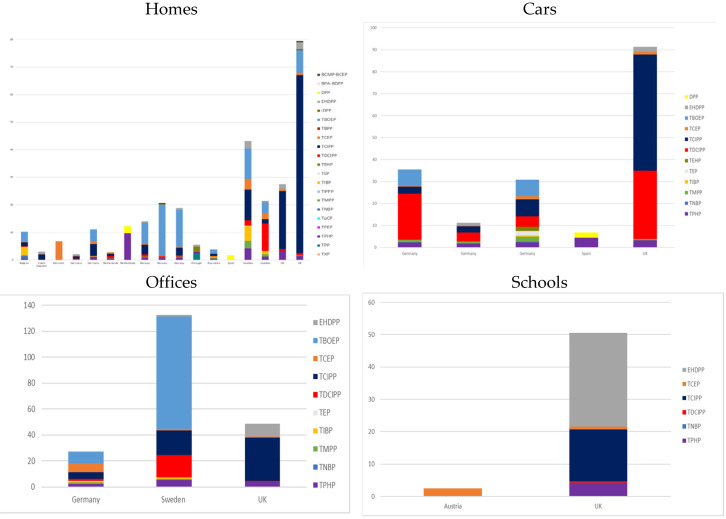
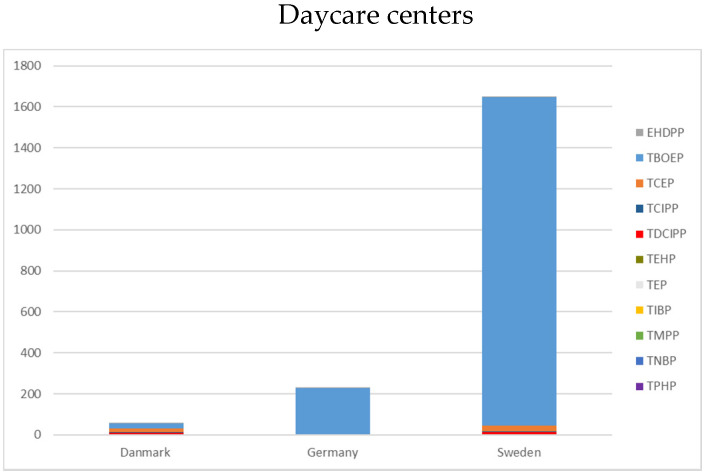
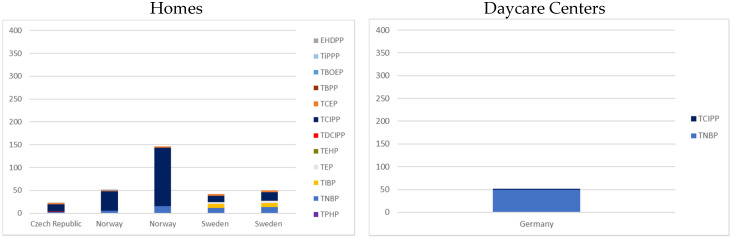
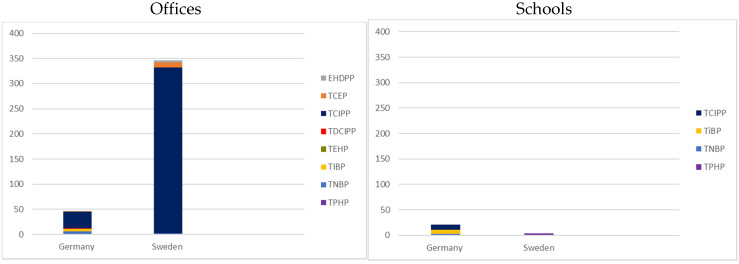
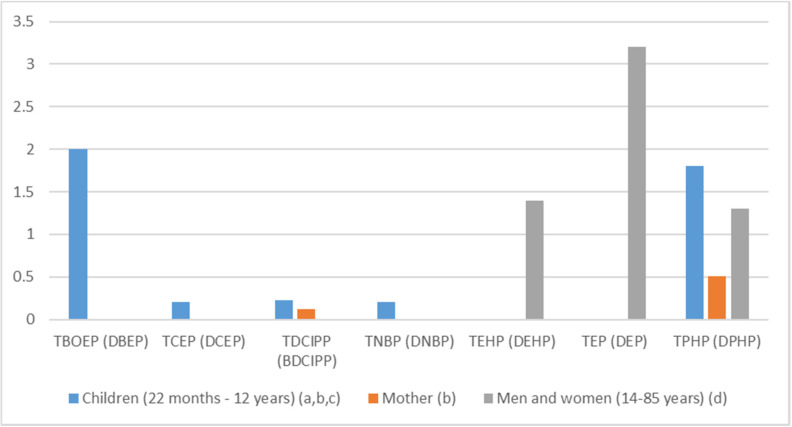
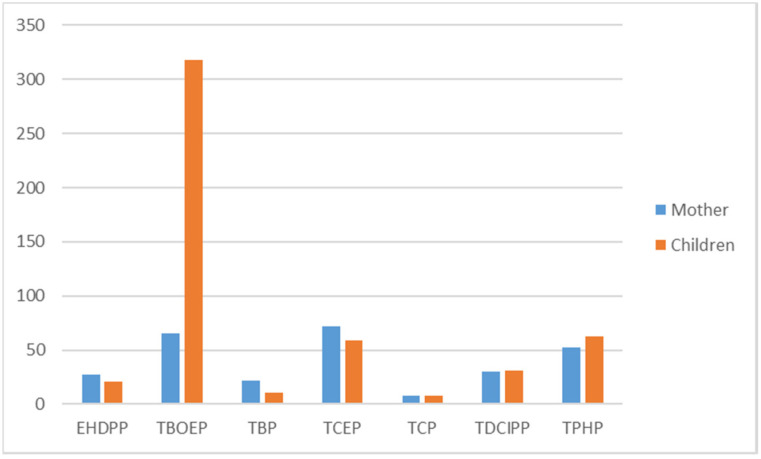
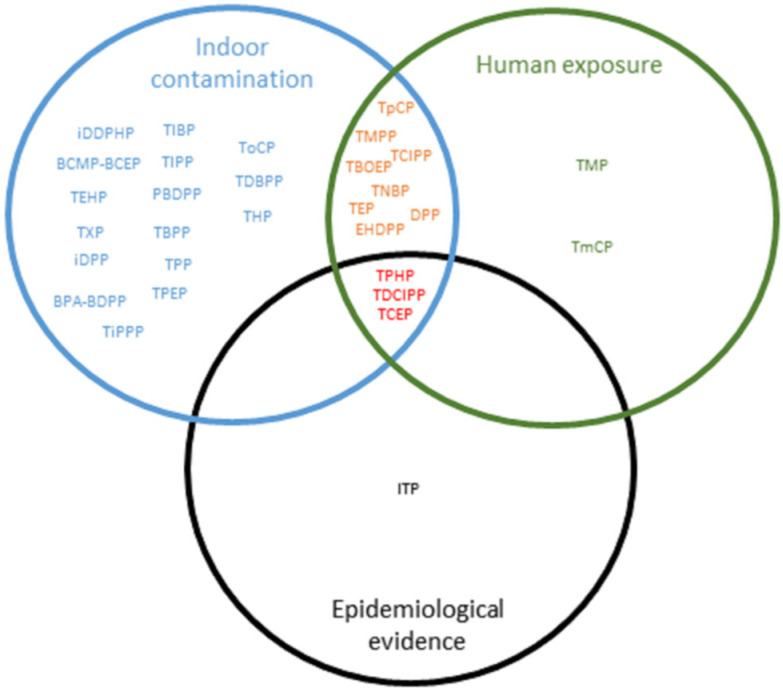
We aimed to identify high-priority organophosphorus flame retardants for action and research. We thus critically reviewed literature between 2000 and 2019 investigating organophosphorus flame retardants' presence indoors and human exposure in Europe, as well as epidemiological evidence of human effects. The most concentrated compounds indoors were tris(2-butoxyethyl)phosphate (TBOEP), tris(1-chloro-2-propyl)phosphate (TCIPP), tris(2,3-dichloropropyl)phosphate (TDCIPP). TBOEP and TCIPP were the most consistently detected compounds in humans' urine, hair or breast milk as well as tris (butyl) phosphate (TNBP) and tris (phenyl) phosphate (TPHP). Notably, epidemiological evidence concerned reprotoxicity, neurotoxicity, respiratory effects and eczema risk for TDCIPP, eczema increase for TBOEP, and neurodevelopmental outcomes for Isopropylated triarylphosphate isomers (ITPs). Given the ubiquitous presence indoors and the prevalence of exposure, the growing health concern seems justified. TDCIPP and TPHP seem to be of particular concern due to a high prevalence of exposure and epidemiological evidence. TBOEP and TNBP require epidemiological studies regarding outcomes other than respiratory or dermal ones.
Keywords: biomonitoring; chemical safety; environmental health; epidemiology; indoor air quality; organophosphate ester.
Conflict of interest statement
The funders had no role in the design of the study; in the collection, analyses, or interpretation of data; in the writing of the manuscript, or in the decision to publish the results.
Figures

References
-
- Kemmlein S., Hahn O., Jann O. Emissions of organophosphate and brominated flame retardants from selected consumer products and building materials. Atmos. Environ. 2003;37:5485–5493. doi: 10.1016/j.atmosenv.2003.09.025. - DOI
-
- European Flame Retardant Association Frequently Asked Questions on Flame Retardants. [(accessed on 10 July 2020)]; Available online: https://docplayer.net/11069706-Flame-retardants-frequently-asked-questio....
-
- Building Evidence for Health. [(accessed on 10 July 2020)]; Available online: https://buildingevidence.forhealth.org/wp-content/uploads/sites/2/2017/0....
-
- Blum A., Behl M., Birnbaum L.S., Diamond M.L., Phillips A., Singla V., Sipes N.S., Stapleton H.M., Venier M. Organophosphate Ester Flame Retardants: Are They a Regrettable Substitution for Polybrominated Diphenyl Ethers? Environ. Sci. Technol. Lett. 2019;6:638–649. doi: 10.1021/acs.estlett.9b00582. - DOI - PMC - PubMed
-
- European Commission Commission Regulation (EU) 2017/227 of 9 February 2017 Amending Annex XVII to Regulation (EC) No 1907/2006 of the European Parliament and of the Council Concerning the Registration, Evaluation, Authorisation and Restriction of Chemicals (REACH) as Regards Bis(Pentabromophenyl)Ether. [(accessed on 12 September 2020)]; Available online: http://data.europa.eu/eli/reg/2017/227/oj.
Publication types
MeSH terms
Substances
LinkOut - more resources
Full Text Sources
