


Type 1 Diabetes: Interferons and the Aftermath of Pancreatic Beta-Cell Enteroviral Infection
- PMID: 32942706
- PMCID: PMC7565444
- DOI: 10.3390/microorganisms8091419
Type 1 Diabetes: Interferons and the Aftermath of Pancreatic Beta-Cell Enteroviral Infection
Abstract
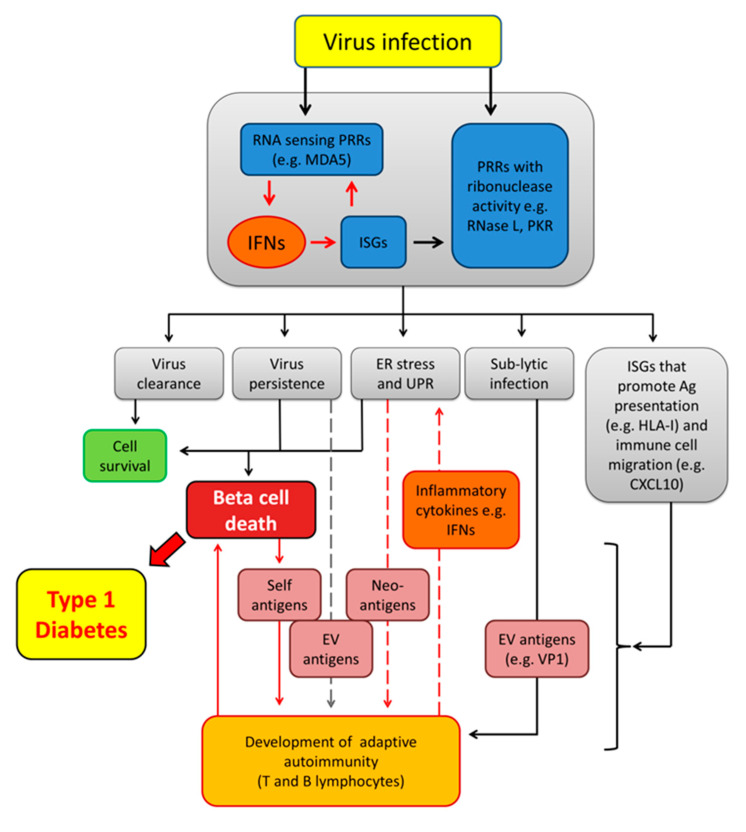
Enteroviruses (EVs) have long been implicated in the pathogenesis of type 1 diabetes (T1D), and accumulating evidence has associated virus-induced autoimmunity with the loss of pancreatic beta cells in T1D. Inflammatory cytokines including interferons (IFN) form a primary line of defence against viral infections, and their chronic elevation is a hallmark feature of many autoimmune diseases. IFNs play a key role in activating and regulating innate and adaptive immune responses, and to do so they modulate the expression of networks of genes and transcription factors known generically as IFN stimulated genes (ISGs). ISGs in turn modulate critical cellular processes ranging from cellular metabolism and growth regulation to endoplasmic reticulum (ER) stress and apoptosis. More recent studies have revealed that IFNs also modulate gene expression at an epigenetic as well as post-transcriptional and post-translational levels. As such, IFNs form a key link connecting the various genetic, environmental and immunological factors involved in the initiation and progression of T1D. Therefore, gaining an improved understanding of the mechanisms by which IFNs modulate beta cell function and survival is crucial in explaining the pathogenesis of virally-induced T1D. This should provide the means to prevent, decelerate or even reverse beta cell impairment.
Keywords: Endoplasmic Reticulum (ER) stress; Interferon Stimulated Genes (ISG); apoptosis; autoimmune disease; enterovirus; innate immunity.
Conflict of interest statement
The authors declare no conflict of interest.
Figures
References
-
- Anagandula M., Richardson S.J., Oberste M.S., Sioofy-Khojine A.B., Hyoty H., Morgan N.G., Korsgren O., Frisk G. Infection of human islets of Langerhans with two strains of Coxsackie B virus serotype 1: Assessment of virus replication, degree of cell death and induction of genes involved in the innate immunity pathway. J. Med. Virol. 2014;86:1402–1411. doi: 10.1002/jmv.23835. - DOI - PubMed
Publication types
Grants and funding
LinkOut - more resources
Full Text Sources
Research Materials
