Pediatric PK/PD Phase I Trial of Pexidartinib in Relapsed and Refractory Leukemias and Solid Tumors Including Neurofibromatosis Type I-Related Plexiform Neurofibromas
- PMID: 32943455
- PMCID: PMC7909006
- DOI: 10.1158/1078-0432.CCR-20-1696
Pediatric PK/PD Phase I Trial of Pexidartinib in Relapsed and Refractory Leukemias and Solid Tumors Including Neurofibromatosis Type I-Related Plexiform Neurofibromas
Abstract
Purpose: Simultaneously targeting the tumor and tumor microenvironment may hold promise in treating children with refractory solid tumors. Pexidartinib, an oral inhibitor of tyrosine kinases including colony stimulating factor 1 receptor (CSF-1R), KIT, and FLT3, is FDA approved in adults with tenosynovial giant cell tumor. A phase I trial was conducted in pediatric and young adult patients with refractory leukemias or solid tumors including neurofibromatosis type 1-related plexiform neurofibromas.
Patients and methods: A rolling six design with dose levels (DL) of 400 mg/m2, 600 mg/m2, and 800 mg/m2 once daily for 28-day cycles (C) was used. Response was assessed at regular intervals. Pharmacokinetics and population pharmacokinetics were analyzed during C1.
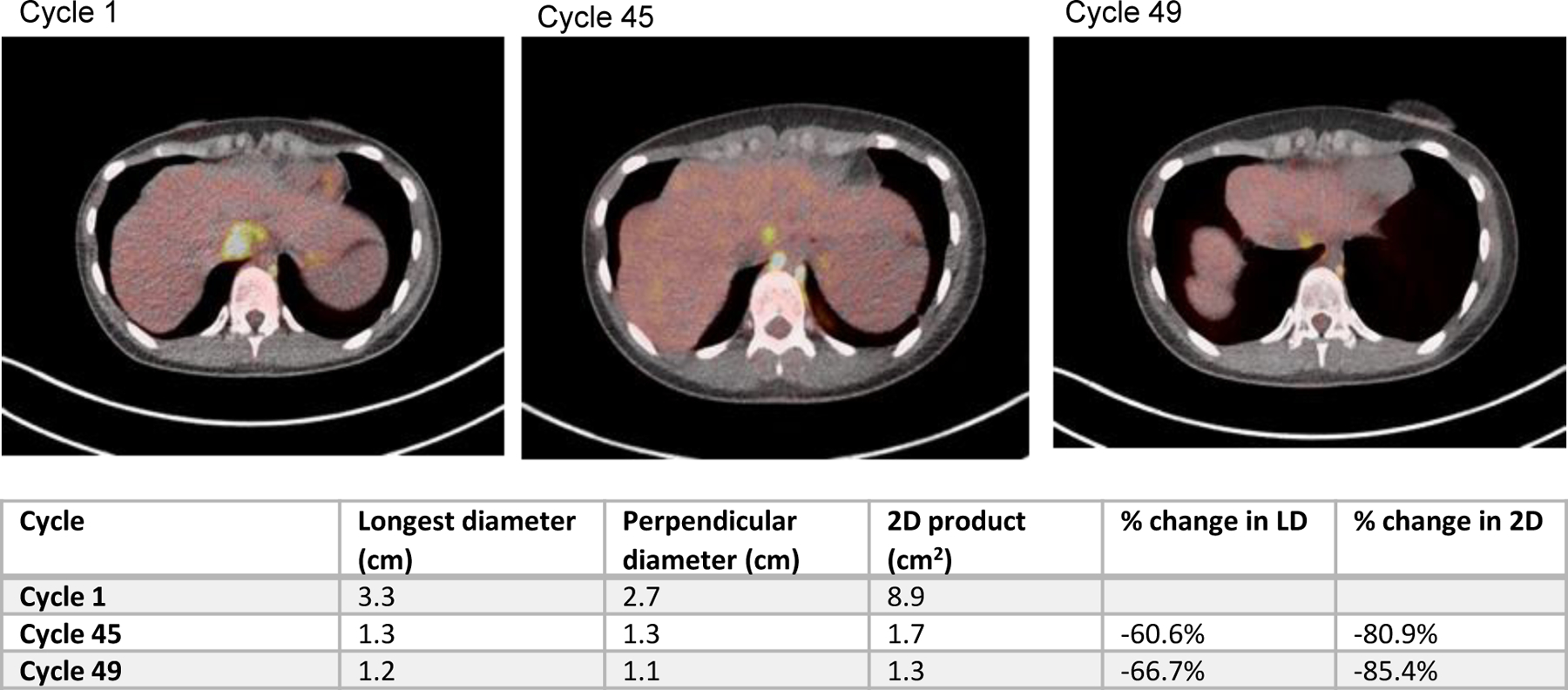
Results: Twelve patients (4 per DL, 9 evaluable) enrolled on the dose-escalation phase and 4 patients enrolled in the expansion cohort: median (lower, upper quartile) age 16 (14, 16.5) years. No dose-limiting toxicities were observed. Pharmacokinetics appeared linear over three DLs. Pharmacokinetic modeling and simulation determined a weight-based recommended phase II dose (RP2D). Two patients had stable disease and 1 patient with peritoneal mesothelioma (C49+) had a sustained partial response (67% RECIST reduction). Pharmacodynamic markers included a rise in plasma macrophage CSF (MCSF) levels and a decrease in absolute monocyte count.
Conclusions: Pexidartinib in pediatric patients was well tolerated at all DL tested, achieved target inhibition, and resulted in a weight-based RPD2 dose.
©2020 American Association for Cancer Research.
Conflict of interest statement
Conflict of Interest Disclosures:
The authors have no conflicts of interest to disclose
Figures

References
-
- Tap WD, Wainberg ZA, Anthony SP, et al. : Structure-Guided Blockade of CSF1R Kinase in Tenosynovial Giant-Cell Tumor. N Engl J Med 373:428–37, 2015 - PubMed
Publication types
MeSH terms
Substances
Grants and funding
LinkOut - more resources
Full Text Sources
Medical
Research Materials
Miscellaneous