. 2020 Sep 17;11(1):4683.
doi: 10.1038/s41467-020-18503-8.

Fully organic compliant dry electrodes self-adhesive to skin for long-term motion-robust epidermal biopotential monitoring

Affiliations

Fully organic compliant dry electrodes self-adhesive to skin for long-term motion-robust epidermal biopotential monitoring

Lei Zhang et al. Nat Commun. .

Abstract

Wearable dry electrodes are needed for long-term biopotential recordings but are limited by their imperfect compliance with the skin, especially during body movements and sweat secretions, resulting in high interfacial impedance and motion artifacts. Herein, we report an intrinsically conductive polymer dry electrode with excellent self-adhesiveness, stretchability, and conductivity. It shows much lower skin-contact impedance and noise in static and dynamic measurement than the current dry electrodes and standard gel electrodes, enabling to acquire high-quality electrocardiogram (ECG), electromyogram (EMG) and electroencephalogram (EEG) signals in various conditions such as dry and wet skin and during body movement. Hence, this dry electrode can be used for long-term healthcare monitoring in complex daily conditions. We further investigated the capabilities of this electrode in a clinical setting and realized its ability to detect the arrhythmia features of atrial fibrillation accurately, and quantify muscle activity during deep tendon reflex testing and contraction against resistance.


Conflict of interest statement

The authors declare no competing interests.

Figures
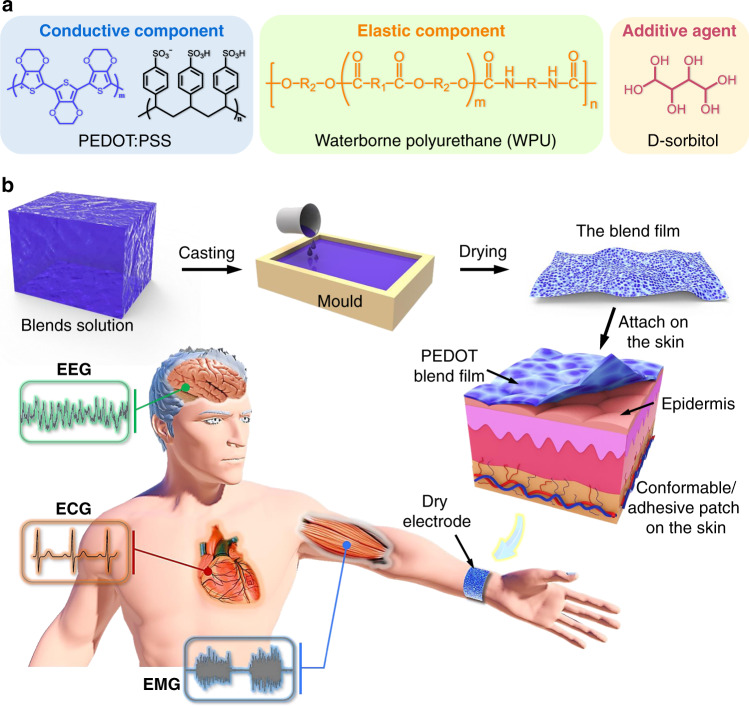
Fig. 1
Fig. 1. Schematic illustration for the preparation of PEDOT:PSS/WPU/D-sorbitol films.
a Chemical structures of PEDOT:PSS, WPU, and D-sorbitol. b Fabrication of the PWS blend films: Firstly, mixing of PEDOT:PSS, WPU and D-sorbitol; Secondly, drop-casting the blend solution in a mold; Thirdly, drying at 60 °C. The resulting blend film can be used as an adhesive electrode on the skin for epidermal biopotential detections such as electrocardiography (ECG), electromyography (EMG), and electroencephalography (EEG).
Fig. 2
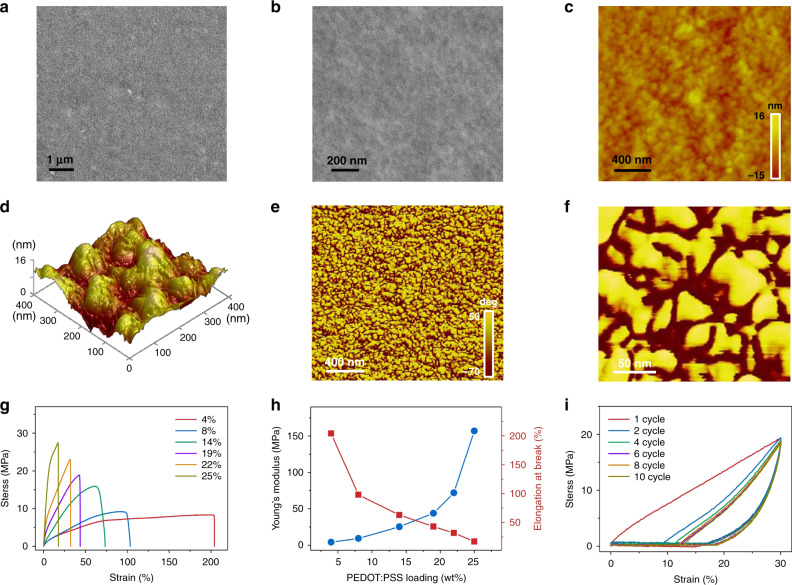
Fig. 2. Characterization and mechanical properties of PWS films.
a, b SEM image of a PWS film. c Topology AFM images of a PWS film. d 3D topographical AFM image. e, f Phase AFM images of a PWS film. g Stress-strain curves of PWS films with different PEDOT:PSS loadings. h Young’s modulus and elongation at break of PWS films with respect to the PEDOT:PSS loading. i Tensile stress–strain curves of PWS films in the first 10 cycles. The tensile speed was 50 mm/min. The PEDOT:PSS loading was 19 wt% for af, and i.
Fig. 3
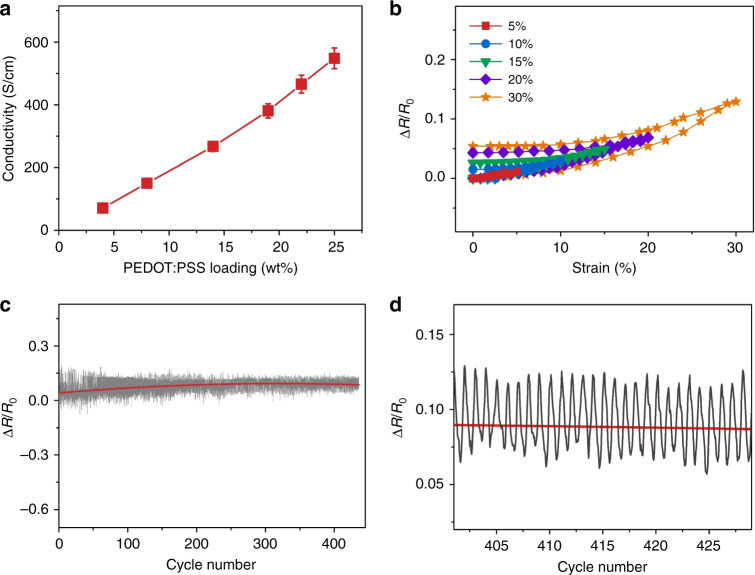
Fig. 3. Electrical properties of PWS films.
a Dependence of the conductivity of the PWS films on the PEDOT:PSS loading. b Variations of the resistance of PWS films with the strains. The PWS films were stretched to different maximum strains of 5, 10, 15, 20, and 30% in different cycles. Resistance variation of a PWS film in c repeated stretching/releasing cycles and d in the 400th–430th stretching/releasing cycles. The PWS film was stretched to the strain of 30% in each cycle, and the tensile speed was 50 mm/min. The PEDOT:PSS loading was 19 wt% for b, c, and d.
Fig. 4
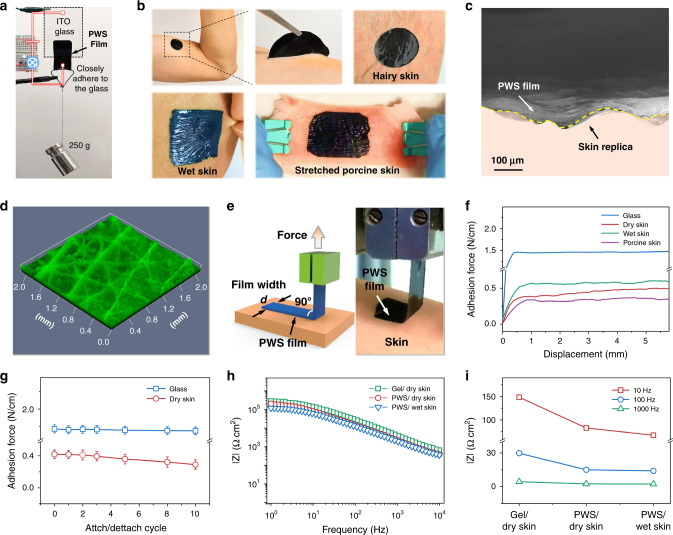
Fig. 4. Conformability and adhesiveness of PWS films.
a A PWS film bearing 250 g of weight attach tightly on the ITO glass, enabling the LED light in the conducting circuit. b The adhesiveness of a PWS film on various skins including the smooth skin, hairy rough skin, wet deformable skin, and stretched porcine skin. c Cross-section SEM image of a PWS film conformed on a rough skin replica. d 3D optical image of a PWS film replicated the skin wrinkles. e The setup for the measurement of the interfacial adhesion on the skin or glass by the standard 90-degree peel test (ASTM D2861). f Interfacial adhesion forces of PWS films on glass and various skins. g Adhesion forces of PWS films on glass and dry skin within ten repetitions of attaching/detaching. h, i Impedance spectra of commercial Ag/AgCl gel electrode and PWS dry electrode on dry and wet skin, and the corresponding impedances at 10, 100, and 1000 Hz.
Fig. 5
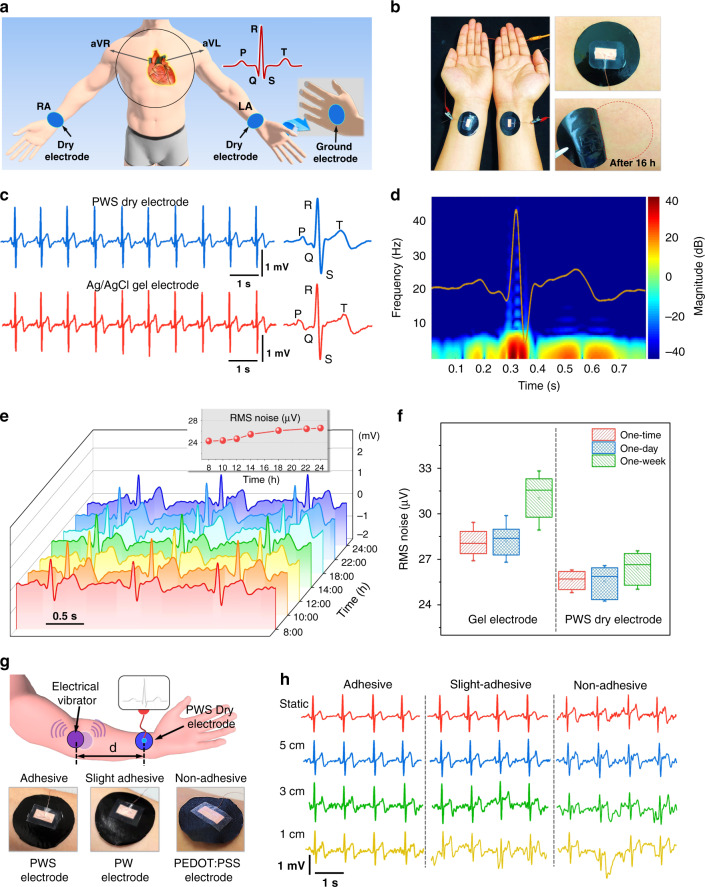
Fig. 5. ECG detection using PWS dry electrodes.
a Schematic illustration of the ECG detection. b Photos of PWS dry electrodes. They could attach firmly to the skin of a wrist and then peeled off after 16 h. No skin irritation or visible redness was observed after the use of 16 h. c Comparison of ECG signals using a PWS dry electrode and commercial Ag/AgCl gel electrode. d Spectrogram of the ECG pulse recorded using the PWS dry electrode. e Long-term monitoring of ECG using PWS dry electrodes for 1 day and their RMS noise. f The RMS noise picked by Ag/AgCl gel electrode and PWS dry electrode during ECG recording in one-time, 1-day, and 1 week. g, h ECG testing on the skin under motion induced by an electrical vibrator. The distance of the vibrator from the electrode was 5, 3, or 1 cm.
Fig. 6
Fig. 6. EMG measurements using PWS dry electrodes.
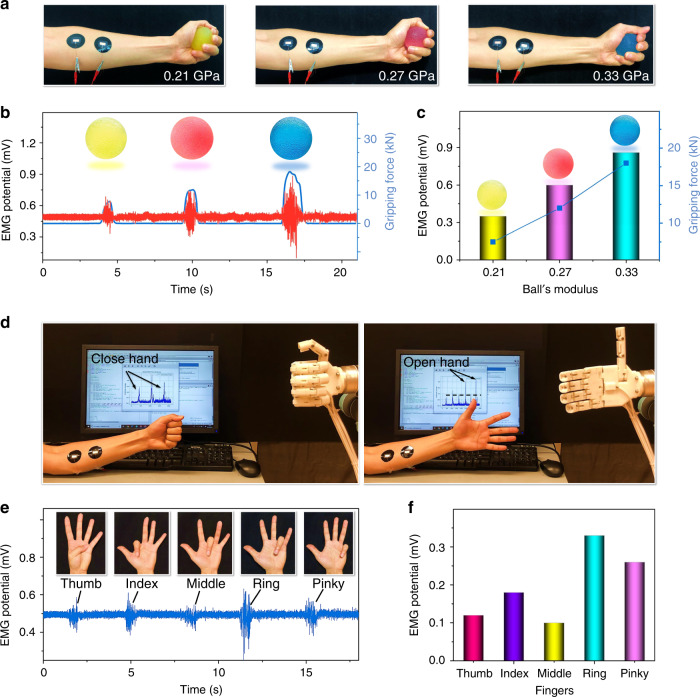
a Monitoring of the EMG signal on a forearm gripping a ball. The three balls had different moduli of 0.21, 0.27, and 0.33 GPa, respectively. b EMG signals while gripping the balls. c Variations of the EMG signal amplitude and the gripping force with the modulus of the balls. d Using EMG signals to control the motion of a robotic hand, including opening and closing. e EMG signals produced by the flexion/extension of different fingers. f EMG signal intensities produced by the five fingers.
Fig. 7
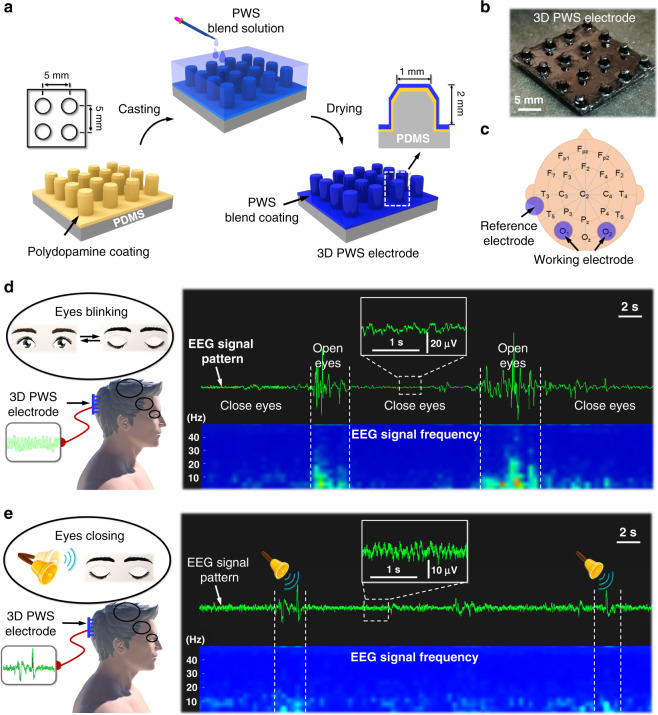
Fig. 7. 3D PWS electrodes with micro-pillar structures for EEG detection.
a Fabrication of the 3D PWS electrodes. b Photo of a 3D PWS electrode. c Positioning two 3D PWS electrodes at the O1 and O2 sites of the rear head and a PWS film electrode behind the ear as the reference electrode. d EEG signals collected during eye-blinking. e EEG signals respond to auditory stimuli.
Fig. 8
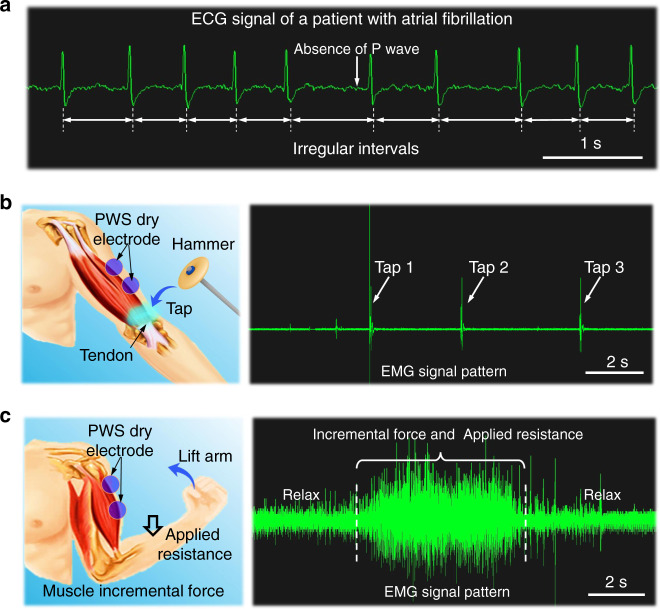
Fig. 8. Clinical evaluation of PWS electrodes for ECG and EMG.
a ECG signals showing the variability in the R-R intervals and absent P-waves, which are diagnostic of atrial fibrillation. b EMG signals showing a brief and significant increase in muscle potentials detected using the PSW dry electrode by tapping on the biceps tendon. c EMG signals showing incremental potentials during contraction of the biceps muscles, which decreased following relaxation.

References

    1. Hong YJ, Jeong H, Cho KW, Lu N, Kim DH. Wearable and implantable devices for cardiovascular healthcare: from monitoring to therapy based on flexible and stretchable electronics. Adv. Funct. Mater. 2019;29:1808247.
    1. Roberts T, et al. Flexible inkjet-printed multielectrode arrays for neuromuscular cartography. Adv. Healthc. Mater. 2016;5:1462–1470. - PubMed
    1. Opie NL, et al. Focal stimulation of the sheep motor cortex with a chronically implanted minimally invasive electrode array mounted on an endovascular stent. Nat. Biomed. Eng. 2018;2:907–914. - PubMed
    1. Choi S, Lee H, Ghaffari R, Hyeon T, Kim DH. Recent advances in flexible and stretchable bio-electronic devices integrated with nanomaterials. Adv. Mater. 2016;28:4203–4218. - PubMed
    1. Sekitani T, et al. Ultraflexible organic amplifier with biocompatible gel electrodes. Nat. Commun. 2016;7:11425. - PMC - PubMed

Publication types