


Joint sparing management of hallux rigidus: Cartiva SCI vs cheilectomy a comparative review
- PMID: 32943827
- PMCID: PMC7479491
- DOI: 10.1016/j.jor.2020.07.004
Joint sparing management of hallux rigidus: Cartiva SCI vs cheilectomy a comparative review
Abstract
Background: Hallux rigidus, or first metatarsophalangeal joing arthritis, is a very common condition which causes pain and loss of motion in the joing which can be debilitating.
Methods: Patient reported outcome measures were utilised to study the difference in day to day functionality between two common surgical management options for hallux rigidus.
Results: 55 Cartiva and 23 Cheilectomy patients were included in this study. The Manchester Oxford Foot and Ankle Questionnaire revealed statistically significant improvements in the cheilectomy patients when compared to Cartiva SCI.Foot and Ankle Ability Measure found no statistical difference was found between the two surgical treatments.
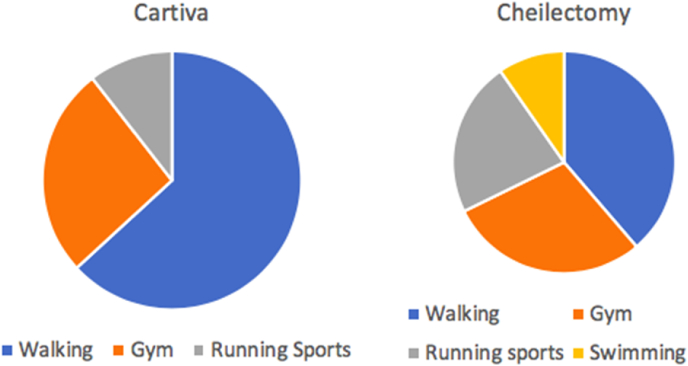
Conclusion: Cheilectomy offers good post-operative functional and sporting outcomes after surgery for the management of hallux rigidus at 5 years.
Keywords: Cartiva; Cheilectomy; Hallux rigidus; PROMs.
© 2020 Professor P K Surendran Memorial Education Foundation. Published by Elsevier B.V. All rights reserved.
Conflict of interest statement
None of the authors have conflicts of interest to disclose.
Figures


References
-
- Gould N., Schneider W., Ashikaga T. Epidemiological survey of foot problems in the continental United States: 1978-1979. Foot Ankle. 1980;1(1):8–10. - PubMed
-
- Jacob H.A. Forces acting in the forefoot during normal gait— an estimate. Clin Biomech. 2001;16(9):783–792. - PubMed
-
- Beertema W., Draijer W.F., van Os J.J., Pilot P. A retrospective analysis of surgical treatment in patients with symptomatic hallux rigidus: long-term follow-up. J Foot Ankle Surg. 2006 Jul-Aug;45(4):244–251. - PubMed
-
- Hamid K.S., Parekh S.G. Clinical presentation and management of hallux rigidus. Foot Ankle Clin. 2015 Sep;20(3):391–399. - PubMed
-
- DeFrino P.F., Brodsky J.W., Pollo F.E., Crenshaw S.J., Beischer A.D. First metatarsophalangeal arthrodesis: a clinical, pedobarographic and gait analysis studyFoot Ankle. Bar Int. 2002;23:496–502. - PubMed
LinkOut - more resources
Full Text Sources
