


Age, Period and Cohort Analysis of Rates of Emergency Department Visits Due to Pneumonia in Taiwan, 1998-2012
- PMID: 32943963
- PMCID: PMC7481296
- DOI: 10.2147/RMHP.S255031
Age, Period and Cohort Analysis of Rates of Emergency Department Visits Due to Pneumonia in Taiwan, 1998-2012
Abstract
Background: Emergency room (ER) physicians need to face clinically suspected pneumonia patients in the front line of medical care and must do to give major medical interventions if patients show severity in pneumonia.
Methods: The data of pneumonia-related ER visit rates were categorized based on the International Classification of Disease (ICD) Codes (480-486) between 1998 and 2012. We use an age-period-cohort (APC) model to separate the pneumonia-related ER visit rates to identify the effects of age, time period, and cohort for a total of 1,813,588 patients.
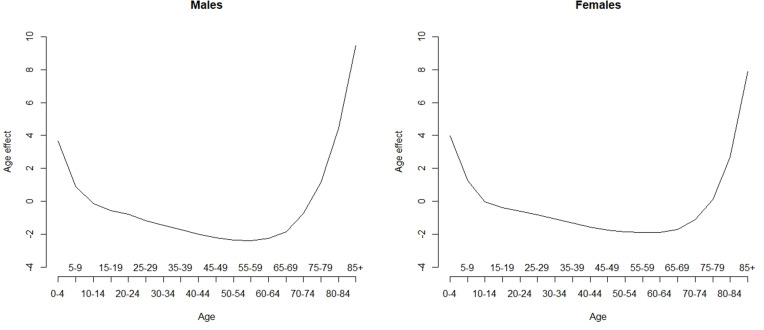
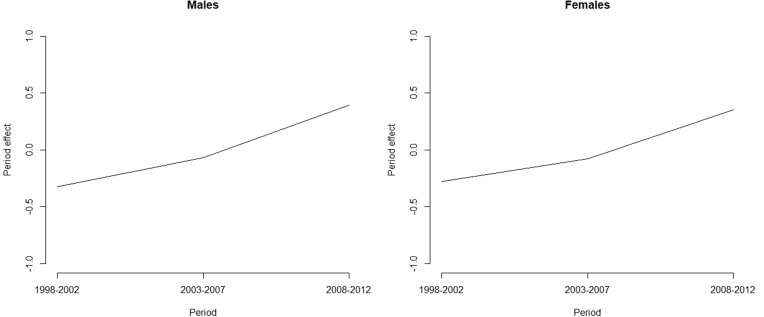
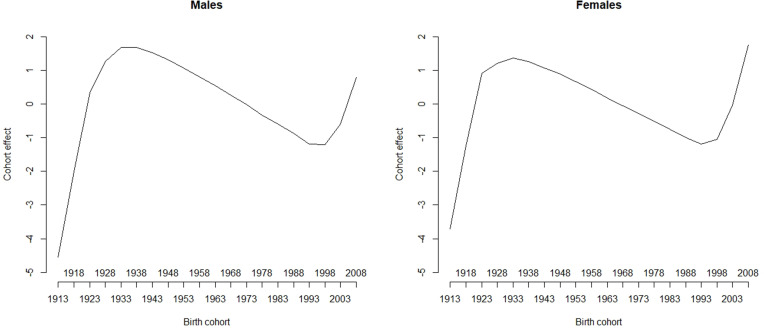
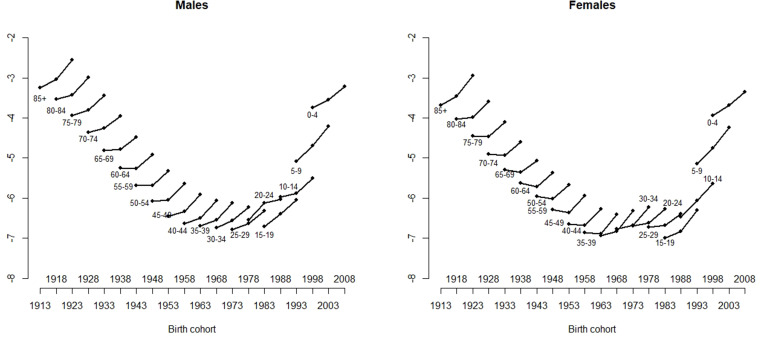
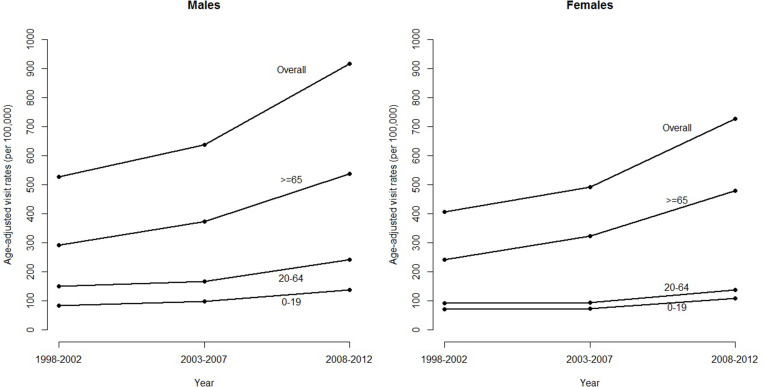
Results: The age effect showed high risk for pediatric and elder populations. There is a significant increasing period effect, which increased from 1998 to 2012. The cohort effect tended to show an oscillation from 1913 to 1988 and the reverse in a recent cohort. Furthermore, the visit rate of pneumonia showed an increase from 1998 to 2012 for both genders.
Conclusion: Age is a risk factor for pneumonia-related ER visits, especially for children and adolescents and older patients. Period and cohort effects were also found to increase the pneumonia visit rates. An APC model used to provide an advance clue for trend of pneumonia-related ER visit rates diversified.
Keywords: age-adjusted emergency rooms visit rates; age-period-cohort; pneumonia.
© 2020 Chen et al.
Conflict of interest statement
The authors report no competing interests with any organization with a direct or indirect financial interest in the subject matter discussed in the manuscript.
Figures
References
LinkOut - more resources
Full Text Sources
