Clinical utility of Dual Energy Computed Tomography in gout: current concepts and applications
- PMID: 32945286
- PMCID: PMC7944678
- DOI: 10.23750/abm.v91i8-S.9942
Clinical utility of Dual Energy Computed Tomography in gout: current concepts and applications
Abstract
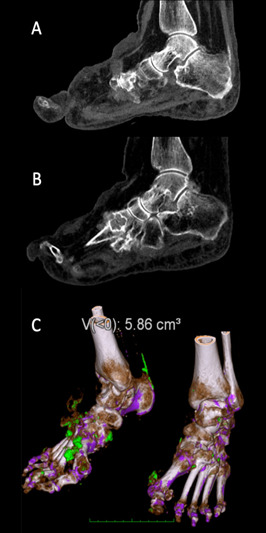
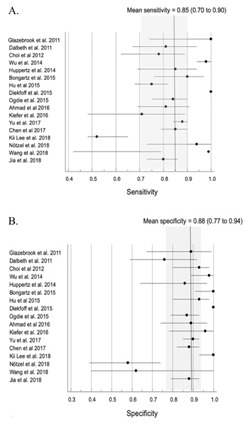
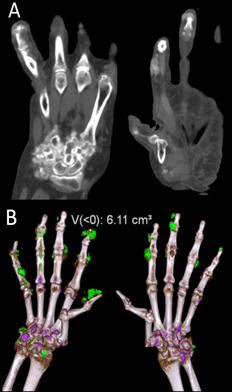
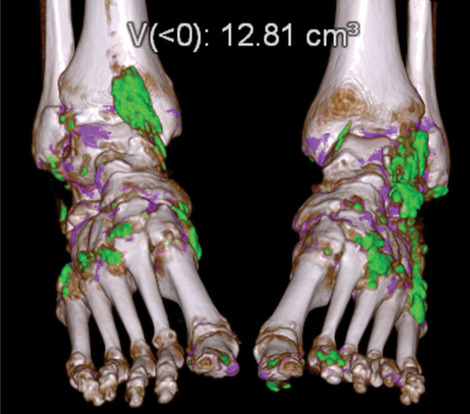
Gout is the most common inflammatory arthritis and is increasing in prevalence and incidence in many countries worldwide. Dual Energy Computed Tomography (DECT) has a high diagnostic accuracy in established gout, but its diagnostic sensitivity is low in subjects with recent-onset gout. A meta-analysis of 17 studies showed a pooled sensitivity and specificity of 0.85 and 0.88, respectively. DECT is a useful diagnostic tool for patients with contraindications for joint aspiration or for those who refuse joint aspiration. This article aims to give an up to date review and summary of existing literature on the role and accuracy of DECT in the imaging of gout.
Conflict of interest statement
Authors declare that they have no commercial associations (e.g. consultancies, stock ownership, equity interest, patent/licensing arrangement etc.) that might pose a conflict of interest in connection with the submitted article.
Figures
References
-
- Dalbeth N, Merriman TR, Stamp LK. Gout. Lancet (London, England) 2016;388:2039–2052. - PubMed
-
- Trifiro G, Morabito P, Cavagna L, et al. Epidemiology of gout and hyperuricaemia in Italy during the years 2005-2009: a nationwide population-based study. Annals of the rheumatic diseases. 2013;72:694–700. - PubMed
-
- Scire CA, Manara M, Cimmino MA, et al. Gout impacts on function and health-related quality of life beyond associated risk factors and medical conditions: results from the KING observational study of the Italian Society for Rheumatology (SIR) Arthritis research & therapy. 2013;15:R101. - PMC - PubMed
-
- McQueen FM, Chhana A, Dalbeth N. Mechanisms of joint damage in gout: evidence from cellular and imaging studies. Nature reviews. Rheumatology. 2012;8:173–81. - PubMed