


Pioneer of prostate cancer: past, present and the future of FOXA1
- PMID: 32946061
- PMCID: PMC7815845
- DOI: 10.1007/s13238-020-00786-8
Pioneer of prostate cancer: past, present and the future of FOXA1
Abstract
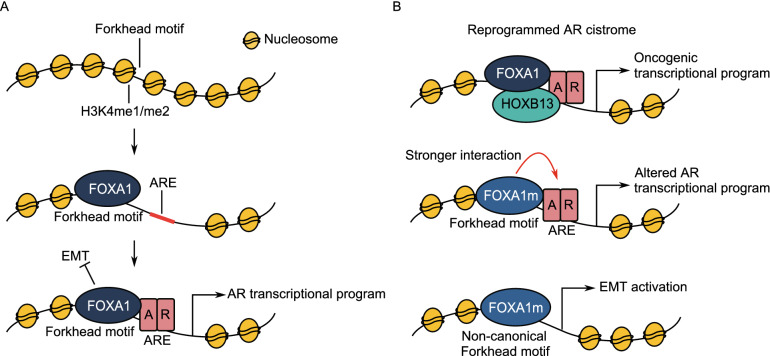
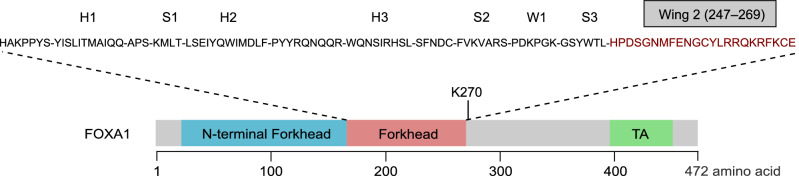
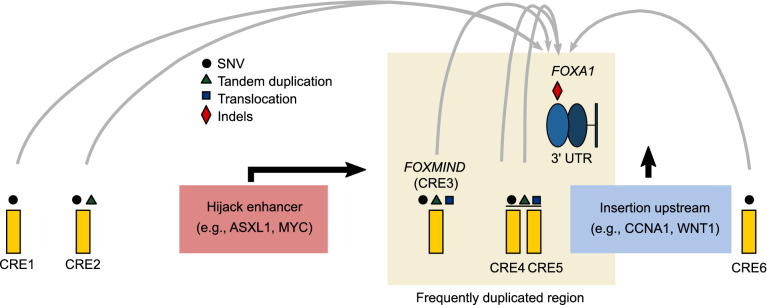
Prostate cancer is the most commonly diagnosed non-cutaneous cancers in North American men. While androgen deprivation has remained as the cornerstone of prostate cancer treatment, resistance ensues leading to lethal disease. Forkhead box A1 (FOXA1) encodes a pioneer factor that induces open chromatin conformation to allow the binding of other transcription factors. Through direct interactions with the Androgen Receptor (AR), FOXA1 helps to shape AR signaling that drives the growth and survival of normal prostate and prostate cancer cells. FOXA1 also possesses an AR-independent role of regulating epithelial-to-mesenchymal transition (EMT). In prostate cancer, mutations converge onto the coding sequence and cis-regulatory elements (CREs) of FOXA1, leading to functional alterations. In addition, FOXA1 activity in prostate cancer can be modulated post-translationally through various mechanisms such as LSD1-mediated protein demethylation. In this review, we describe the latest discoveries related to the function and regulation of FOXA1 in prostate cancer, pointing to their relevance to guide future clinical interventions.
Keywords: FOXA1; epigenetics; pioneer factor; prostate cancer; transcription factor.
Figures
References
-
- American Cancer Society (2019) Cancer Facts & Figures 2019
-
- Arrowsmith CH, Bountra C, Fish PV, Lee K, Schapira M. Epigenetic protein families: a new frontier for drug discovery. Nat Rev Drug Discov. 2012;11:384–400. - PubMed
Publication types
MeSH terms
Substances
Grants and funding
LinkOut - more resources
Full Text Sources
Medical
Research Materials
Miscellaneous
