


Peri-implantation cytokine profile differs between singleton and twin IVF pregnancies
- PMID: 32946159
- PMCID: PMC8221280
- DOI: 10.1111/aji.13348
Peri-implantation cytokine profile differs between singleton and twin IVF pregnancies
Abstract
Problem: It is unknown whether maternal cytokine production differs between twin and singleton gestations in the implantation phase. A difference in maternal serum cytokine concentrations in twins would imply a dose-response to the invading embryos, as opposed to a general immune reaction.
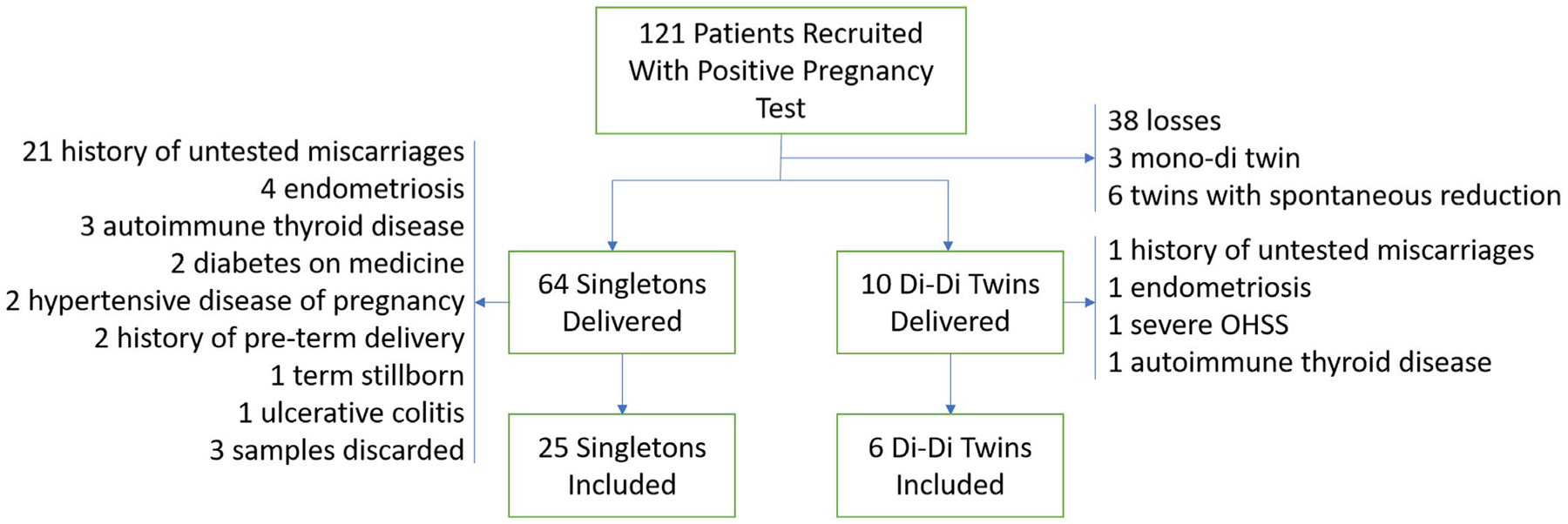
Method of study: A prospective longitudinal cohort of women aged 18-45 at an academic fertility center undergoing in vitro fertilization and embryo transfer (IVF-ET) underwent routine collection of serial serum samples starting 9 days after ET and then approximately every 48 hours thereafter. Cryopreserved aliquots of these samples were assayed for interleukin-10 (IL-10), tumor necrosis factor-alpha (TNF-α), and C-X-C motif chemokine ligand 10 (CXCL10) using the SimplePlex immunoassay platform. Pregnancies were followed until delivery. Serial measures of serum concentrations of IL-10, CXCL10, and TNF-α in singleton or di-di twin pregnancies from 9 to 15 days after IVF-ET were compared.
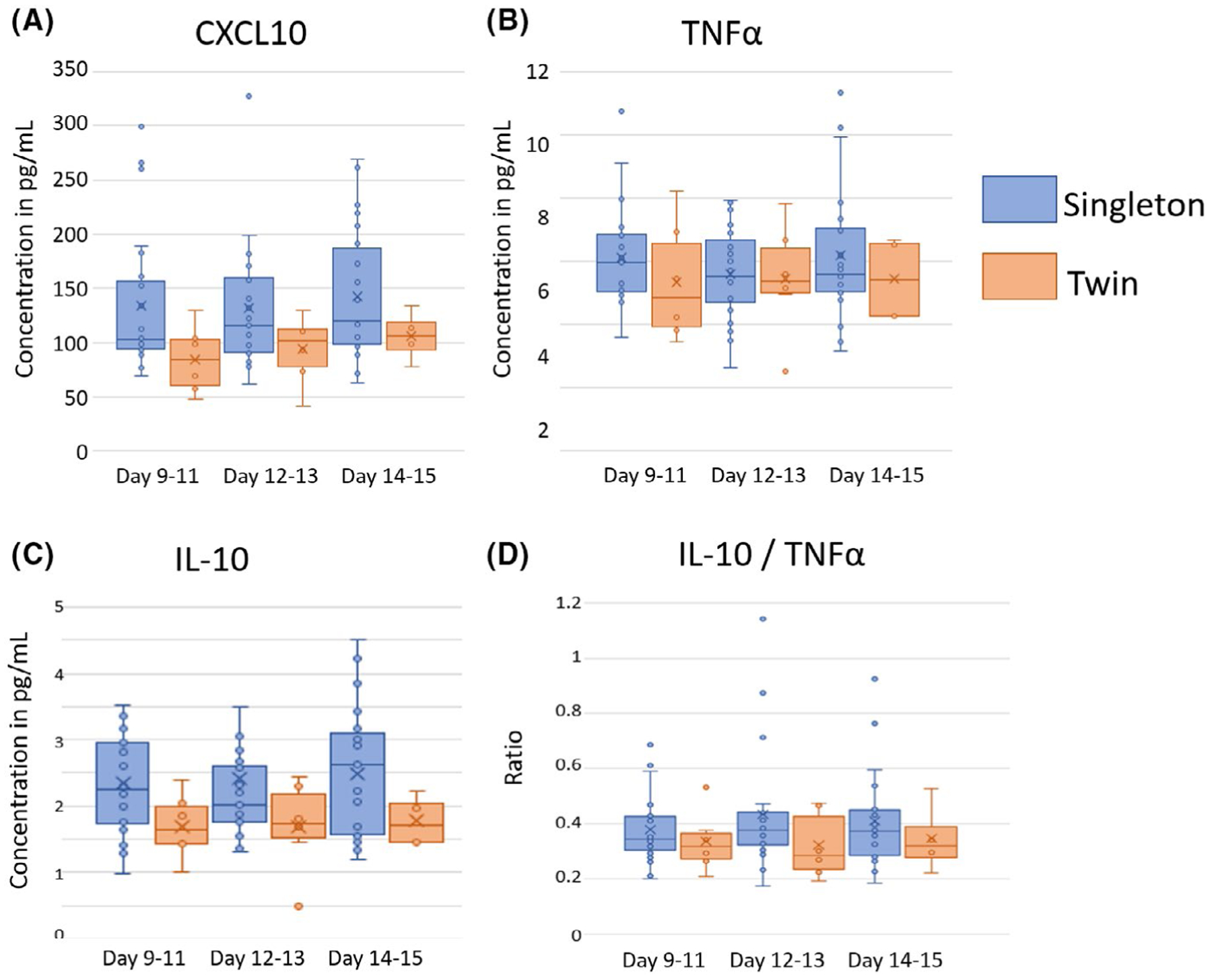
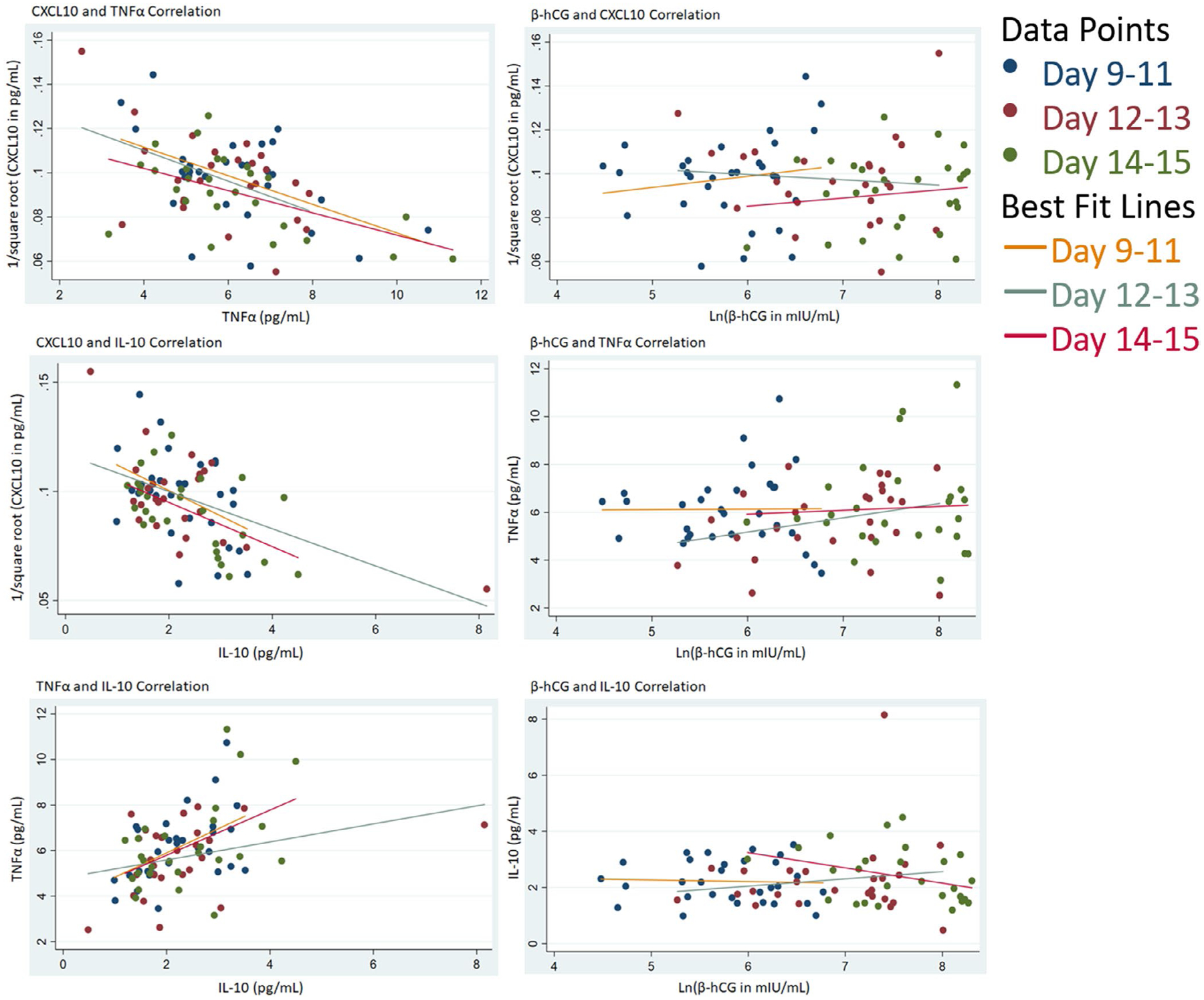
Results: Maternal serum levels of CXCL10 are significantly lower in women with di-di twin pregnancies in early implantation compared to those with singleton gestation (day 9-11, P = .02). Serum levels of TNF-α and IL-10 were comparable at all studied time points (P > .05).
Conclusion: Maternal serum levels of CXCL10 are significantly lower in the earliest implantation phase in di-di twins compared to singleton conceptions. Given the known anti-angiogenic role of CXCL10, we hypothesize that lower CXCL10 levels in twin implantations allow an environment that is conducive for the greater vascularization required for the establishment of dual placentation in di-di twins.
Keywords: CXCL10; SimplePlex; cytokines; implantation; twins.
© 2020 John Wiley & Sons A/S. Published by John Wiley & Sons Ltd.
Figures
References
-
- Sela HY, Goldman-Wohl DS, Haimov-Kochman R, et al. Human trophectoderm apposition is regulated by interferon ɣ-induced protein 10 (IP-10) during early implantation. Placenta. 2013;34:222–230. - PubMed
-
- Boomsma CM, Kavelaars A, Eijkemans MJ, et al. Endometrial secretion analysis identifies a cytokine profile predictive of pregnancy. Hum Reprod. 2009;24:1427–1435. - PubMed
Publication types
MeSH terms
Substances
Grants and funding
LinkOut - more resources
Full Text Sources
Medical
Research Materials
