Review
. 2020 Sep 16;21(18):6794.
doi: 10.3390/ijms21186794.

New Era of Diacylglycerol Kinase, Phosphatidic Acid and Phosphatidic Acid-Binding Protein

Affiliations
Review

New Era of Diacylglycerol Kinase, Phosphatidic Acid and Phosphatidic Acid-Binding Protein

Fumio Sakane et al. Int J Mol Sci. .

Abstract

Diacylglycerol kinase (DGK) phosphorylates diacylglycerol (DG) to generate phosphatidic acid (PA). Mammalian DGK consists of ten isozymes (α-κ) and governs a wide range of physiological and pathological events, including immune responses, neuronal networking, bipolar disorder, obsessive-compulsive disorder, fragile X syndrome, cancer, and type 2 diabetes. DG and PA comprise diverse molecular species that have different acyl chains at the sn-1 and sn-2 positions. Because the DGK activity is essential for phosphatidylinositol turnover, which exclusively produces 1-stearoyl-2-arachidonoyl-DG, it has been generally thought that all DGK isozymes utilize the DG species derived from the turnover. However, it was recently revealed that DGK isozymes, except for DGKε, phosphorylate diverse DG species, which are not derived from phosphatidylinositol turnover. In addition, various PA-binding proteins (PABPs), which have different selectivities for PA species, were recently found. These results suggest that DGK-PA-PABP axes can potentially construct a large and complex signaling network and play physiologically and pathologically important roles in addition to DGK-dependent attenuation of DG-DG-binding protein axes. For example, 1-stearoyl-2-docosahexaenoyl-PA produced by DGKδ interacts with and activates Praja-1, the E3 ubiquitin ligase acting on the serotonin transporter, which is a target of drugs for obsessive-compulsive and major depressive disorders, in the brain. This article reviews recent research progress on PA species produced by DGK isozymes, the selective binding of PABPs to PA species and a phosphatidylinositol turnover-independent DG supply pathway.

Keywords: diacylglycerol kinase; docosahexaenoic acid; fatty acid; lipid sensor; phosphatidic acid; phosphatidic acid-binding protein; phosphatidylinositol turnover.


Conflict of interest statement

The authors declare no conflict of interest.

Figures
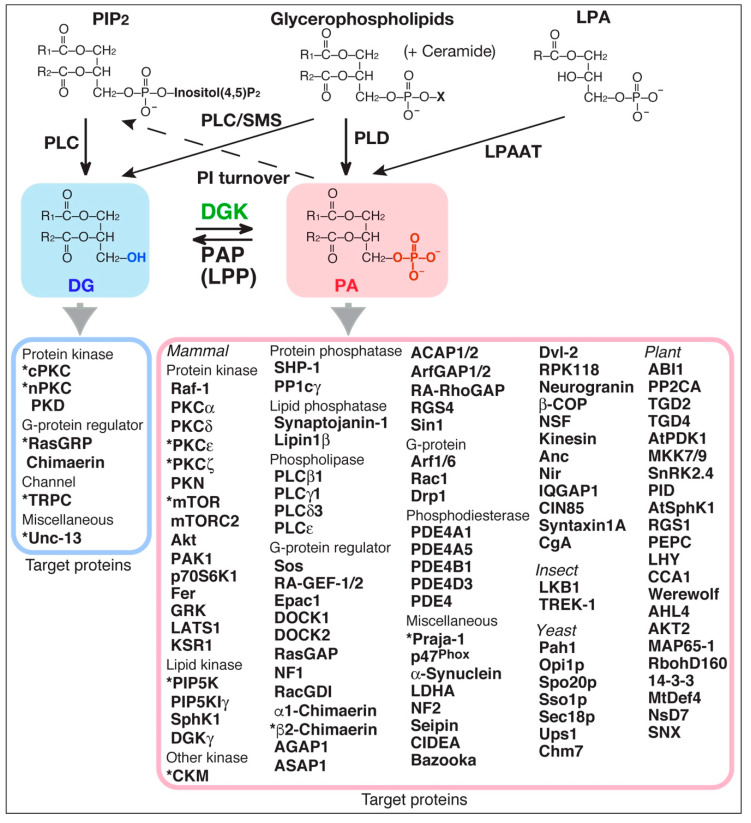
Figure 1
Figure 1
Target proteins of substrate (DG) and reaction product (PA) of DGK. Asterisks indicate target proteins that have been strongly suggested to be regulated by DGK isoforms through consumption of DG or production of PA. PAP, PA phosphatase; LPP, lipid phosphate phosphatase; PC, phosphatidylcholine; PI, phosphatidylinositol; PIP2, PI 4,5-bisphosphate; PLC, phospholipase C; PLD, phospholipase D; cPKC, conventional protein kinase C (PKCα, β and γ); nPKC, novel PKC (PKC δ, ε, η and θ); PKD, protein kinase D; Unc-13, uncoordinated-13; RasGRP, Ras guanyl nucleotide-releasing protein; TRPC, transient receptor potential channel; chimaerin (RacGAP); Raf-1/C-Raf, rapidly accelerated fibrosarcoma (serine/threonine protein kinase); PKCζ (atypical PKC (aPKC)); PKN (aPKC); mTOR, mammalian target of rapamycin (serine/threonine protein kinase); mTORC2, mTOR complex 2; Akt/protein kinase B; PAK1, p21-activated kinase 1; p70S6K1/S6K1, ribosomal protein S6 kinase β-1; Fer (tyrosine protein kinase); GRK, G protein-coupled receptor kinase; LATS1, large tumor suppressor kinase 1; KSR1, kinase suppressor of Ras 1 (serine/threonine protein kinase/scaffold protein); PIP5K, PI-4-phosphate 5-kinase; SphK1, sphingosine kinase 1; CKM, creatine kinase-muscle type; SHP-1, Src homology 2 domain-containing protein-tyrosine phosphatase 1; PP1c, protein phosphatase-1 catalytic subunit; synaptopjanin-1 (PI(4,5)P2-5-phosphatase); lipin1β (PAP); Sos, son of sevenless (Ras guanyl nucleotide exchange factor (GEF)); RA-GEF-1/2/PDZ-GEF (Rap1GEF); Epac1 (RapGEF); DOCK, dedicator of cytokinesis (RacGEF); RasGAP, Ras GTPase-activating protein; NF1, neurofibromatosis type-1 (RasGAP); RacGDI, Rac guanosine dissociation inhibitor; AGAP (ADP-ribosylation factor (Arf) 1 GAP); ASAP1 (Arf1GAP); ACAP1/2 (Arf6GAP1/2); RA-RhoGAP, Rap-activated RhoGAP; RGS, regulator of G-protein signaling protein; Sin1, SAPK-interacting protein 1 (suppressor of Ras signaling); Arf, ADP-ribosylation factor; Rac1, Ras-related C3 botulinum toxin substrate 1 (Rho family, small GTP binding protein); Drp1, dynamin-related protein 1 (dynamin superfamily GTPase); PDE, cAMP phosphodiesterase; Praja-1 (E3 ubiquitin ligase acting on serotonin transporter); p47phox (component of NADPH oxidase); α-synuclein (associated with Parkinson’s disease); NF2 (Hippo upstream component); seipin (role in lipid droplet formation); CIDEA, cell-death-induced DFF45-like effector A (lipid droplet protein); Bazooka/Par-3 (cell polarity regulator); Dvl-2, dishevelled homolog (mediator of the Wnt signaling pathway); RPK118 (SphK1-binding protein); Neurogranin (calmodulin-binding protein); β-COP (coatmer protein); NSF, N-ethylmaleimide-sensitive factor (ATPase associated with diverse cellular activity (AAA)); Kinesin (motor protein); Anc, adenine nucleotide carrier protein; Nir (PI-transfer protein); IQGAP1, IQ motif-containing guanosine triphosphatase-activating protein 1 (scaffold protein); CIN85, Cbl-interacting protein of 85 kDa (adaptor/scaffold protein); syntaxin1A (soluble NSF attachment protein receptor (SNARE) protein); CgA, chromogranin A (a representative constituent of the core aggregate within secretory granules); LKB1, liver kinase B1 (serine/threonine protein kinase); TREK-1, TWIK-related K+ channel type 1 (potassium channel); Pah1 (PAP); Opi1p (transcriptional repressor); Spo20p (SNARE protein); Sso1p (SNARE protein); Sec18p/NSF (AAA); Ups1 (mitochondrial fusion protein in the inner membrane); Chm7 (part of an ESCRT-III-like complex); ABI1, ABA-insensitive 1 (protein phosphatase); PP2CA, protein phosphatase 2CA; TGD, trigalactosyldiacylglycerol (chloroplast lipid transport protein); AtPDK1 (Arabidopsis thaliana 3-phosphoinositide-dependent protein kinase-1); MKK7/9 (mitogen-activated protein kinase kinase 7/9); SnRK2.4, sucrose nonfermenting-1-related protein kinase 2.4; PID, protein kinase PINOID (regulator of auxin signaling); AtSphK1, Arabidopsis thaliana sphingosine kinase 1; PEPC, phosphoenolpyruvate carboxylase; LHY (late elongated hypocotyl, transcription factor involved in the circadian clock); CCA1 (circadian clock associated 1, transcription factor involved in the circadian clock); Werewolf (MYB transcription factor); AHL4, AT-hook motif nuclear localized protein 4 (transcription factor to regulate triacylglycerol degradation for seeding establishment); AKT2, potassium channel; MAP65-1, microtubule-associated protein 65-1; RbohD160, respiratory burst oxidase homolog D 160; 14-3-3 protein (member of a family of regulatory molecules); MtDef4, Medicago truncatula defensin 4; NsD7, Nicotiana suaveolens defensin 7; SNX, sorting nexin (suppressing vascular degradation).
Figure 2
Figure 2
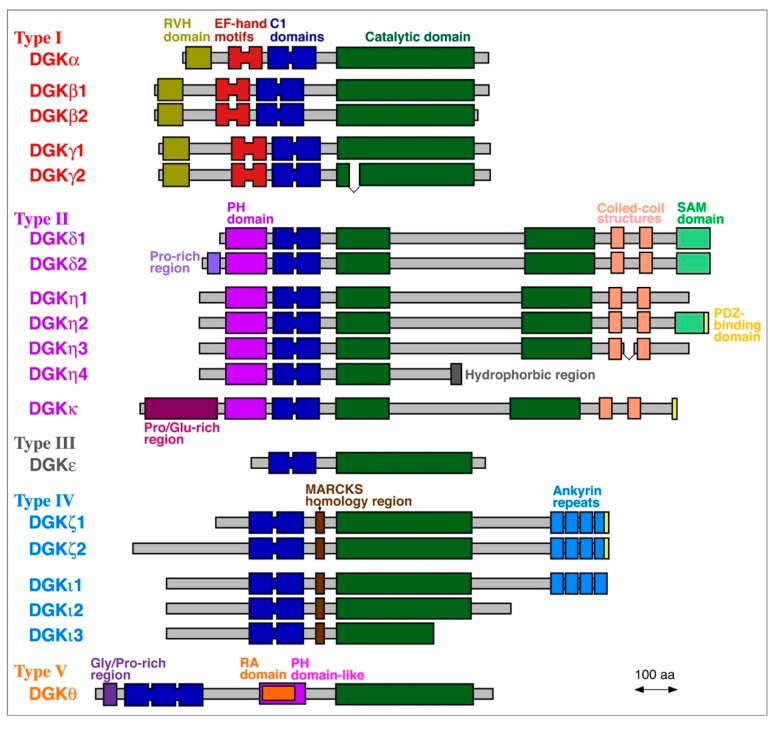
Mammalian DGK family proteins. Alternative splice variants are also shown. MARCKS, myristoylated alanine-rich C-kinase substrate; PDZ, postsynaptic density 95, discs large, zonula occludens-1; PH: pleckstrin homology; RA, Ras-associated; RVH, recoverin homology; SAM, sterile α-motif.
Figure 3
Figure 3
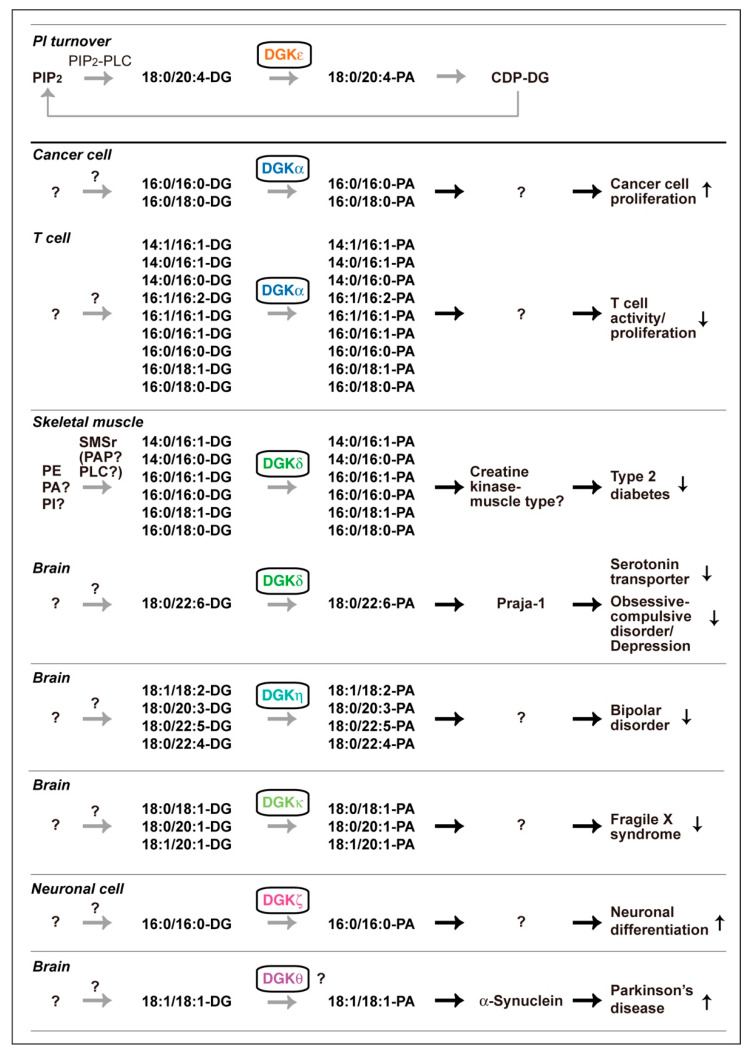
Various DGK isozyme-dependent DG species phosphorylation pathways that are independent of PI turnover. PIP2, phosphatidylinositol 4,5-bisphosphate; CDP-DG, cytidine diphosphate diacylglycerol; SMSr, sphingomyelin synthase-related proteins; PAP, PA phosphatase. PA molecular species produced by DGKβ, DGKγ and DGKι have not been determined.
Figure 4
Figure 4
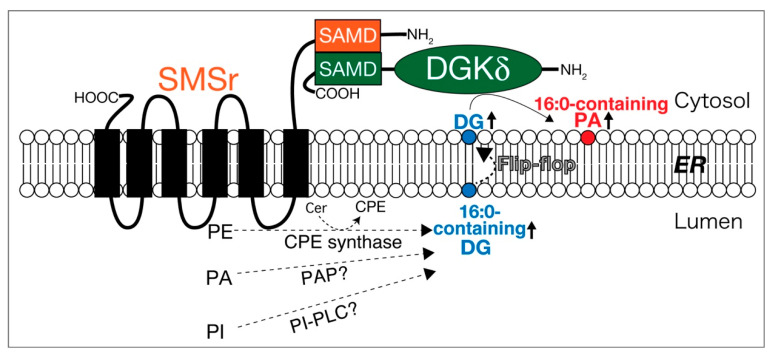
SMSr interacts with DGKδ and supplies DG. SAMD, SAM domain; Cer, ceramide; CPE, ceramide phosphoethanolamine; ER, endoplasmic reticulum.

References

    1. Goto K., Hozumi Y., Kondo H. Diacylglycerol, phosphatidic acid, and the converting enzyme, diacylglycerol kinase, in the nucleus. Biochim. Biophys. Acta. 2006;1761:535–541. doi: 10.1016/j.bbalip.2006.04.001. - DOI - PubMed
    1. Merida I., Avila-Flores A., Merino E. Diacylglycerol kinases: At the hub of cell signalling. Biochem. J. 2008;409:1–18. doi: 10.1042/BJ20071040. - DOI - PubMed
    1. Sakane F., Imai S., Kai M., Yasuda S., Kanoh H. Diacylglycerol kinases: Why so many of them? Biochim. Biophys. Acta. 2007;1771:793–806. doi: 10.1016/j.bbalip.2007.04.006. - DOI - PubMed
    1. Sakane F., Mizuno S., Takahashi D., Sakai H. Where do substrates of diacylglycerol kinases come from? Diacylglycerol kinases utilize diacylglycerol species supplied from phosphatidylinositol turnover-independent pathways. Adv. Biol. Regul. 2018;67:101–108. doi: 10.1016/j.jbior.2017.09.003. - DOI - PubMed
    1. Topham M.K., Epand R.M. Mammalian diacylglycerol kinases: Molecular interactions and biological functions of selected isoforms. Biochim. Biophys. Acta. 2009;1790:416–424. doi: 10.1016/j.bbagen.2009.01.010. - DOI - PMC - PubMed

LinkOut - more resources