


Prediction of early recurrence of hepatocellular carcinoma after resection using digital pathology images assessed by machine learning
- PMID: 32948835
- PMCID: PMC7817520
- DOI: 10.1038/s41379-020-00671-z
Prediction of early recurrence of hepatocellular carcinoma after resection using digital pathology images assessed by machine learning
Abstract
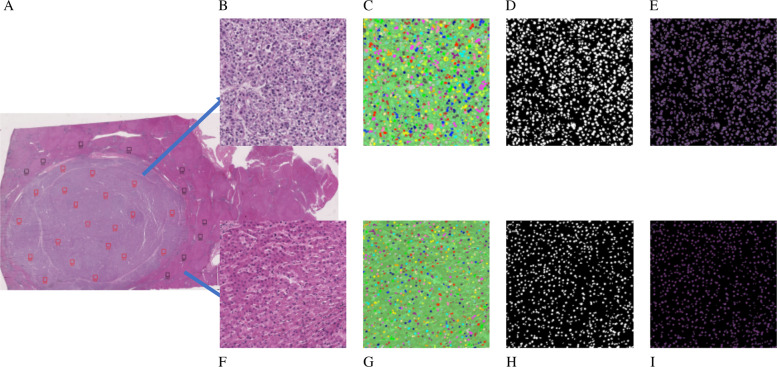
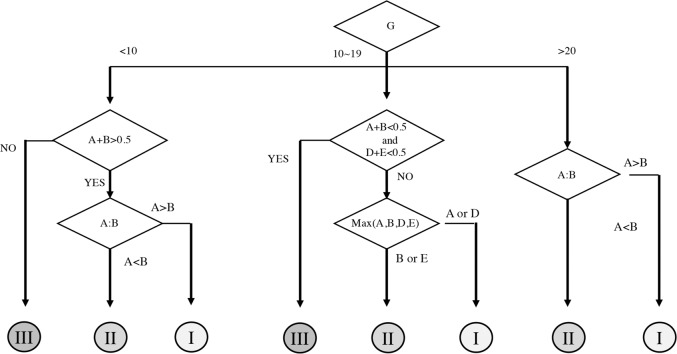
Hepatocellular carcinoma (HCC) is a representative primary liver cancer caused by long-term and repetitive liver injury. Surgical resection is generally selected as the radical cure treatment. Because the early recurrence of HCC after resection is associated with low overall survival, the prediction of recurrence after resection is clinically important. However, the pathological characteristics of the early recurrence of HCC have not yet been elucidated. We attempted to predict the early recurrence of HCC after resection based on digital pathologic images of hematoxylin and eosin-stained specimens and machine learning applying a support vector machine (SVM). The 158 HCC patients meeting the Milan criteria who underwent surgical resection were included in this study. The patients were categorized into three groups: Group I, patients with HCC recurrence within 1 year after resection (16 for training and 23 for test); Group II, patients with HCC recurrence between 1 and 2 years after resection (22 and 28); and Group III, patients with no HCC recurrence within 4 years after resection (31 and 38). The SVM-based prediction method separated the three groups with 89.9% (80/89) accuracy. Prediction of Groups I was consistent for all cases, while Group II was predicted to be Group III in one case, and Group III was predicted to be Group II in 8 cases. The use of digital pathology and machine learning could be used for highly accurate prediction of HCC recurrence after surgical resection, especially that for early recurrence. Currently, in most cases after HCC resection, regular blood tests and diagnostic imaging are used for follow-up observation; however, the use of digital pathology coupled with machine learning offers potential as a method for objective postoprative follow-up observation.
Conflict of interest statement
The authors declare that they have no conflict of interest.
Figures
References
MeSH terms
LinkOut - more resources
Full Text Sources
Medical
