


Unique roles of rare variants in the genetics of complex diseases in humans
- PMID: 32948841
- PMCID: PMC7728599
- DOI: 10.1038/s10038-020-00845-2
Unique roles of rare variants in the genetics of complex diseases in humans
Abstract
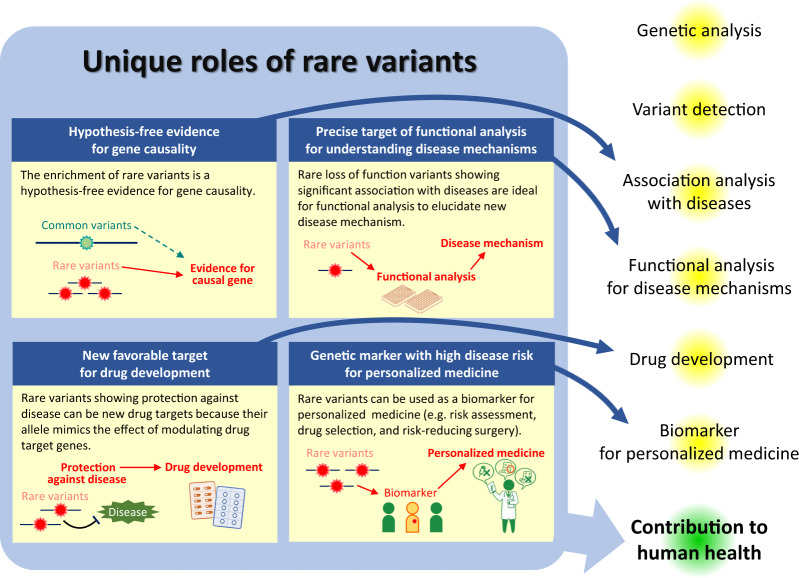
Genome-wide association studies have identified >10,000 genetic variants associated with various phenotypes and diseases. Although the majority are common variants, rare variants with >0.1% of minor allele frequency have been investigated by imputation and using disease-specific custom SNP arrays. Rare variants sequencing analysis mainly revealed have played unique roles in the genetics of complex diseases in humans due to their distinctive features, in contrast to common variants. Unique roles are hypothesis-free evidence for gene causality, a precise target of functional analysis for understanding disease mechanisms, a new favorable target for drug development, and a genetic marker with high disease risk for personalized medicine. As whole-genome sequencing continues to identify more rare variants, the roles associated with rare variants will also increase. However, a better estimation of the functional impact of rare variants across whole genome is needed to enhance their contribution to improvements in human health.
Conflict of interest statement
The authors declare that they have no conflict of interest.
Figures
References
-
- Tam V, Patel N, Turcotte M, Bossé Y, Paré G, Meyre D. Benefits and limitations of genome-wide association studies. Nat Rev Genet. 2019;20:467–84. - PubMed
Publication types
MeSH terms
Grants and funding
LinkOut - more resources
Full Text Sources
Research Materials