


Surgery for patellar dislocation has evolved towards anatomical reconstructions with assessment and treatment of anatomical risk factors
- PMID: 32948907
- PMCID: PMC8126543
- DOI: 10.1007/s00167-020-06277-x
Surgery for patellar dislocation has evolved towards anatomical reconstructions with assessment and treatment of anatomical risk factors
Abstract
Purpose: Increasing knowledge on the treatment of patellar dislocation has resulted in the development of new surgical techniques for patella stabilisation. National incidence and trends in surgery for patellar dislocation were examined using data from the Finnish National Hospital Discharge Register (NHDR). The hypothesis was that an increased understanding of the pathophysiology of patellar instability has increased the popularity of reconstructing damaged structures and modification of anatomical risk factors.
Methods: Data from the years 1997-2016 were collected from the NHDR database using ICD-10 diagnostic codes and the Nomesco Classification of Surgical Procedures (NCSP) codes. Surgical procedures were categorised into subgroups representing the main surgical approaches of patellar dislocation. Total incidence of surgery for patellar dislocation and change in incidence during the study period were calculated.
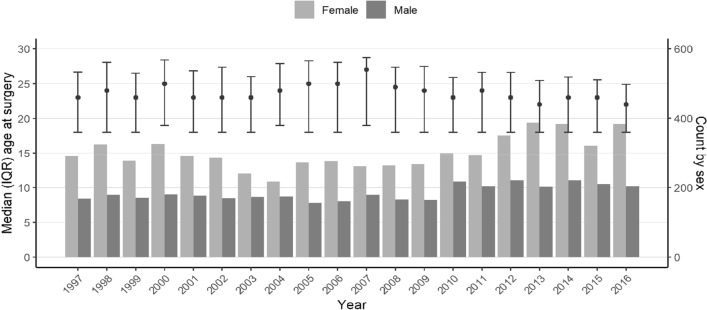
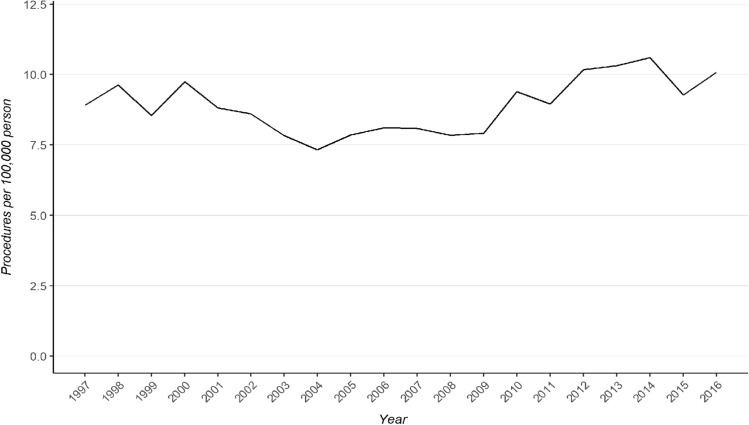
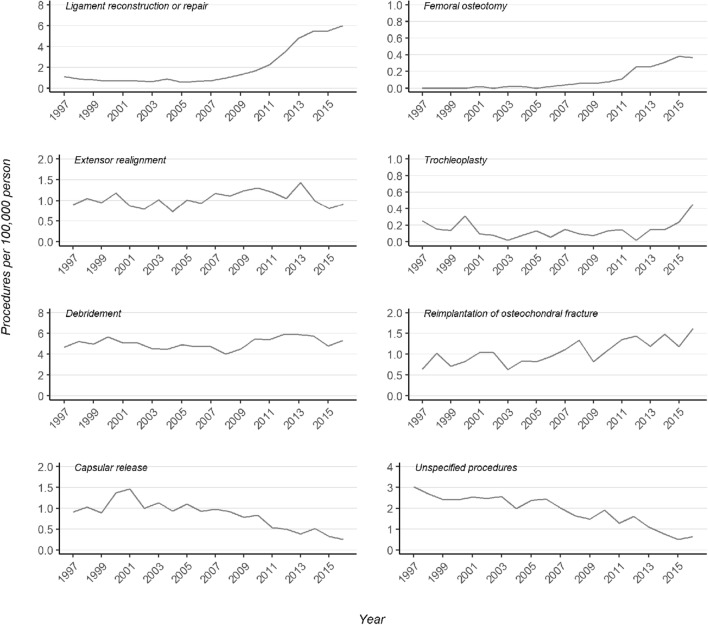
Results: A total of 9702 operations for patellar dislocation were performed during the study period. Median (IQR) patient age at time of primary surgery was 23 (18-34) years. The total incidence of surgeries remained stable across the study period at of 8.9 per 100,000 person-years. Incidences of ligament reconstruction, femoral osteotomies and osteochondral fragment reimplantation operations multiplied during the study period. Ligament reconstruction procedures were the most performed operations at the end of the study period.
Conclusion: The incidence of surgical procedures for patellar dislocation remained unchanged during the years 1997-2016. Ligament reconstruction procedures increased in popularity. Surgical techniques have shifted towards the reconstruction of damaged structures and the modification of congenital anatomical risk factors for patellar dislocation. Diversified surgical techniques have enabled the tailoring and combining of stabilizing procedures according to the patient's individual anatomy.
Keywords: Incidence; Knee injury; Patellar dislocation; Patellar dislocation surgery.
Conflict of interest statement
None declared.
Figures
References
-
- Albee FH. The bone graft wedge in the treatment of habitual dislocation of the patella. Med Rec. 1915;88:257–259.
-
- Askenberger M, Bengtsson Moström E, Ekström W, Arendt EA, Hellsten A, Mikkelsen C, et al. Operative repair of medial patellofemoral ligament injury versus knee brace in children with an acute first-time traumatic patellar dislocation: a randomized controlled trial. Am J Sports Med. 2018;46:2328–2340. - PubMed
-
- Askenberger M, Ekström W, Finnbogason T, Janarv P-M. Occult intra-articular knee injuries in children with hemarthrosis. Am J Sports Med. 2014;42:1600–1606. - PubMed
-
- Avikainen VJ, Nikku RK, Seppänen-Lehmonen TK. Adductor magnus tenodesis for patellar dislocation. Technique and preliminary results. Clin Orthop Relat Res. 1993;297:12–16. - PubMed
-
- Bitar AC, Demange MK, D'Elia CO, Camanho GL. Traumatic patellar dislocation: nonoperative treatment compared with MPFL reconstruction using patellar tendon. Am J Sports Med. 2012;40:114–122. - PubMed
MeSH terms
LinkOut - more resources
Full Text Sources
