


Breeding and biotechnological interventions for trait improvement: status and prospects
- PMID: 32948920
- PMCID: PMC7500504
- DOI: 10.1007/s00425-020-03465-4
Breeding and biotechnological interventions for trait improvement: status and prospects
Abstract
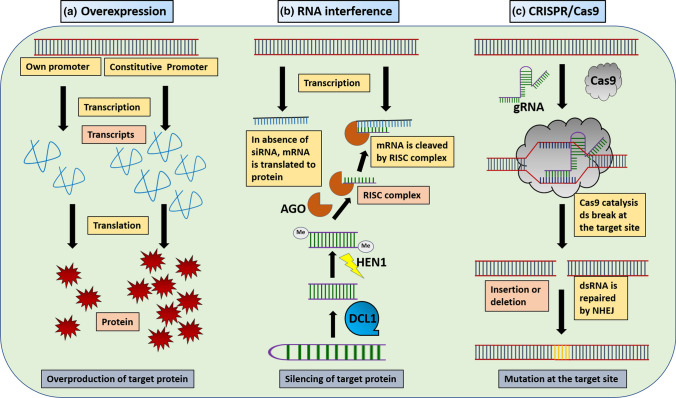
Present review describes the molecular tools and strategies deployed in the trait discovery and improvement of major crops. The prospects and challenges associated with these approaches are discussed. Crop improvement relies on modulating the genes and genomic regions underlying key traits, either directly or indirectly. Direct approaches include overexpression, RNA interference, genome editing, etc., while breeding majorly constitutes the indirect approach. With the advent of latest tools and technologies, these strategies could hasten the improvement of crop species. Next-generation sequencing, high-throughput genotyping, precision editing, use of space technology for accelerated growth, etc. had provided a new dimension to crop improvement programmes that work towards delivering better varieties to cope up with the challenges. Also, studies have widened from understanding the response of plants to single stress to combined stress, which provides insights into the molecular mechanisms regulating tolerance to more than one stress at a given point of time. Altogether, next-generation genetics and genomics had made tremendous progress in delivering improved varieties; however, the scope still exists to expand its horizon to other species that remain underutilized. In this context, the present review systematically analyses the different genomics approaches that are deployed for trait discovery and improvement in major species that could serve as a roadmap for executing similar strategies in other crop species. The application, pros, and cons, and scope for improvement of each approach have been discussed with examples, and altogether, the review provides comprehensive coverage on the advances in genomics to meet the ever-growing demands for agricultural produce.
Keywords: Gene editing; Genomics-assisted breeding; Molecular markers; RNA interference; Speed breeding; Transgenics.
Conflict of interest statement
The authors declare that they have no conflict of interest.
Figures



References
-
- Aluko G, Martinez C, Tohme J, Castano C, Bergman C, Oard JH. QTL mapping of grain quality traits from the interspecific cross Oryza sativa × O. glaberrima. Theor Appl Genet. 2004;109:630–639. - PubMed
-
- Arabidopsis Genome Initiative Analysis of the genome sequence of the flowering plant Arabidopsis thaliana. Nature. 2000;408:796–815. - PubMed
-
- Baier KM, Maynard C, Powell W. Early flowering in chestnut species induced under high dose light in growth chambers. J Am Chestnut Found. 2012;26:8–10.
Publication types
MeSH terms
Grants and funding
LinkOut - more resources
Full Text Sources
Miscellaneous
