


Endometriosis-induced massive hemoperitoneum misdiagnosed as ruptured ectopic pregnancy: a case report
- PMID: 32951608
- PMCID: PMC7504832
- DOI: 10.1186/s13256-020-02486-7
Endometriosis-induced massive hemoperitoneum misdiagnosed as ruptured ectopic pregnancy: a case report
Abstract
Background: Endometriosis, an estrogen-dependent inflammatory disease, is commonly observed in gynecologic practice. Spontaneous hemoperitoneum is a rare but serious complication of endometriosis. Most cases of endometriosis-induced hemoperitoneum are attributable to a ruptured endometrioma or utero-ovarian vessel hemorrhage. We report a case of massive hemoperitoneum secondary to intra-abdominal bleeding from the peritoneal endometriotic deposits with spontaneous abortion that was misdiagnosed as a ruptured ectopic pregnancy.
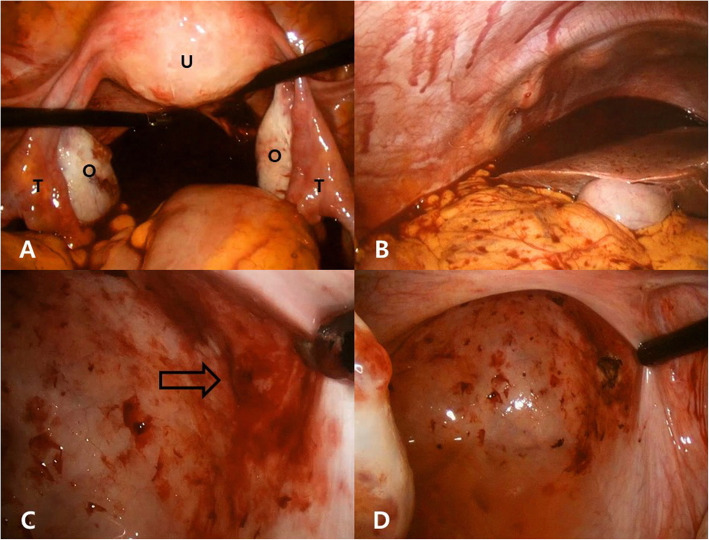
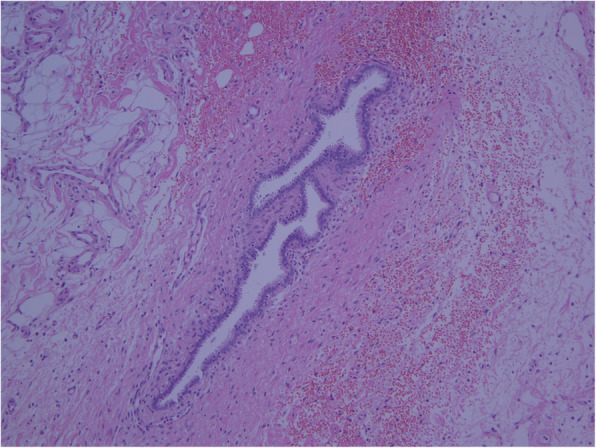
Case presentation: A 36-year-old Korean woman was admitted to our hospital for acute abdominal pain and vaginal bleeding. She was suspected of ruptured ectopic pregnancy on the basis of a positive serum human chorionic gonadotropin test result and ultrasonographic evidence of pelvic fluid collection. During hospitalization, her symptoms deteriorated with peritoneal irritation sign on physical examination, hypotension, and tachycardia. Emergency exploratory laparoscopy was performed and revealed active bleeding from the peritoneal endometriotic deposit, which was treated with laparoscopic electrocoagulation. The patient's postoperative course was uneventful. Spontaneous abortion was diagnosed on the basis of decreased serial serum human chorionic gonadotropin level estimation.
Conclusions: Although rare, gynecologists should consider endometriosis-induced hemoperitoneum with spontaneous abortion in the differential diagnosis in women of reproductive age presenting with a positive serum human chorionic gonadotropin test result and acute abdomen with intra-abdominal bleeding.
Keywords: Acute abdomen; Endometriosis; Hemoperitoneum.
Conflict of interest statement
The authors declare that they have no competing interests.
Figures
References
Publication types
MeSH terms
LinkOut - more resources
Full Text Sources
Medical
