


Topical green tea formulation with anti-hemorrhagic and antibacterial effects
- PMID: 32952956
- PMCID: PMC7478251
- DOI: 10.22038/ijbms.2020.41397.9782
Topical green tea formulation with anti-hemorrhagic and antibacterial effects
Abstract
Objectives: Potentially preventable death from uncontrolled hemorrhage clearly indicates the importance of simple, fast and efficient ways to achieving hemostasis. The aim of this study was to develop a topical formulation of green tea extract for reducing bleeding that can be helpful in hemorrhage control.
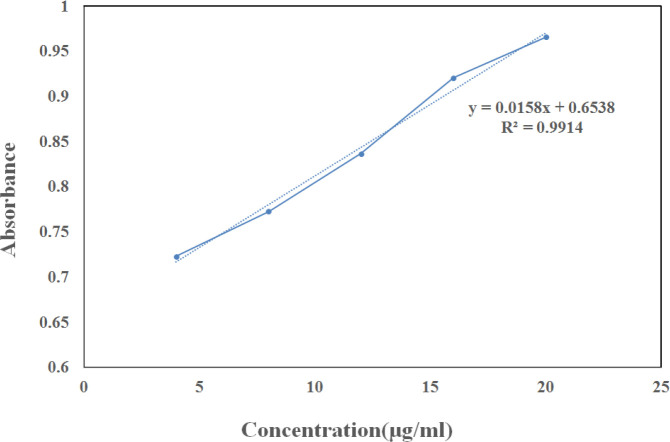
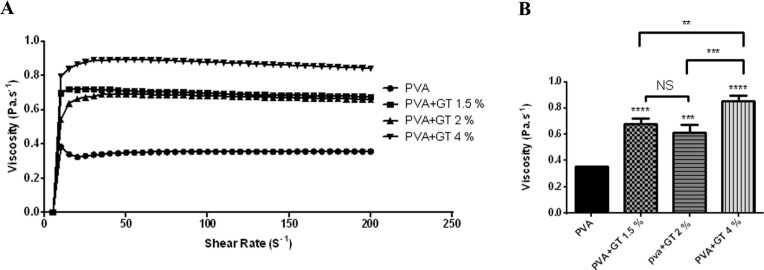
Materials and methods: Hydroalcoholic extract of green tea was isolated from Camellia sinensis and formulated in polyvinyl alcohol (PVA) to achieve two concentrations of 2% and 4% v/v. Folin-Ciocalteau assay was used to determine the total amount of tannins in extract. Rheological behavior of solutions was investigated by measuring viscosity at shear rates of 0-200 sec-1. Quantitative and qualitative microbial limit tests and minimum inhibitory concentration (MIC) assay were done. The effect of formulations on bleeding time was evaluated in an animal model.
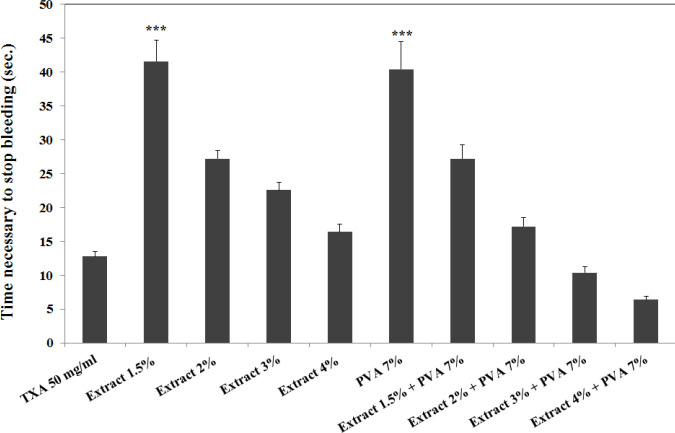
Results: The total amount of tannin in green tea extract was 3.8% w/w and addition of green tea significantly increased the viscosity of PVA. The results of MIC assay showed that PVA could not inhibit the growth of bacteria, while, 716 µg/ml of green tea and 2860 µg/ml of green tea/PVA 4% inhibited the growth of Staphylococcus aureus and Pseudomonas aeruginosa. In an animal study both 2% and 4% formulations were able to stop hemorrhage approximately at an equal time compared with tranexamic acid (TXA) 50 mg/ml as a control and the lowest bleeding time was 6.4±0.51 sec for green tea/PVA 4%.
Conclusion: Based on our results, the topical formulation of green tea extract in PVA has a great potential for anti-hemorrhage applications.
Keywords: Bleeding; Green tea; Hemostasis; Polyvinyl alcohol; Tannin; Topical formulation.
Figures

References
-
- Ong SY, Wu J, Moochhala SM, Tan MH, Lu J. Development of a chitosan-based wound dressing with improved hemostatic and antimicrobial properties. Biomaterials. 2008;29:4323–4332. - PubMed
-
- Williams-Johnson J, McDonald A, Strachan GG, Williams E. Effects of tranexamic acid on death, vascular occlusive events, and blood transfusion in trauma patients with significant haemorrhage (CRASH-2): a randomised, placebo-controlled trial. West Indian Med J. 2010;59:612–624. - PubMed
-
- Cabrera C, Artacho R, Giménez R. Beneficial effects of green tea: a review. J Am Coll Nutr. 2006;25:79–99. - PubMed
LinkOut - more resources
Full Text Sources
Medical
Miscellaneous