


An Investigation of the COMT Gene Val158Met Polymorphism in Patients Admitted to the Emergency Department Because of Synthetic Cannabinoid Use
- PMID: 32953411
- PMCID: PMC7474226
- DOI: 10.2478/bjmg-2020-0010
An Investigation of the COMT Gene Val158Met Polymorphism in Patients Admitted to the Emergency Department Because of Synthetic Cannabinoid Use
Abstract
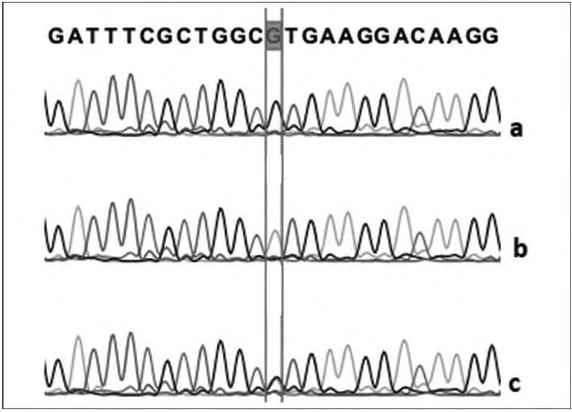
Catechol-O-methyl transferase (COMT) enzyme has a role in the inactivation of catecholamine neurotransmitters. Functional polymorphism in the COMT gene has been reported to play an important role in schizophrenia, bipolar affective disorder, aggressive and antisocial behavior, suicide attempts and the pathogenesis of Parkinson's disease. In this study, we aimed to investigate the effect of the Vall58Met polymorphism of the COMT gene on substance use, and treatment history in patients with synthetic cannabinoid (SC) intoxication. The COMT enzyme Val158Met polymorphisms from DNA of 49 patients who were evaluated in the Emergency Department after SC use and 50 healthy control groups aged 18-45 years, were identified by polymerase chain reaction (PCR) and restriction fragment length polymorphism (RFLP) analyses as reported in the literature. Information regarding recurrent intake or hospitalization due to substance use was obtained from hospital records. Wild-type (WT) genotypes in 14 (28.6%) patients, heterozygous genotypes in 25 (51.0%) and homozygous genotypes in 10 (20.4%) patients were detected. Wild-type genotypes The homozygous genotype was found to be significantly higher in patients hospitalized due to drug addiction and substance use (p 0.008). The Vall58 Met polymorphism of the COMT gene was not found to be significant in the first use after substance intake, while a significant relationship was found in terms of this polymorphism in patients with substance addiction diagnosis and treatment history.
Keywords: Addiction; Catechol-O-methyl transferase (COMT) gene; Synthetic cannabinoids (SC); Val-158Met polymorphism.
© 2020 Nennicioglu Y, Kaya H, Eraybar S, Atmaca S, Gorukmez O, Armagan E, published by Sciendo.
Figures
References
-
- Varma GS, Karadağ OF, Erdal ME, Ay Öİ, Levent N, Tekkanat Ç. Katekol-O-metiltransferaz geni Vall58 Met polimorfizminin şizofreni hastalarındaki bilişsel işlevlere Tiileri. Bull Clin Psychopharmacol. 2011;21(1):24–32. et al.
-
- Oswald LM, McCaul M, Choi L, Yang X, Wand GS. Catechol-O-methyltransferase polymorphism alters hypothalamic-pituitary-adrenal axis responses to naloxone: A preliminary report. Biol Psychiatry. 2004;55(1):102–105. - PubMed
-
- Drabant EM, Hariri AR, Meyer-Lindenberg A, Munoz KE, Mattay VS, Kolachana BS. Catechol O-methyltransferase val 15 8met genotype and neural mechanisms related to affective arousal and regulation. Arch Gen Psychiatry. 2006;63(12):1396–1406. et al. - PubMed
-
- van Winkel R, Henquet C, Rosa A, Papiol S, Fañanás L, De Heret M. Evidence that the COMT Val158 Met polymorphism moderates sensitivity to stress in psychosis: An experience sampling study. Am J Med Genet B Neuropsychiatr Genet. 2008;147B(1):10–17. et al. - PubMed
LinkOut - more resources
Full Text Sources
Miscellaneous