


Effect of dibenz(b,f)-1,4-oxazepine aerosol on the breathing pattern and respiratory variables by continuous recording and analysis in unanaesthetised mice
- PMID: 32953463
- PMCID: PMC7486425
- DOI: 10.1016/j.toxrep.2020.08.022
Effect of dibenz(b,f)-1,4-oxazepine aerosol on the breathing pattern and respiratory variables by continuous recording and analysis in unanaesthetised mice
Abstract
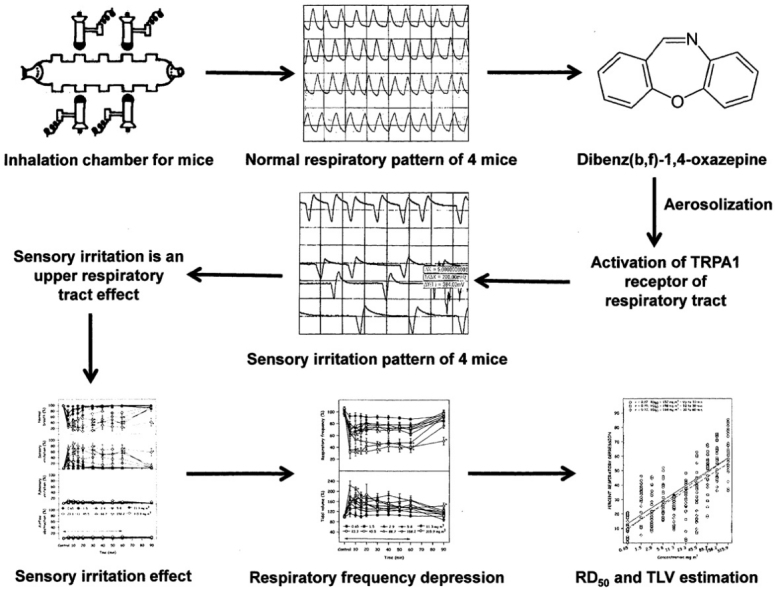
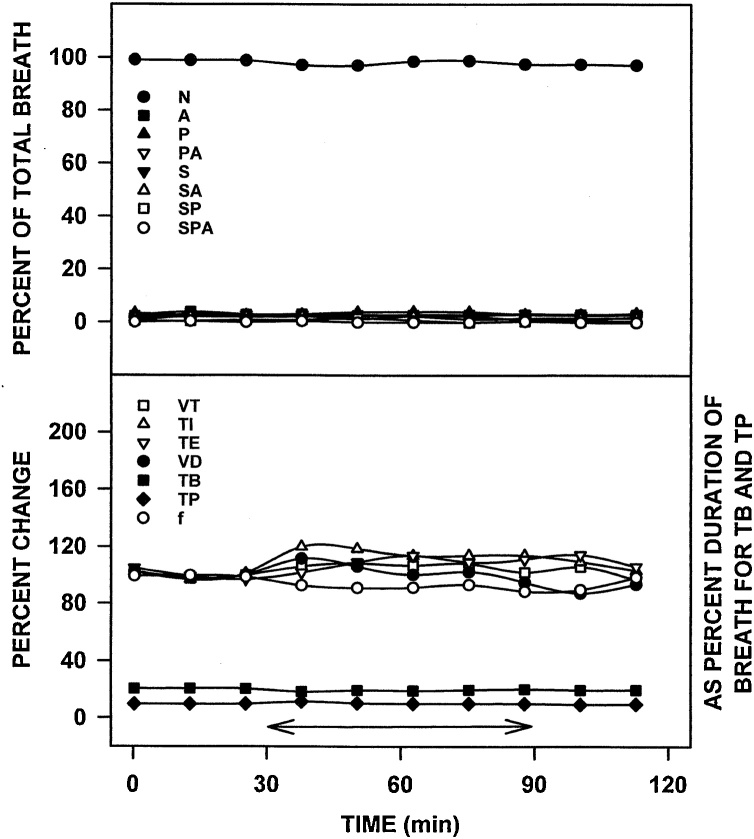
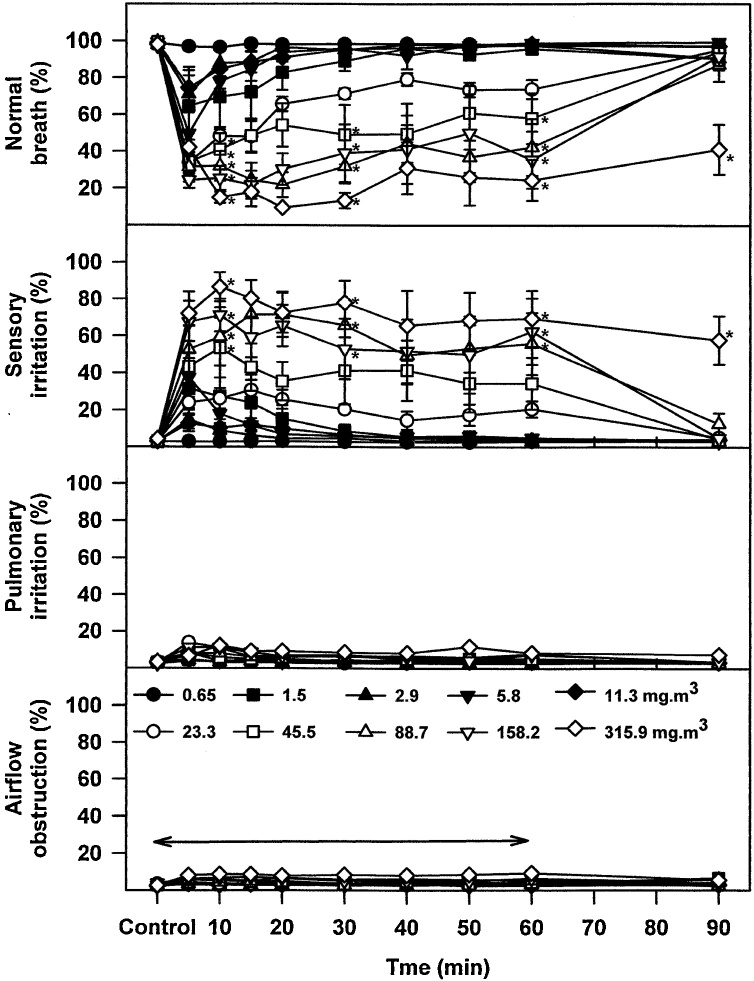
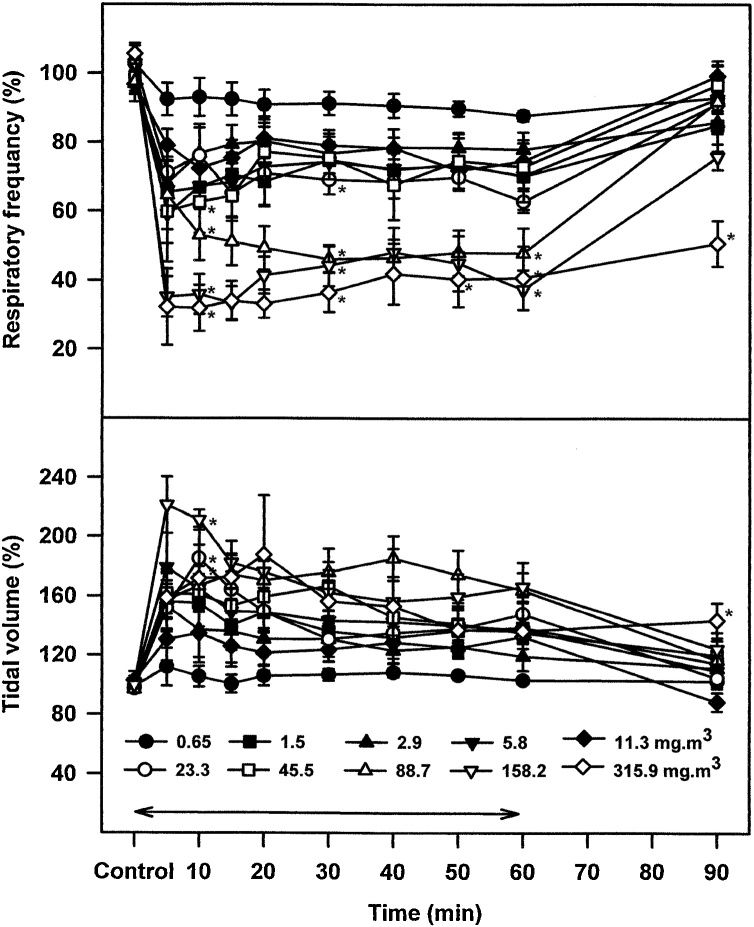
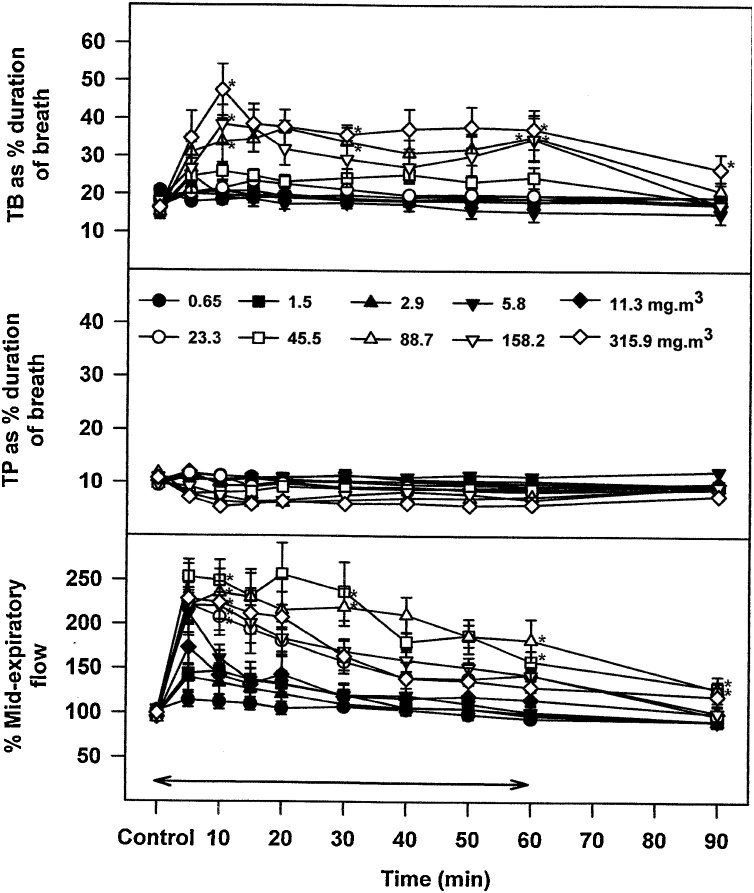
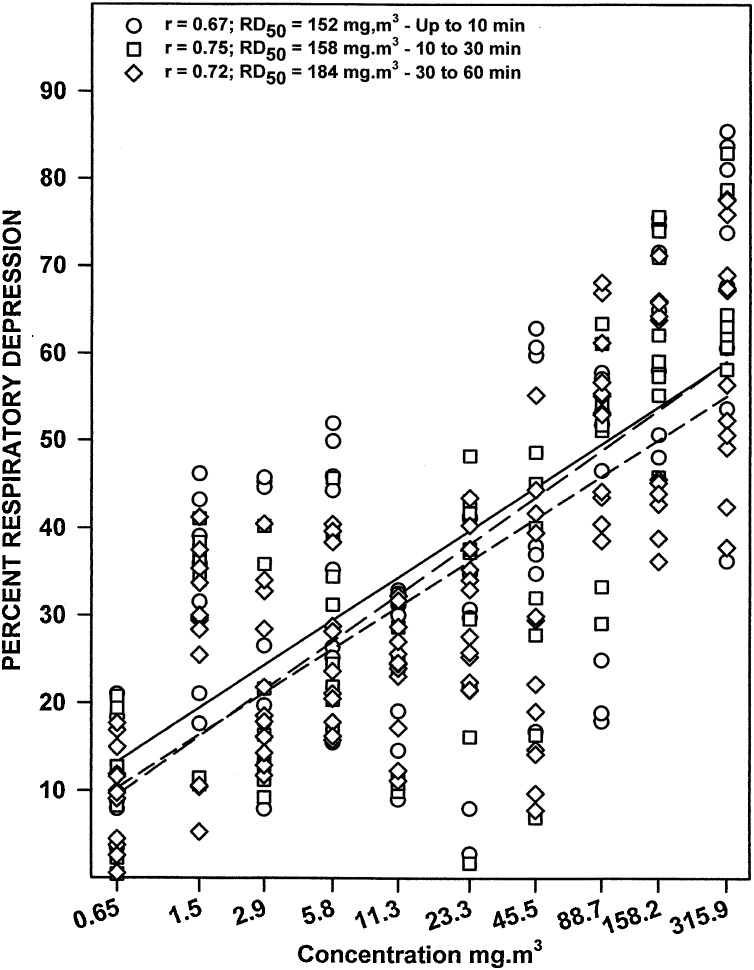
A riot control agent has to be a sensory irritant of a reversible type without pulmonary irritation as the later can cause lung injury. The aim of the present study is to continuously record and analyse breathing pattern and respiratory variables of dibenz (b,f)-1,4-oxazepine (CR) in unanaesthetised mice during and after exposure. The lowest concentration of 0.65 mg/m3 did not produce any effect on the breathing pattern. As high as 500 fold increase (315.9 mg/m3) in the concentration was used and no mortality was observed. CR produced a concentration dependent sensory irritation, without pulmonary irritation or airflow obstruction, showing that it may not cause any lung injury. The sensory irritation was initiated within 5 min of exposure due to the activation of TRPA1 receptors of the upper respiratory tract. Immediate recovery of normal breath without sensory irritation was observed in all the concentrations except the highest concentration of 315.9 mg/m3. Corresponding to the sensory irritation there was concentration dependent respiratory depression. The 50 percent respiratory depression (RD50) in this experiment was 152 mg/m3 and the estimated threshold limit value for occupational exposure was 4.56 mg/m3. The present study shows that CR causes sensory irritation only which is completely recoverable.
Keywords: Dibenz(b.f)-1,4-oxazepine; Inhalation; Mice; RD50; Respiratory rate; Riot control agent; Sensory irritation; TRPA1 receptor.
© 2020 The Author(s).
Conflict of interest statement
The authors declare that they have no known competing financial interests or personal relationships that could have appeared to influence the work reported in this paper.
Figures
References
-
- Ballantyne B. Medical management of the traumatic consequences of civil unrest incidents: causation, clinical approaches, needs and advanced planning criteria. Toxicol. Rev. 2006;25:155–197. - PubMed
-
- Blain P.G. Tear gases and irritant incapacitants. 1-chloroacetophenone, 2-chlorobenzylidene malononitrile and dibenz[b,f]-1,4-oxazepine. Toxicol. Rev. 2003;22:103–110. - PubMed
LinkOut - more resources
Full Text Sources
Research Materials
Miscellaneous
