


A novel mechanism of inhibiting in-stent restenosis with arsenic trioxide drug-eluting stent: Enhancing contractile phenotype of vascular smooth muscle cells via YAP pathway
- PMID: 32954055
- PMCID: PMC7484501
- DOI: 10.1016/j.bioactmat.2020.08.018
A novel mechanism of inhibiting in-stent restenosis with arsenic trioxide drug-eluting stent: Enhancing contractile phenotype of vascular smooth muscle cells via YAP pathway
Erratum in
-
Corrigendum to "A novel mechanism of inhibiting in-stent restenosis with arsenic trioxide drug-eluting stent: Enhancing contractile phenotype of vascular smooth muscle cells via YAP pathway" [Bioact. Mater. 6 2 (February 2021) 375-385].Bioact Mater. 2021 Aug 2;8:574. doi: 10.1016/j.bioactmat.2021.07.032. eCollection 2022 Feb. Bioact Mater. 2021. PMID: 34786522 Free PMC article.
Abstract
Objective: Arsenic trioxide (ATO or As2O3) has beneficial effects on suppressing neointimal hyperplasia and restenosis, but the mechanism is still unclear. The goal of this study is to further understand the mechanism of ATO's inhibitory effect on vascular smooth muscle cells (VSMCs).
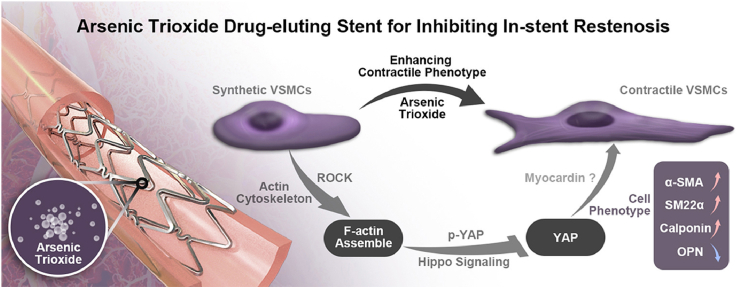
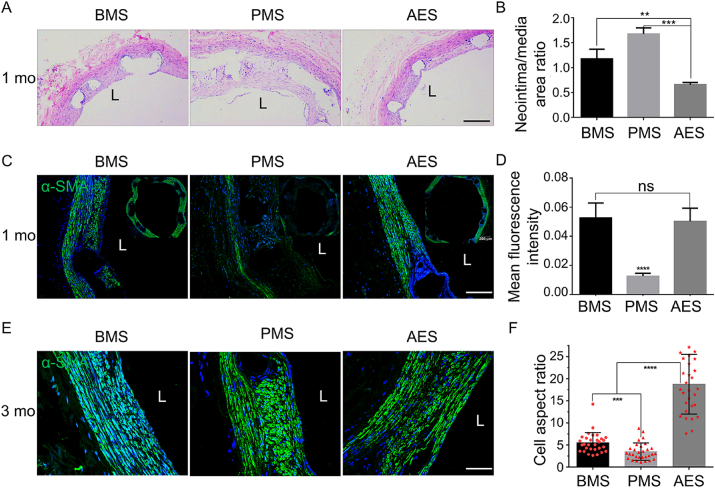
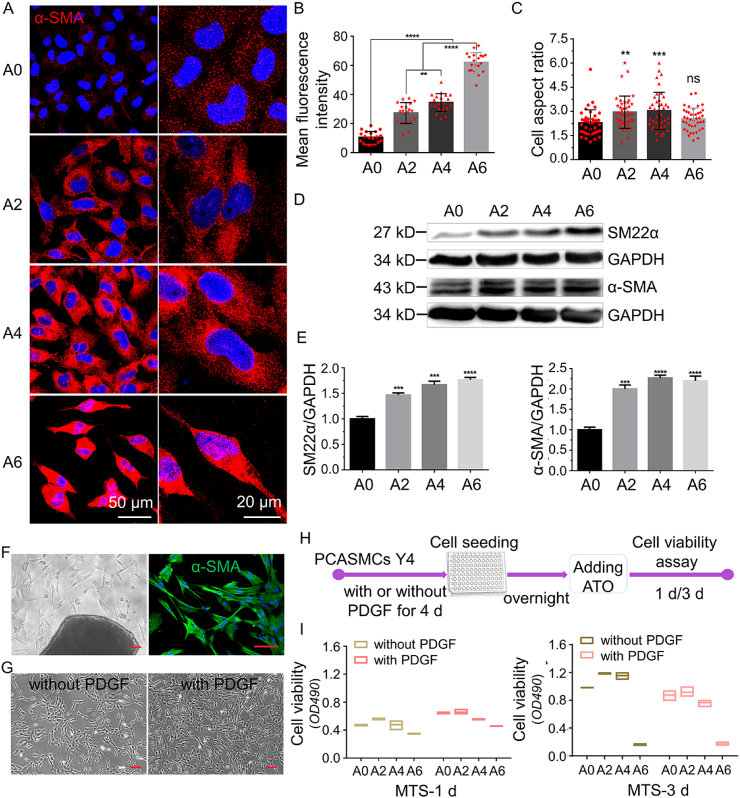
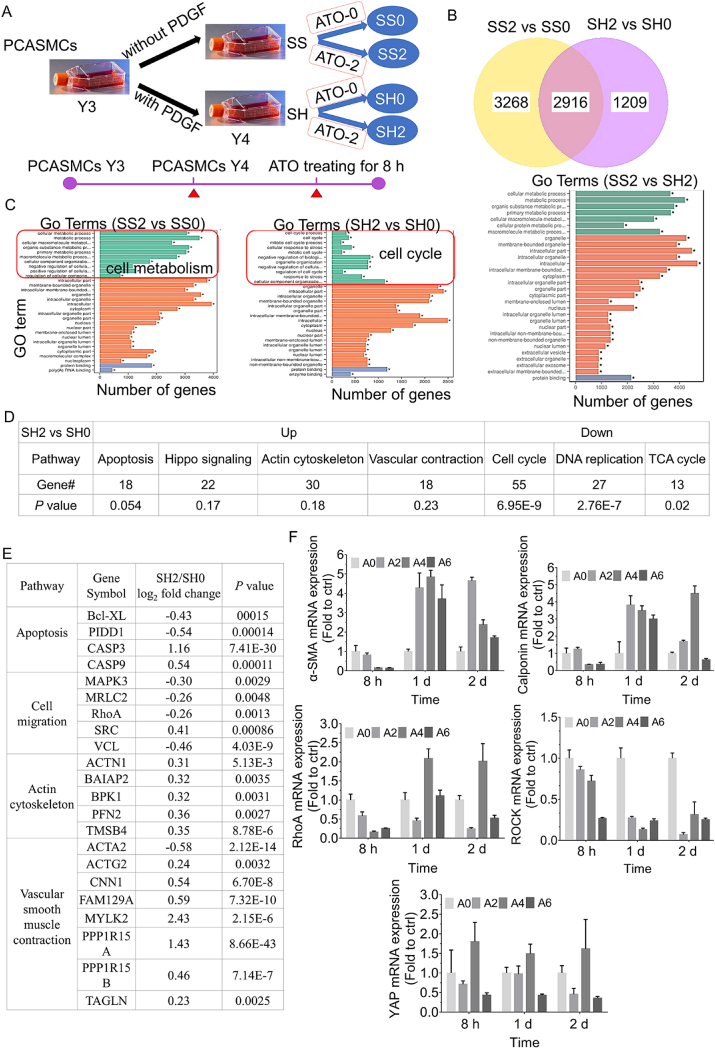
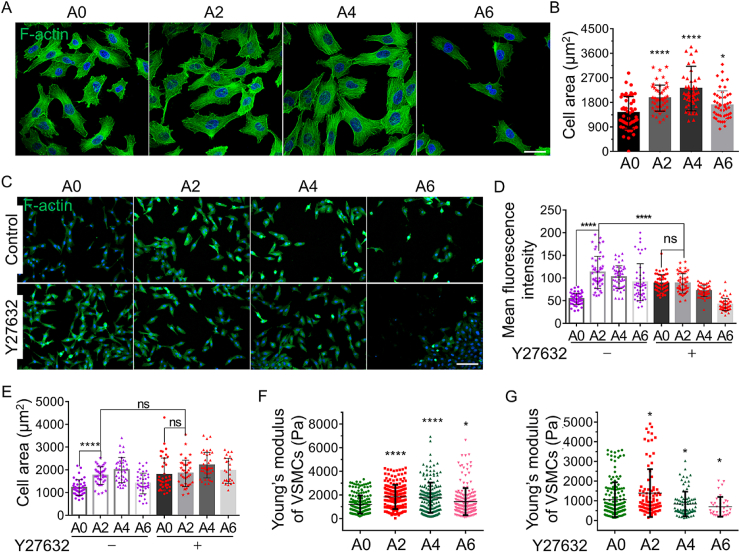
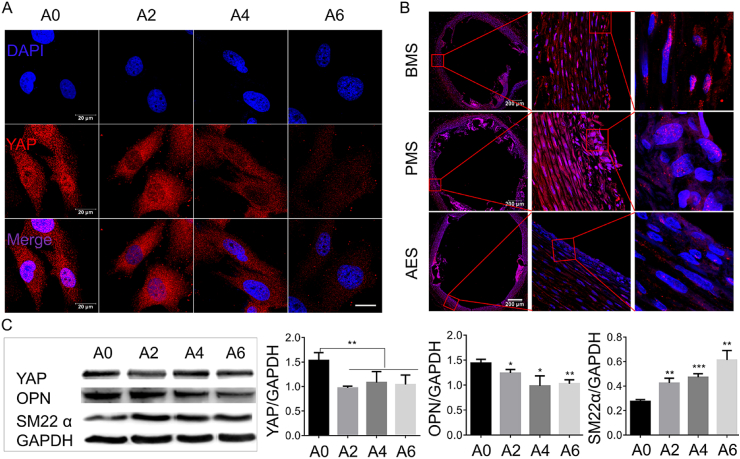
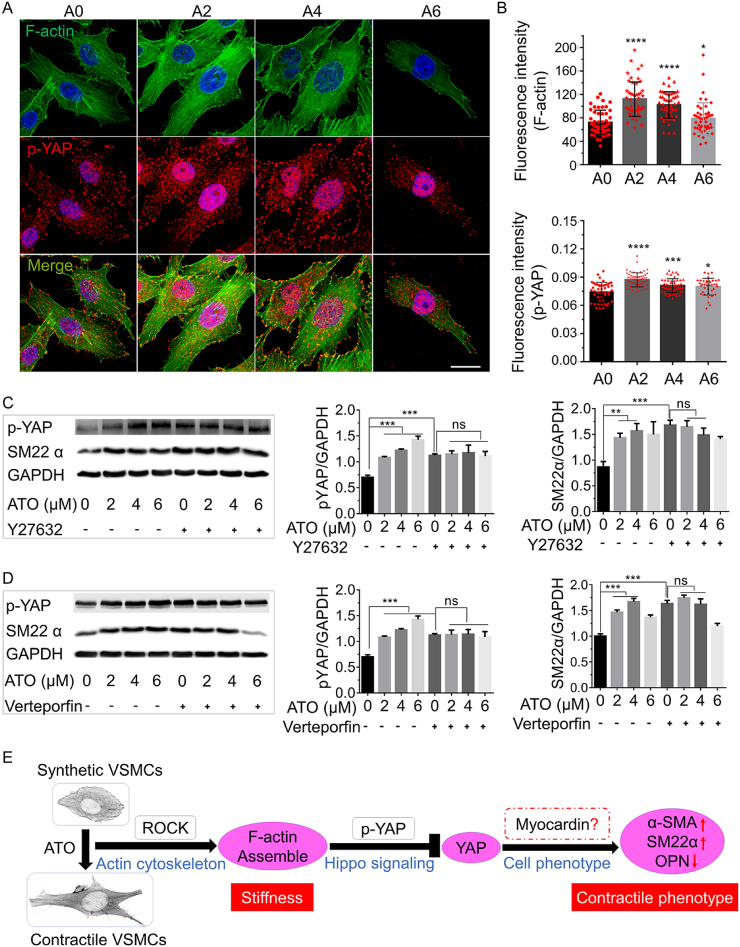
Methods and results: Through in vitro cell culture and in vivo stent implanting into the carotid arteries of rabbit, a synthetic-to-contractile phenotypic transition was induced and the proliferation of VSMCs was inhibited by ATO. F-actin filaments were clustered and the elasticity modulus was increased within the phenotypic modulation of VSMCs induced by ATO in vitro. Meanwhile, Yes-associated protein (YAP) nuclear translocation was inhibited by ATO both in vivo and in vitro. It was found that ROCK inhibitor or YAP inactivator could partially mask the phenotype modulation of ATO on VSMCs.
Conclusions: The interaction of YAP with the ROCK pathway through ATO seems to mediate the contractile phenotype of VSMCs. This provides an indication of the clinical therapeutic mechanism for the beneficial bioactive effect of ATO-drug eluting stent (AES) on in-stent restenosis (ISR).
Keywords: Arsenic trioxide (ATO); Bioactive; In-stent restenosis (ISR); Yes-associated protein (YAP).
© 2020 The Authors. Publishing services by Elsevier B.V. on behalf of KeAi Communications Co., Ltd.
Conflict of interest statement
The authors declare that they have no known competing financial interests or personal relationships that could have appeared to influence the work reported in this paper.
Figures
References
-
- Waxman S., Anderson K.C. History of the development of arsenic derivatives in cancer therapy. Oncol. 2001;6(S2):3–10. - PubMed
-
- Guo Z.Z., Meng M.J., Geng S.N. The optimal dose of arsenic trioxide induced opposite efficacy in autophagy between K562 cells and their initiating cells to eradicate human myelogenous leukemia. J. Ethnopharmacol. 2017;196:29–38. - PubMed
-
- Chandy M., George B., Mathews V. Treatment of children with newly diagnosed acute promyelocytic leukemia (APML) using intravenous arsenic trioxide (As2O3) Blood. 2003;102(11):620A.
-
- Zhu J., Chen Z., Lallemand-Breitenbach V. How acute promyelocytic leukaemia revived arsenic. Nat. Rev. Canc. 2002;2(9):705–713. - PubMed
LinkOut - more resources
Full Text Sources
Other Literature Sources
Research Materials
