


Effect of Sevelamer on Calciprotein Particles in Hemodialysis Patients: The Sevelamer Versus Calcium to Reduce Fetuin-A-Containing Calciprotein Particles in Dialysis (SCaRF) Randomized Controlled Trial
- PMID: 32954068
- PMCID: PMC7486191
- DOI: 10.1016/j.ekir.2020.06.014
Effect of Sevelamer on Calciprotein Particles in Hemodialysis Patients: The Sevelamer Versus Calcium to Reduce Fetuin-A-Containing Calciprotein Particles in Dialysis (SCaRF) Randomized Controlled Trial
Abstract
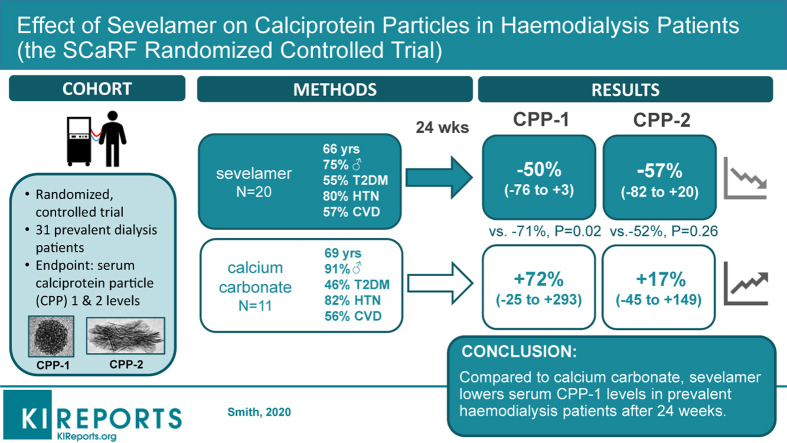
Introduction: Calciprotein particles (CPPs) are potentially modifiable mediators of phosphate toxicity in patients with kidney disease. We compared the effects of calcium carbonate (CC) and the non-calcium-based phosphate binder sevelamer on CPP levels in patients undergoing hemodialysis (HD). We hypothesized that treatment with sevelamer would achieve greater reductions in amorphous calcium phosphate-containing CPP (CPP-1) and hydroxyapatite-containing CPP (CPP-2) owing to reduced calcium loading and anti-inflammatory pleiotropic effects.
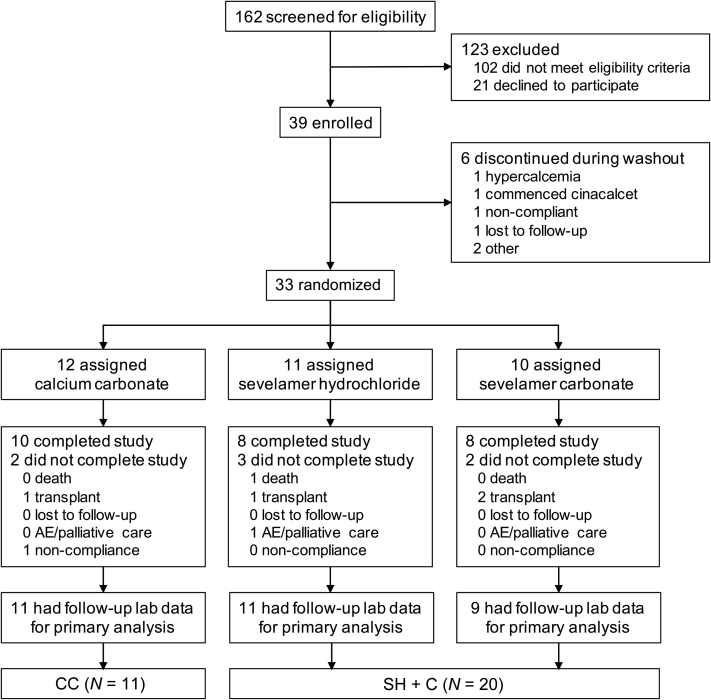
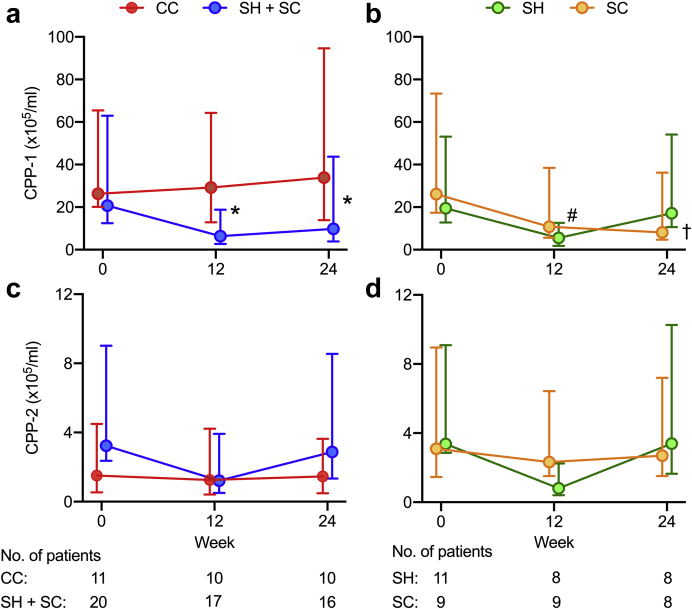
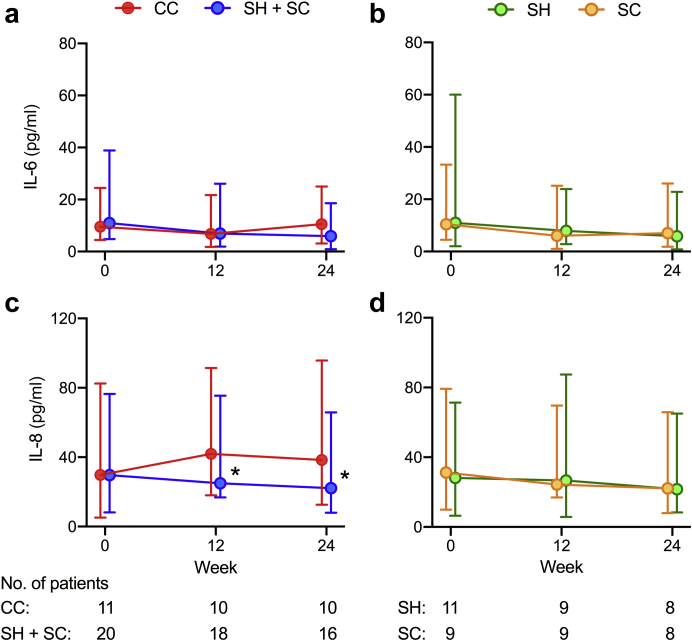
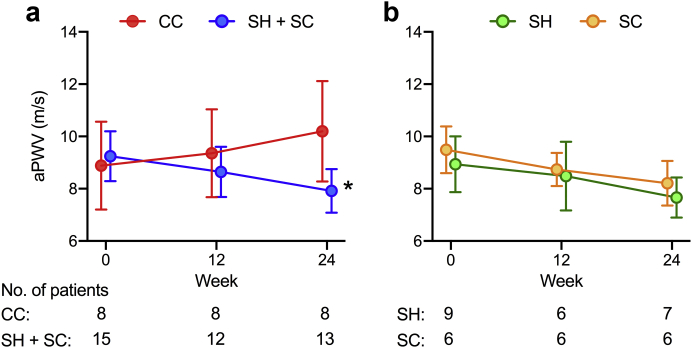
Methods: We conducted an open-label, randomized controlled trial (RCT) in which 31 stable prevalent HD patients were allocated to receive either sevelamer hydrochloride (SH), sevelamer carbonate (SC), or CC for 24 weeks. Dual primary endpoints were the between groups differences in serum CPP-1 and CPP-2 levels at 24 weeks in SH + SC-treated versus CC-treated patients. Effects on aortic pulse wave velocity (aPWV), inflammatory cytokines (interleukin-6 and -8), and effects across individual treatment arms were also assessed.
Results: Serum CPP-1, but not CPP-2, levels were lower in those randomly assigned to the sevelamer (SH + SC) group compared with the CC group at 24 weeks (-70%, 95% confidence interval [CI] -90% to -15%, P = 0.02). In subgroup analysis, this effect was confined to those receiving SC (-83.4%, 95% CI -95.7% to -36.8%, P = 0.01). aPWV and interleukin-8 levels were also lower in those who received sevelamer compared with CC at 24 weeks (-2.0 m/s, 95% CI -2.9 to -1.1; -57%, 95% CI -73% to -30%, respectively, both P = 0.01). Conventional markers of mineral metabolism remained stable across all treatment groups.
Discussion: Compared with treatment with CC, use of sevelamer for 24 weeks was associated with lower serum CPP-1 levels and a reduction in aPWV and systemic inflammation.
Keywords: calciprotein particles; calcium carbonate; hemodialysis; inflammation; phosphate; phosphate binder; sevelamer.
© 2020 International Society of Nephrology. Published by Elsevier Inc.
Figures
References
-
- Fukagawa M., Kido R., Komaba H. Abnormal mineral metabolism and mortality in hemodialysis patients with secondary hyperparathyroidism: evidence from marginal structural models used to adjust for time-dependent confounding. Am J Kidney Dis. 2014;63:979–987. - PubMed
-
- Tentori F., Blayney M.J., Albert J.M. Mortality risk for dialysis patients with different levels of serum calcium, phosphorus, and PTH: the Dialysis Outcomes and Practice Patterns Study (DOPPS) Am J Kidney Dis. 2008;52:519–530. - PubMed
-
- Floege J. Phosphate binders in chronic kidney disease: a systematic review of recent data. J Nephrol. 2016;29:329–340. - PubMed
-
- Cannata-Andia J.B., Fernandez-Martin J.L., Locatelli F. Use of phosphate-binding agents is associated with a lower risk of mortality. Kidney Int. 2013;84:998–1008. - PubMed
LinkOut - more resources
Full Text Sources
