


Breast cancer treatment delays by socioeconomic and health care access latent classes in Black and White women
- PMID: 32954493
- PMCID: PMC7789230
- DOI: 10.1002/cncr.33121
Breast cancer treatment delays by socioeconomic and health care access latent classes in Black and White women
Abstract
Background: Breast cancer mortality is higher for Black and younger women. This study evaluated 2 possible contributors to disparities-time to treatment and treatment duration-by race and age.
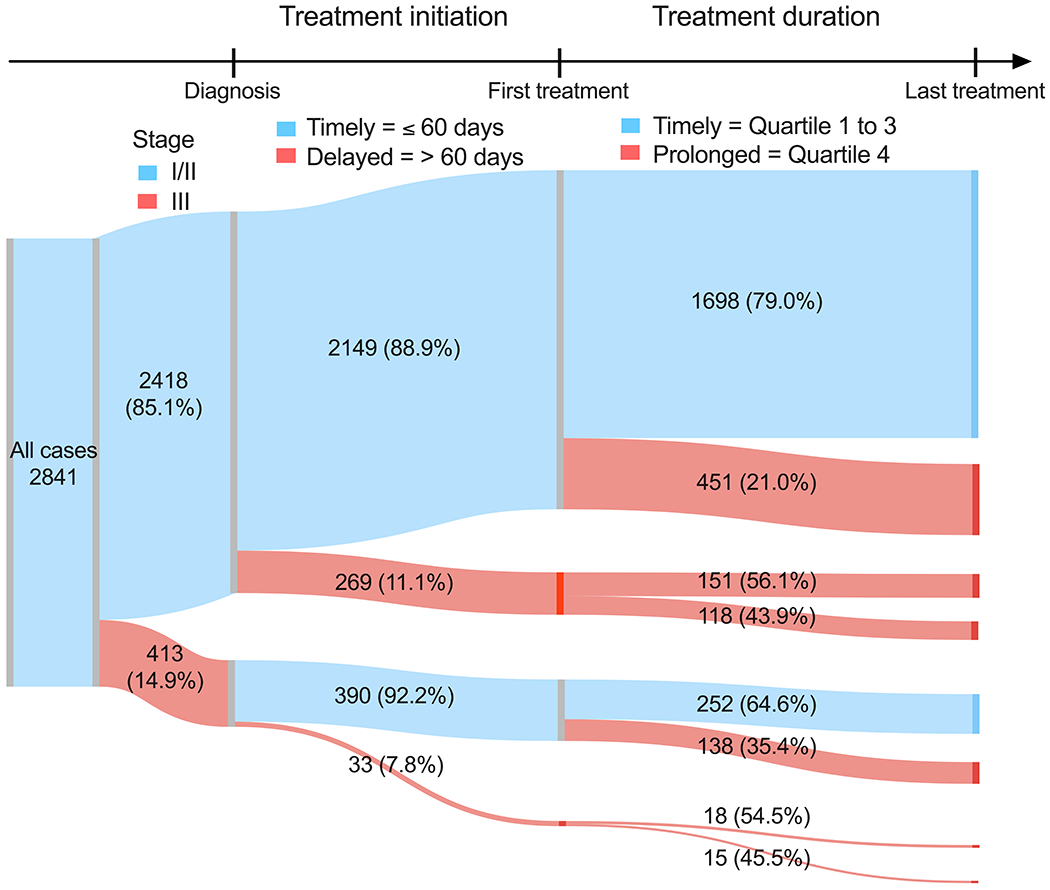
Methods: Among 2841 participants with stage I-III disease in the Carolina Breast Cancer Study, we identified groups of women with similar patterns of socioeconomic status (SES), access to care, and tumor characteristics using latent class analysis. We then evaluated latent classes in association with treatment delay (initiation >60 days after diagnosis) and treatment duration (in quartiles by treatment modality).
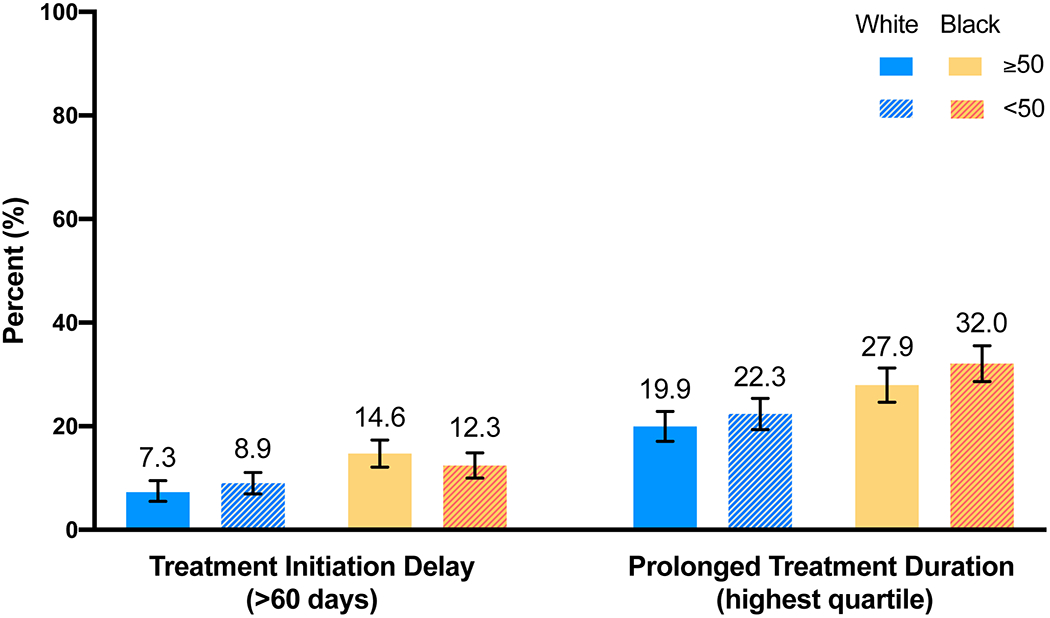
Results: Thirty-two percent of younger Black women were in the highest quartile of treatment duration (versus 22% of younger White women). Black women experienced a higher frequency of delayed treatment (adjusted relative frequency difference [RFD], 5.5% [95% CI, 3.2%-7.8%]) and prolonged treatment duration (RFD, 8.8% [95% CI, 5.7%-12.0%]). Low SES was significantly associated with treatment delay among White women (RFD, 3.5% [95% CI, 1.1%-5.9%]), but treatment delay was high at all levels of SES in Black women (eg, 11.7% in high SES Black women compared with 10.6% and 6.7% among low and high SES White women, respectively). Neither SES nor access to care classes were significantly associated with delayed initiation among Black women, but both low SES and more barriers were associated with treatment duration across both groups.
Conclusions: Factors that influence treatment timeliness persist throughout the care continuum, with prolonged treatment duration being a sensitive indicator of differences by race, SES, and care barriers.
Keywords: breast cancer; health care disparities; latent class analysis; racial disparities; treatment delay; treatment duration.
© 2020 American Cancer Society.
Conflict of interest statement
Conflict of interest statement
We have no conflicts of interest to disclose.
Figures
References
-
- DeSantis CE, Fedewa SA, Goding Sauer A, et al. Breast cancer statistics, 2015: Convergence of incidence rates between black and white women. CA Cancer J Clin. 2016;66(1):31–42. - PubMed
-
- Shavers VL, Harlan LC, Stevens JL. Racial/ethnic variation in clinical presentation, treatment, and survival among breast cancer patients under age 35. Cancer. 2003;97(1):134–47. - PubMed
-
- Jatoi I, Becher H, Leake CR. Widening disparity in survival between white and African-American patients with breast carcinoma treated in the U. S. Department of Defense Healthcare system. Cancer. 2003;98(5):894–9. - PubMed
Publication types
MeSH terms
Grants and funding
LinkOut - more resources
Full Text Sources
Medical
