


Can Exercise Counteract Cancer Cachexia? A Systematic Literature Review and Meta-Analysis
- PMID: 32954861
- PMCID: PMC7503012
- DOI: 10.1177/1534735420940414
Can Exercise Counteract Cancer Cachexia? A Systematic Literature Review and Meta-Analysis
Abstract
Background: Cancer-cachexia is associated with chronic inflammation, impaired muscle metabolism and body mass loss, all of which are classical targets of physical exercise.
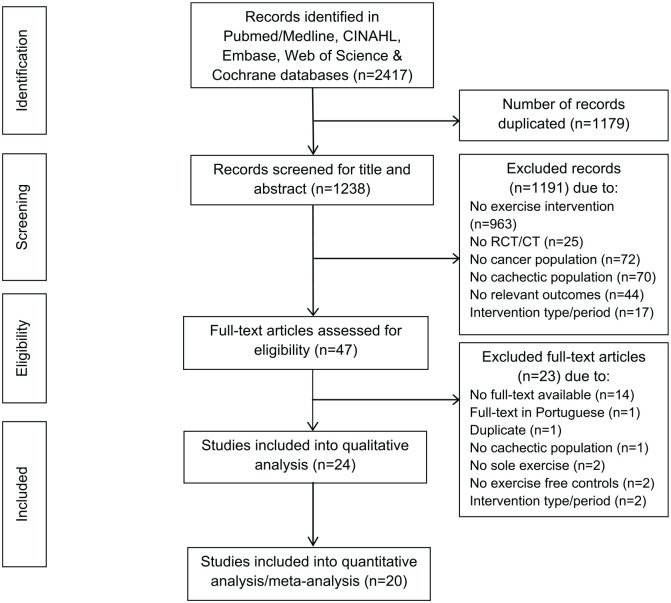
Objectives: This systematic review and meta-analysis aimed to determine the effects of exercise on body and muscle mass in cachectic cancer hosts.
Data sources: PubMed/Medline, EMBASE, CINHAL, ISI Web of Science, and Cochrane Library were searched until July 2019.
Study selection: Trials had to be randomized controlled trials or controlled trials including cancer patients or animal models with cachexia-inducing tumors. Only sole exercise interventions over at least 7 days performed in a controlled environment were included.
Data extraction: Risk of bias was assessed and a random-effects model was used to pool effect sizes by standardized mean differences (SMD).
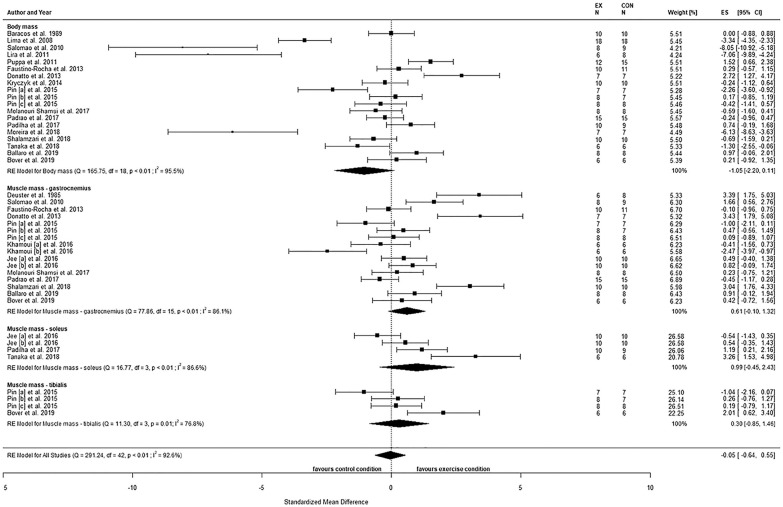
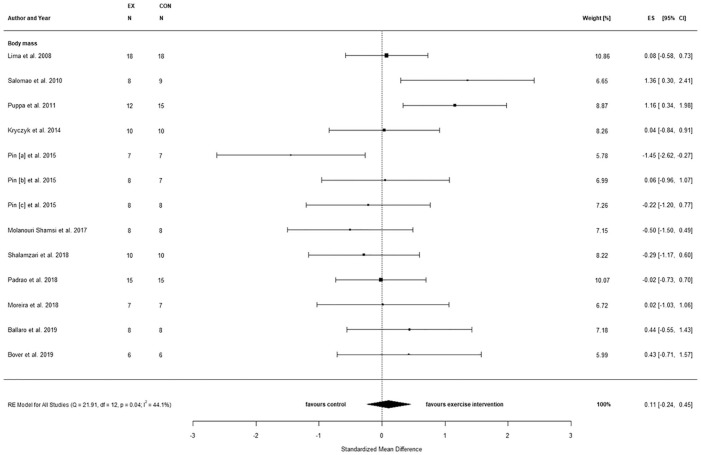
Results: All eligible 20 studies were performed in rodents. Studies prescribed aerobic (n = 15), strength (n = 3) or combined training (n = 2). No statistical differences were observed for body mass and muscle weight of the gastrocnemius, soleus, and tibialis muscles between the exercise and control conditions (SMD = ‒0.05, 95%CI-0.64-0.55, P = 0.87). Exercise duration prior to tumor inoculation was a statistical moderator for changes in body mass under tumor presence (P = 0.04).
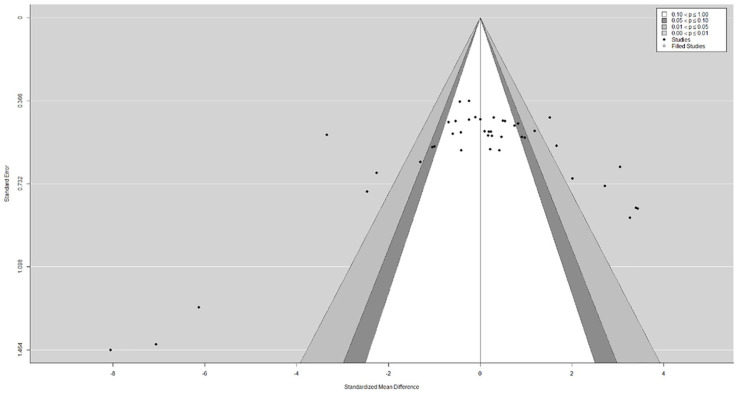
Limitations: No human trials were identified. A large study heterogeneity was present, probably due to different exercise modalities and outcome reporting.
Conclusion: Exercise does not seem to affect cancer-cachexia in rodents. However, the linear regression revealed that exercise duration prior to tumor inoculation led to reduced cachexia-severity, possibly strengthening the rationale for the use of exercise in cancer patients at cachexia risk.
Keywords: cancer cachexia; clinical exercise science; exercise oncology; exercise training; muscle wasting; supportive cancer therapy; tissue wasting syndrome.
Conflict of interest statement
Figures
References
-
- Greten H, Rinninger F, Greten TF, Amling M, eds. Innere Medizin. 13th ed. Thieme; 2000.
-
- Tisdale MJ. Molecular pathways leading to cancer cachexia. Physiology (Bethesda). 2005;20:340-348. - PubMed
-
- Donatto FF, Neves RX, Rosa FO, et al. Resistance exercise modulates lipid plasma profile and cytokine content in the adipose tissue of tumour-bearing rats. Cytokine. 2013;61: 426-432. - PubMed
-
- Tisdale MJ. The “cancer cachectic factor.” Support Care Cancer. 2003;11:73-78. - PubMed
Publication types
MeSH terms
LinkOut - more resources
Full Text Sources
Medical
