The prevalence of mental illness in refugees and asylum seekers: A systematic review and meta-analysis
- PMID: 32956381
- PMCID: PMC7505461
- DOI: 10.1371/journal.pmed.1003337
The prevalence of mental illness in refugees and asylum seekers: A systematic review and meta-analysis
Abstract
Background: Globally, the number of refugees and asylum seekers has reached record highs. Past research in refugee mental health has reported wide variation in mental illness prevalence data, partially attributable to methodological limitations. This systematic review aims to summarise the current body of evidence for the prevalence of mental illness in global refugee populations and overcome methodological limitations of individual studies.
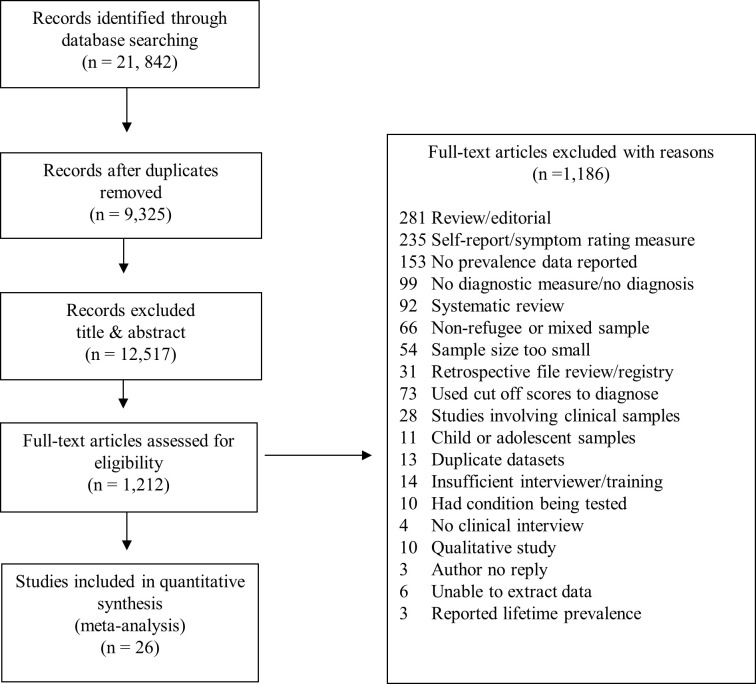
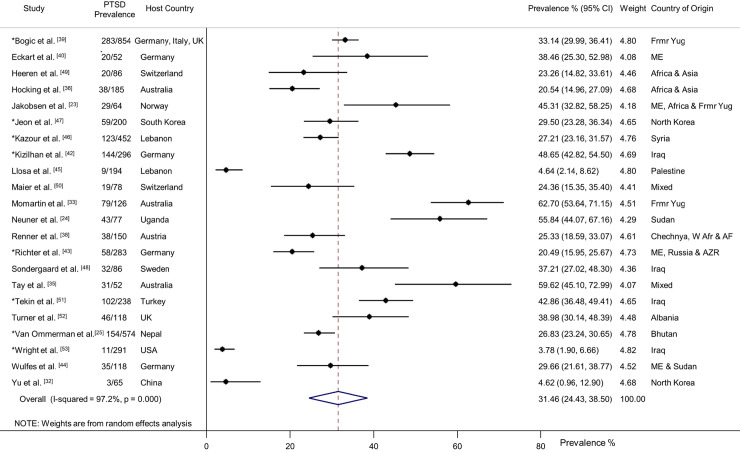
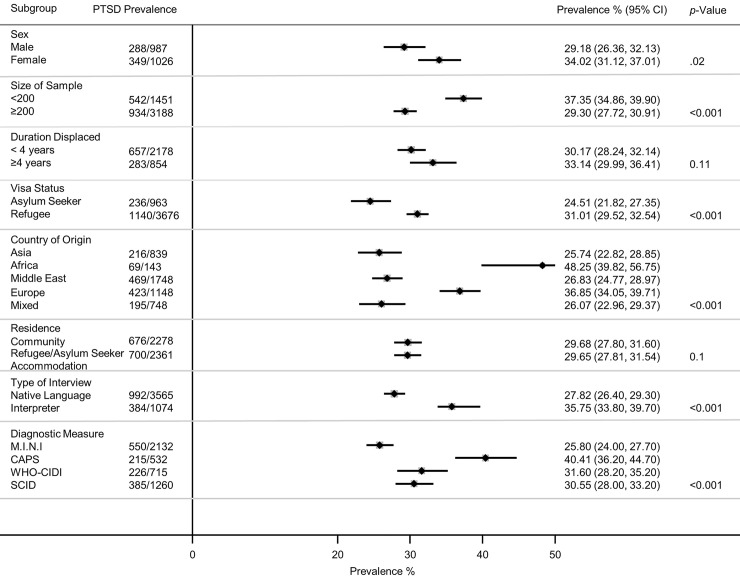
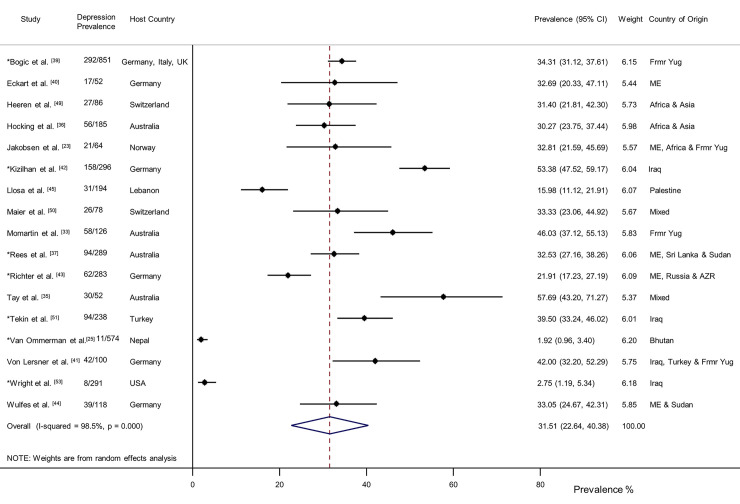
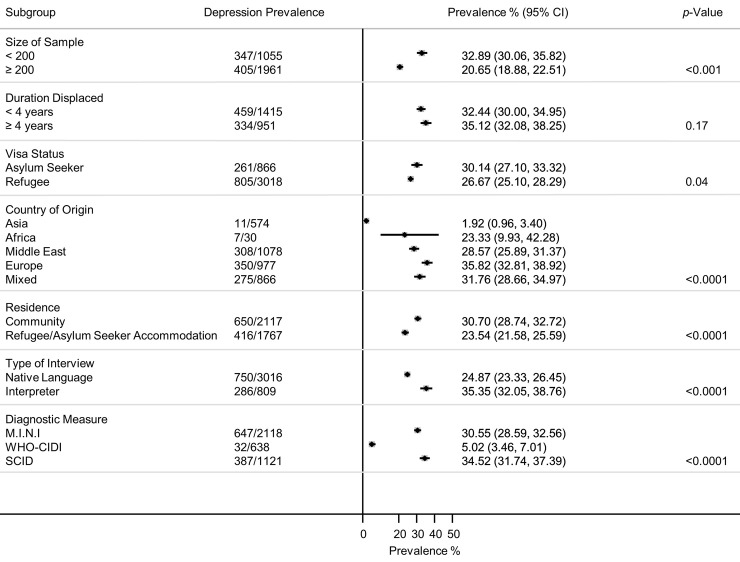
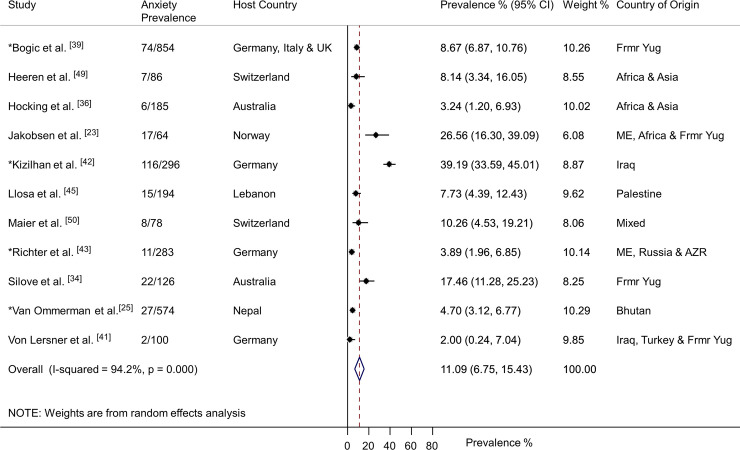
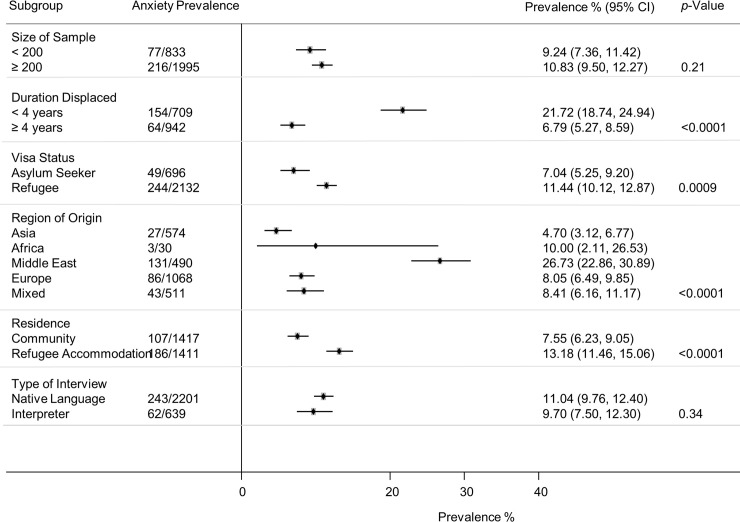
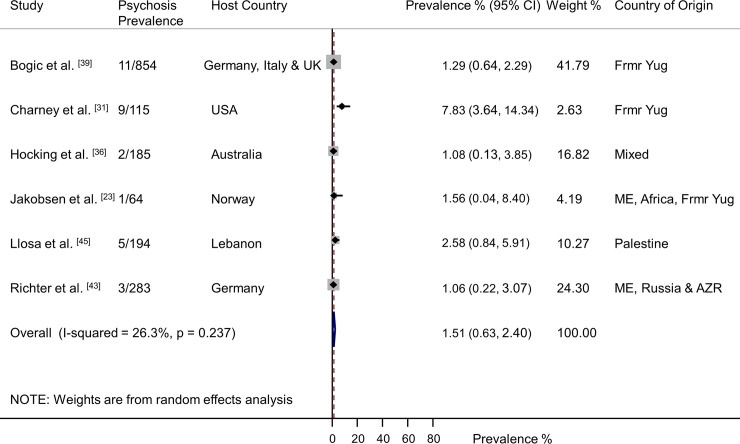
Methods and findings: A comprehensive search of electronic databases was undertaken from 1 January 2003 to 4 February 2020 (MEDLINE, MEDLINE In-Process, EBM Reviews, Embase, PsycINFO, CINAHL, PILOTS, Web of Science). Quantitative studies were included if diagnosis of mental illness involved a clinical interview and use of a validated assessment measure and reported at least 50 participants. Study quality was assessed using a descriptive approach based on a template according to study design (modified Newcastle-Ottawa Scale). Random-effects models, based on inverse variance weights, were conducted. Subgroup analyses were performed for sex, sample size, displacement duration, visa status, country of origin, current residence, type of interview (interpreter-assisted or native language), and diagnostic measure. The systematic review was registered with PROSPERO (CRD) 42016046349. The search yielded a result of 21,842 records. Twenty-six studies, which included one randomised controlled trial and 25 observational studies, provided results for 5,143 adult refugees and asylum seekers. Studies were undertaken across 15 countries: Australia (652 refugees), Austria (150), China (65), Germany (1,104), Italy (297), Lebanon (646), Nepal (574), Norway (64), South Korea (200), Sweden (86), Switzerland (164), Turkey (238), Uganda (77), United Kingdom (420), and the United States of America (406). The prevalence of posttraumatic stress disorder (PTSD) was 31.46% (95% CI 24.43-38.5), the prevalence of depression was 31.5% (95% CI 22.64-40.38), the prevalence of anxiety disorders was 11% (95% CI 6.75-15.43), and the prevalence of psychosis was 1.51% (95% CI 0.63-2.40). A limitation of the study is that substantial heterogeneity was present in the prevalence estimates of PTSD, depression, and anxiety, and limited covariates were reported in the included studies.
Conclusions: This comprehensive review generates current prevalence estimates for not only PTSD but also depression, anxiety, and psychosis. Refugees and asylum seekers have high and persistent rates of PTSD and depression, and the results of this review highlight the need for ongoing, long-term mental health care beyond the initial period of resettlement.
Conflict of interest statement
The authors have declared that no competing interests exist.
Figures
References
-
- United Nations High Commissioner for Refugees. Global trends—forced displacement in 2018. United Nations High Commissioner for Refugees. 2019. Available from: https://www.unhcr.org/en-au/statistics/unhcrstats/5d08d7ee7/unhcr-global...
-
- Kéri S. Suffering has no race or nation: The psychological impact of the refugee crisis in Hungary and the occurrence of posttraumatic stress disorder. Soc Sci. 2015;4(4).
-
- Beiser M. Longitudinal research to promote effective refugee resettlement. Transcult Psychiatry. 2006; 43(1): 56–71. - PubMed
-
- Porter M, Haslam N. Predisplacement and postdisplacement factors associated with mental health of refugees and internally displaced persons—a meta-analysis. JAMA. 2005;294(5): 602–12. - PubMed
Publication types
MeSH terms
LinkOut - more resources
Full Text Sources
Medical
Miscellaneous