


Mulinane- and Azorellane-Type Diterpenoids: A Systematic Review of Their Biosynthesis, Chemistry, and Pharmacology
- PMID: 32957713
- PMCID: PMC7565077
- DOI: 10.3390/biom10091333
Mulinane- and Azorellane-Type Diterpenoids: A Systematic Review of Their Biosynthesis, Chemistry, and Pharmacology
Abstract
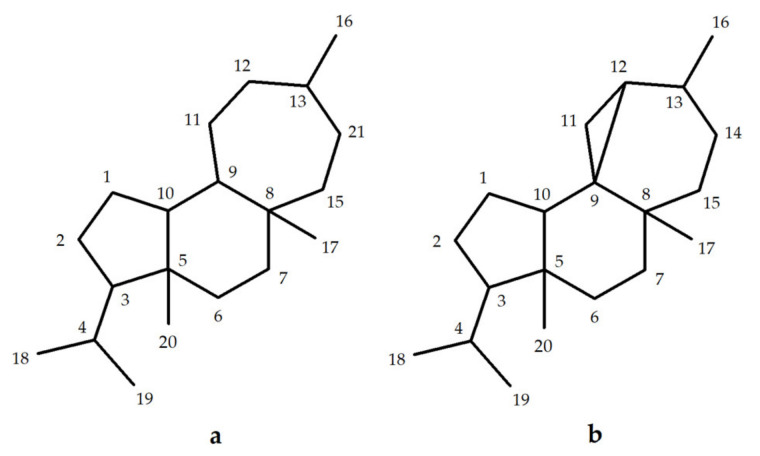
Mulinane- and azorellane-type diterpenoids have unique tricyclic fused five-, six-, and seven-membered systems and a wide range of biological properties, including antimicrobial, antiprotozoal, spermicidal, gastroprotective, and anti-inflammatory, among others. These secondary metabolites are exclusive constituents of medicinal plants belonging to the Azorella, Laretia, and Mulinum genera. In the last 30 years, more than 95 mulinanes and azorellanes have been reported, 49 of them being natural products, 4 synthetics, and the rest semisynthetic and biotransformed derivatives. This systematic review highlights the biosynthetic origin, the chemistry, and the pharmacological activities of this remarkably interesting group of diterpenoids.
Keywords: antimycobacterial; antiulcer; azorellane; diterpenoids; mulinane.
Conflict of interest statement
The authors declare no conflict of interest.
Figures




References
-
- Sen T., Samanta S.K. Medicinal plants, human health and biodiversity: A broad review. Adv. Biochem. Engin./Biotechnol. 2014;123:127–141. - PubMed
-
- Solecki R. Shanidar IV, a Neanderthal flower burial in northern Iraq. Science. 1975;190:880–881. doi: 10.1126/science.190.4217.880. - DOI
-
- World Health Organization The World Medicines Situation 2011—Traditional Medicines: Global Situation, Issues and Challenges. [(accessed on 4 May 2012)]; Available online: http://digicollection.org/hss/documents/s180.
Publication types
MeSH terms
Substances
Grants and funding
LinkOut - more resources
Full Text Sources
Molecular Biology Databases
