


Is low-back pain a limiting factor for senior workers with high physical work demands? A cross-sectional study
- PMID: 32958013
- PMCID: PMC7507239
- DOI: 10.1186/s12891-020-03643-1
Is low-back pain a limiting factor for senior workers with high physical work demands? A cross-sectional study
Abstract
Background: Low-back pain (LBP) is highly prevalent among senior workers and may affect work ability, especially among those with hard physical work. This study determined the joint association of LBP intensity and physical work demands with work limitiations due to pain in senior workers.
Methods: In the SeniorWorkingLife study (2018), 11,738 senior workers (≥50 years) replied to questions about physical work demands, LBP intensity, and work limitations due to pain. Using logistic regression analyses and controlling for potential confounders, associations between the physical work demands and LBP intensity (interaction) with work limitiations due to pain (outcome) was modeled.
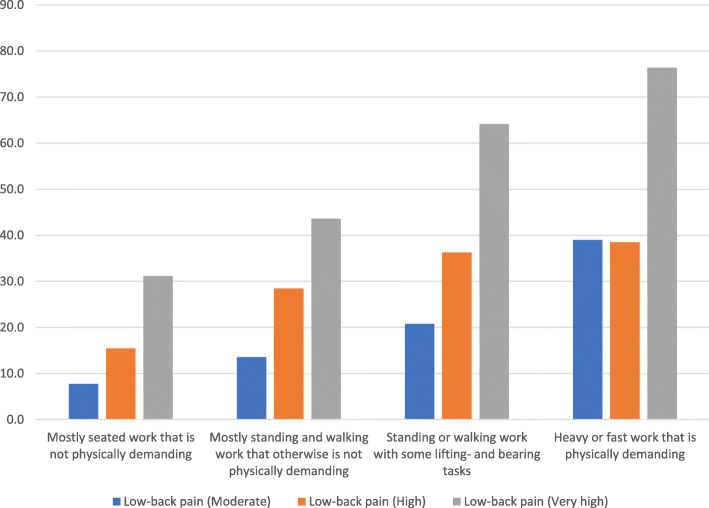
Results: Higher LBP intensity, as well as higher physical work demands, significantly increased the odds of experiencing work limitiations due to pain, and these two factors interacted with each other (p < 0.0001). In analyses stratified for LBP intensity, higher physical work demands gradually increased the odds of experiencing work limitiations due to pain.
Conclusions: Senior workers with a combination of physically demanding work and LBP are more affected by their pain during everyday work tasks compared to workers with similar LBP-intensity in sedentary occupations. Accommodation of work demands seems especially relevant for this group of workers.
Keywords: Ergonomics; Low-back; Musculoskeletal disease; Occupational medicine; Physical work; Sustainable employment; Work ability; Work limitations; Workplace.
Conflict of interest statement
The authors declare no conflicts of interest.
Figures
References
-
- Hoy D, et al. Measuring the global burden of low back pain. Best Pract Res Clin Rheumatol. 2010;24(2):155–165. - PubMed
-
- James SL, Abate D, Abate KH, Abay SM, Abbafati C, Abbasi N, et al. Lancet, global, regional, and national incidence, prevalence, and years lived with disability for 354 diseases and injuries for 195 countries and territories, 1990–2017: a systematic analysis for the global burden of disease study 2017. Lancet. 2018;392(10159):1789–1858. - PMC - PubMed
-
- Weinstein S. The burden of musculoskeletal conditions. J Bone Joint Surg. 2016;98:1331. - PubMed
-
- Rubin DI. Epidemiology and risk factors for spine pain. Neurol Clin. 2007;25(2):353–371. - PubMed
-
- Volinn E. The epidemiology of low back pain in the rest of the world. A review of surveys in low- and middle-income countries. Spine (Phila Pa 1976) 1997;22(15):1747–1754. - PubMed
MeSH terms
LinkOut - more resources
Full Text Sources
Medical
Miscellaneous
