. 2020 Sep 21;11(1):4761.
doi: 10.1038/s41467-020-18557-8.

Ring-opening functionalizations of unstrained cyclic amines enabled by difluorocarbene transfer

Affiliations

Ring-opening functionalizations of unstrained cyclic amines enabled by difluorocarbene transfer

Youyoung Kim et al. Nat Commun. .

Abstract

Chemical synthesis based on the skeletal variation has been prolifically utilized as an attractive approach for modification of molecular properties. Given the ubiquity of unstrained cyclic amines, the ability to directly alter such motifs would grant an efficient platform to access unique chemical space. Here, we report a highly efficient and practical strategy that enables the selective ring-opening functionalization of unstrained cyclic amines. The use of difluorocarbene leads to a wide variety of multifaceted acyclic architectures, which can be further diversified to a range of distinctive homologative cyclic scaffolds. The virtue of this deconstructive strategy is demonstrated by successful modification of several natural products and pharmaceutical analogues.


Conflict of interest statement

The authors declare no competing interests.

Figures
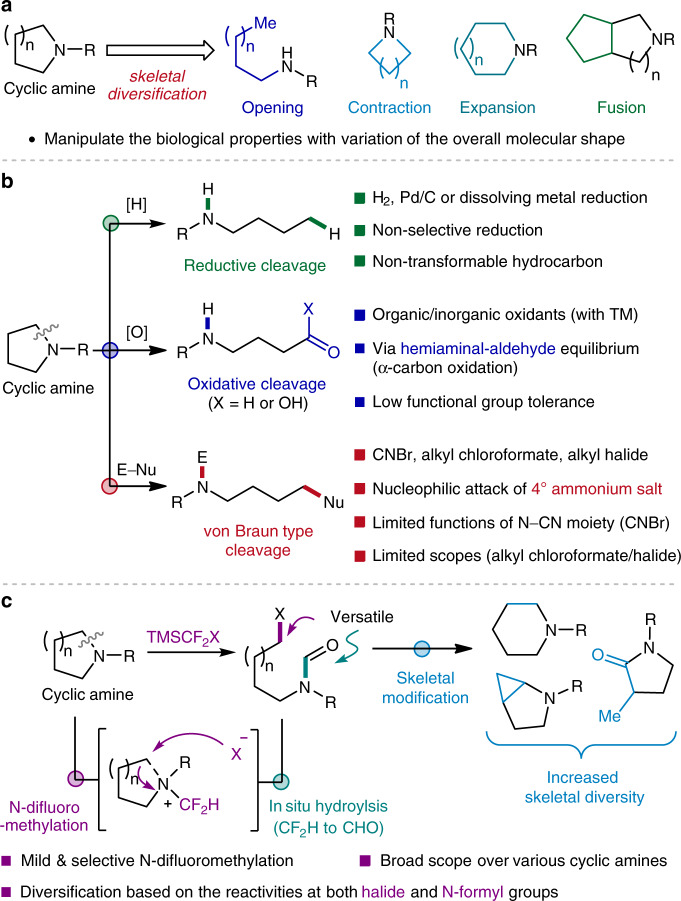
Fig. 1
Fig. 1. C–N Bond cleavage of unstrained cyclic amines.
a Importance of skeletal diversification of unstrained cyclic amines. b Previously reported strategies for C–N bond cleavage of cyclic amines. c This work: Ring-opening halogenation via N-difluoromethylative C–N bond cleavage.
Fig. 2
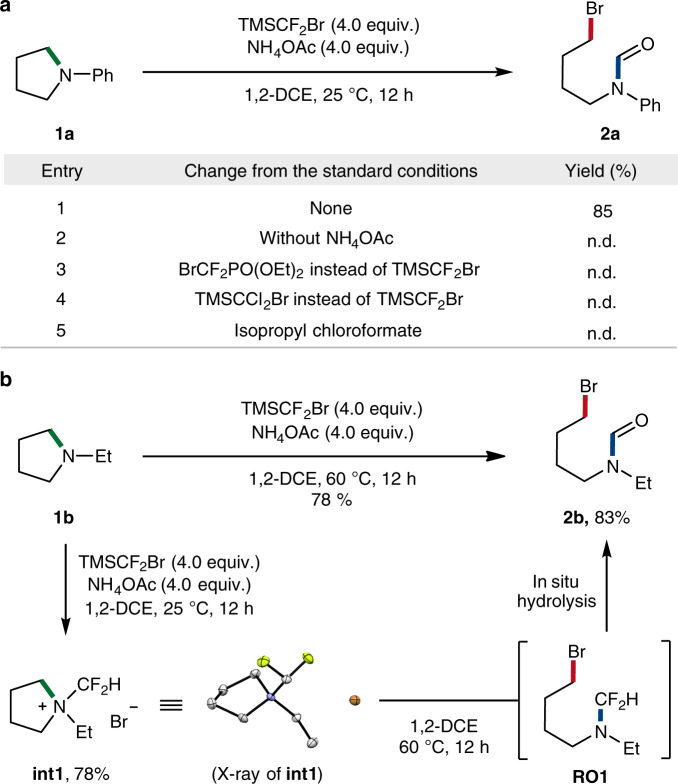
Fig. 2. Reaction development.
a Selected optimization conditions for the ring-opening bromoformylation of N-phenylpyrrolidine 1a; All reactions were performed on a 0.2 mmol scale; 1,2-DCE, 1,2-dichloroethane; n.d., not detected; Isolated yields. b Isolation of an ammonium salt intermediate from N-ethylpyrrolidine 1b.
Fig. 3
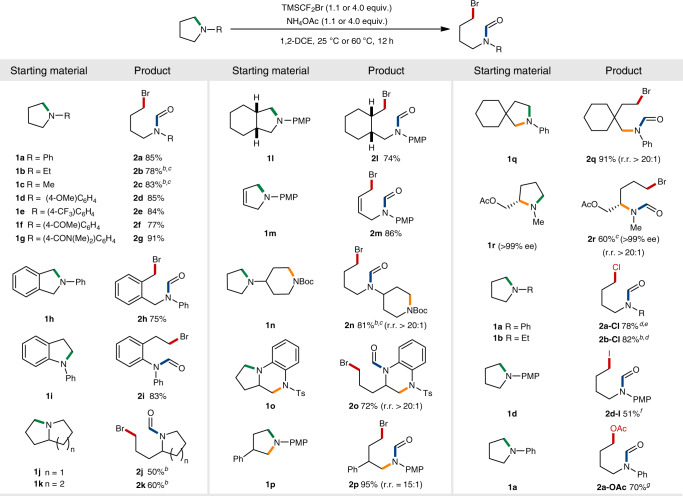
Fig. 3. Reaction scope of five-membered cyclic amines.
aReaction conditions: Unless otherwise indicated, all reactions were performed on a 0.2 mmol scale using cyclic amine (1.0 equiv.), TMSCF2Br (4.0 equiv.), NH4OAc (4.0 equiv.) and 1,2-DCE (0.5 mL) at room temperature. regioselectivity ratios (r.r.) were determined by 1H NMR spectroscopy of crude mixtures. b60 °C. c1.1 equiv. of TMSCF2Br and 1.1 equiv. of NH4OAc. dTMSCF2Cl (4.0 equiv.) instead of TMSCF2Br. eKF (4.0 equiv.) as an alternative base, with H2O (0.05 mL) as a co-solvent. fTMSCF2I (4.0 equiv.) instead of TMSCF2Br. g4.0 equiv. of TMSCF2Cl and 16.0 equiv. of NH4OAc. PMP para-methoxyphenyl.
Fig. 4
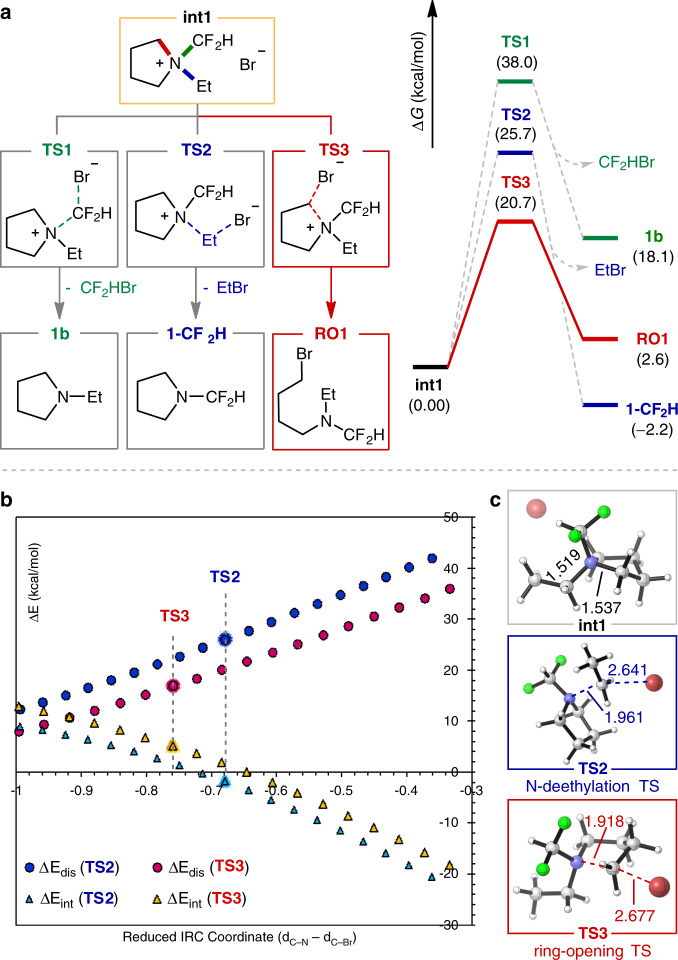
Fig. 4. Evaluation of selectivity for 5-membered cyclic amines with DFT calculation.
a Reaction energy profiles of three possible nucleophilic substitution pathways from N-CF2H salt (int1); green: dedifluoromethylation path leading to 1b (via TS1), blue: deethylation path leading to 1-CF2H (via TS2), and red: ring-opening path leading to RO1 (via TS3). b Distortion-interaction analysis along IRC coordinate of int1; blue dot: distortion energy of deethylation, red dot: distortion energy of ring-opening, sky blue triangle: interaction energy of deethylation, and yellow triangle: interaction energy of ring-opening. c DFT-optimized structures of int1 and its transition states for deethylation (blue, TS2) and ring-opening (red, TS3).
Fig. 5
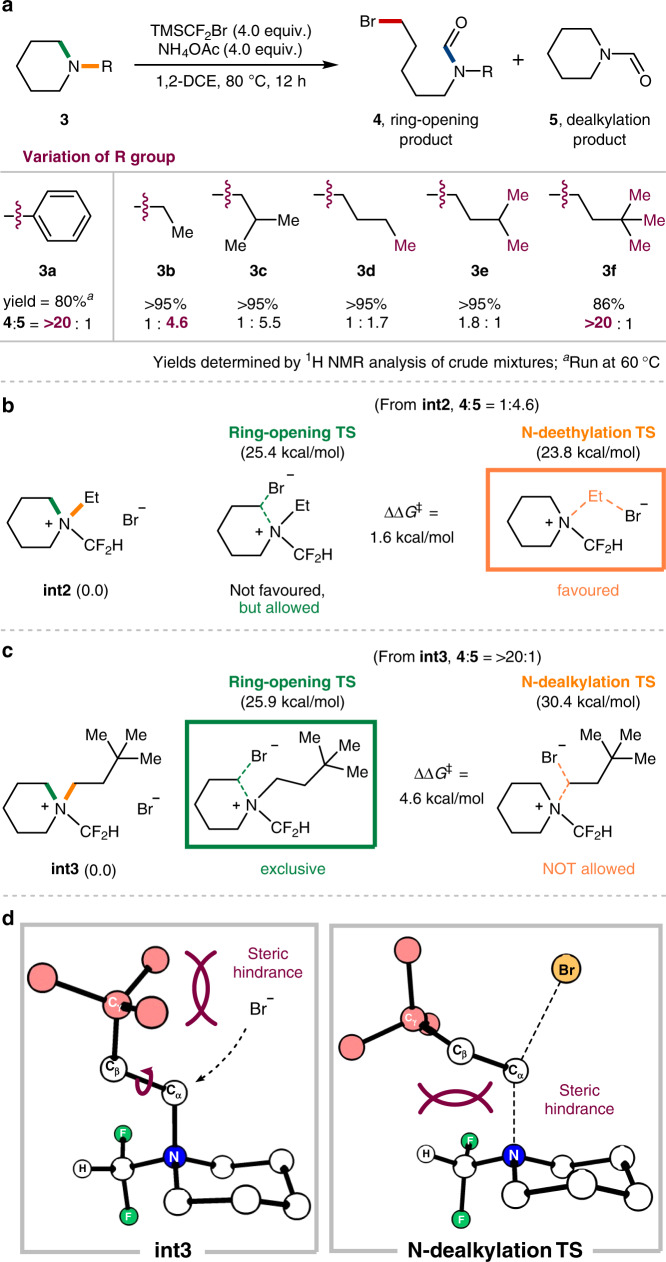
Fig. 5. Application to 6-membered cyclic amines and DFT calculations for the elucidation of the observed selectivity.
a Influence of R group on the site-selectivity in 6-membered rings. b Competitive reaction energy profiles of N-dealkylation and ring-opening pathways of N-ethyl salt int2. c Competitive reaction energy profiles of N-neohexyl salt int3. d Structural analysis for N-dealkylation of int3.
Fig. 6
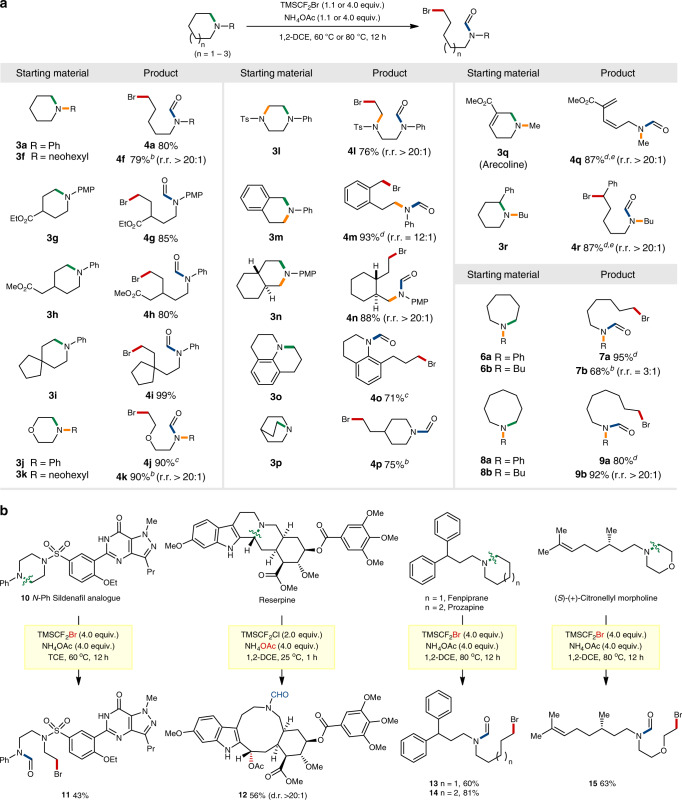
Fig. 6. Reaction of six-membered and larger cyclic amines.
a Substrate scope; areaction conditions: unless otherwise indicated, all reactions were performed on a 0.2 mmol scale using cyclic amine (1.0 equiv.), TMSCF2Br (4.0 equiv.), NH4OAc (4.0 equiv.) and 1,2-DCE (0.5 mL) at 60 °C. regioselectivity ratios (r.r.) were determined by 1H NMR spectroscopy of crude mixtures. b80 °C. c40 °C. d25 °C. e1.1 equiv. of TMSCF2Br and 1.1 equiv. of NH4OAc. PMP para-methoxyphenyl. b Late-stage ring-opening functionalization of biologically relevant compounds.
Fig. 7
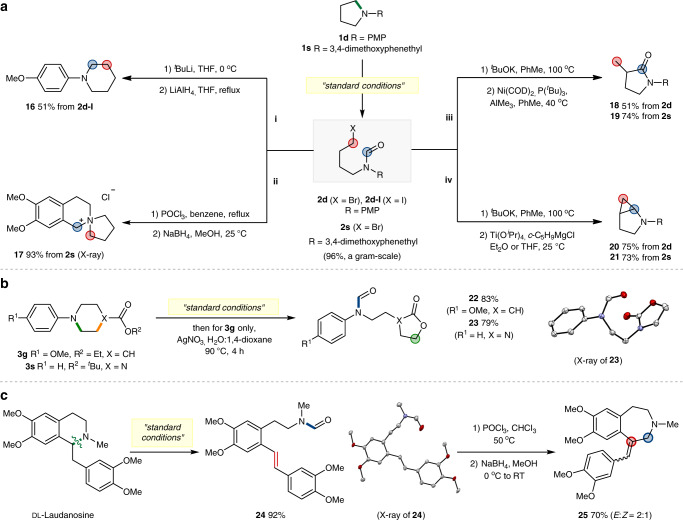
Fig. 7. Skeletal diversification.
a Skeletal remodelling of pyrrolidine rings. i, ring-expansion. ii, synthesis of spiro-bicyclic compound through the Bischler–Napieralski reaction. iii, synthesis of γ-lactam products by hydrocarbamoylation of E2 products. iv, synthesis of ring-fused products by the Kulinkovich–de Meijere reaction. b Skeletal remodelling of 6-membered rings by using a pre-installed nucleophile. c Ring-diversification of natural product: Ring-expansion of DL-Laudanosine.

References

    1. Roughley SD, Jordan AM. The medicinal chemist’s toolbox: an analysis of reactions used in the pursuit of drug candidates. J. Med. Chem. 2011;54:3451–3479. - PubMed
    1. Taylor RD, MacCoss M, Lawson ADG. Rings in drugs. J. Med. Chem. 2014;57:5845–5859. - PubMed
    1. Vitaku E, Smith DT, Njardarson JT. Analysis of the structural diversity, substitution patterns, and frequency of nitrogen heterocycles among U.S. FDA approved pharmaceuticals. J. Med. Chem. 2014;57:10257–10274. - PubMed
    1. Blakemore DC, et al. Organic synthesis provides opportunities to transform drug discovery. Nat. Chem. 2018;10:383–394. - PubMed
    1. Beak P, Kerrick ST, Wu S, Chu J. Complex induced proximity effects: enantioselective syntheses based on asymmetric deprotonations of N-Boc-pyrrolidines. J. Am. Chem. Soc. 1994;116:3231–3239.

Publication types