


Trends in stimulant dispensing by age, sex, state of residence, and prescriber specialty - United States, 2014-2019
- PMID: 32961454
- PMCID: PMC7851748
- DOI: 10.1016/j.drugalcdep.2020.108297
Trends in stimulant dispensing by age, sex, state of residence, and prescriber specialty - United States, 2014-2019
Abstract
Background: Stimulant medications are commonly prescribed for the treatment of attention-deficit/hyperactivity disorder; however, they also have high potential for diversion and misuse. We estimated national stimulant dispensing trends from 2014 to 2019 and differences in dispensing by age, sex, state, prescriber specialty, payor type, patient copay, and stimulant type.
Methods: We calculated rates of stimulant dispensing using IQVIA National Prescription Audit (NPA) New to Brand, NPA Regional, and NPA Extended Insights data, which provide dispensing estimates from approximately 49,900 pharmacies representing 92 % of prescriptions dispensed in the United States. Average annual percent change (AAPC) from 2014 to 2019 was analyzed using Joinpoint regression.
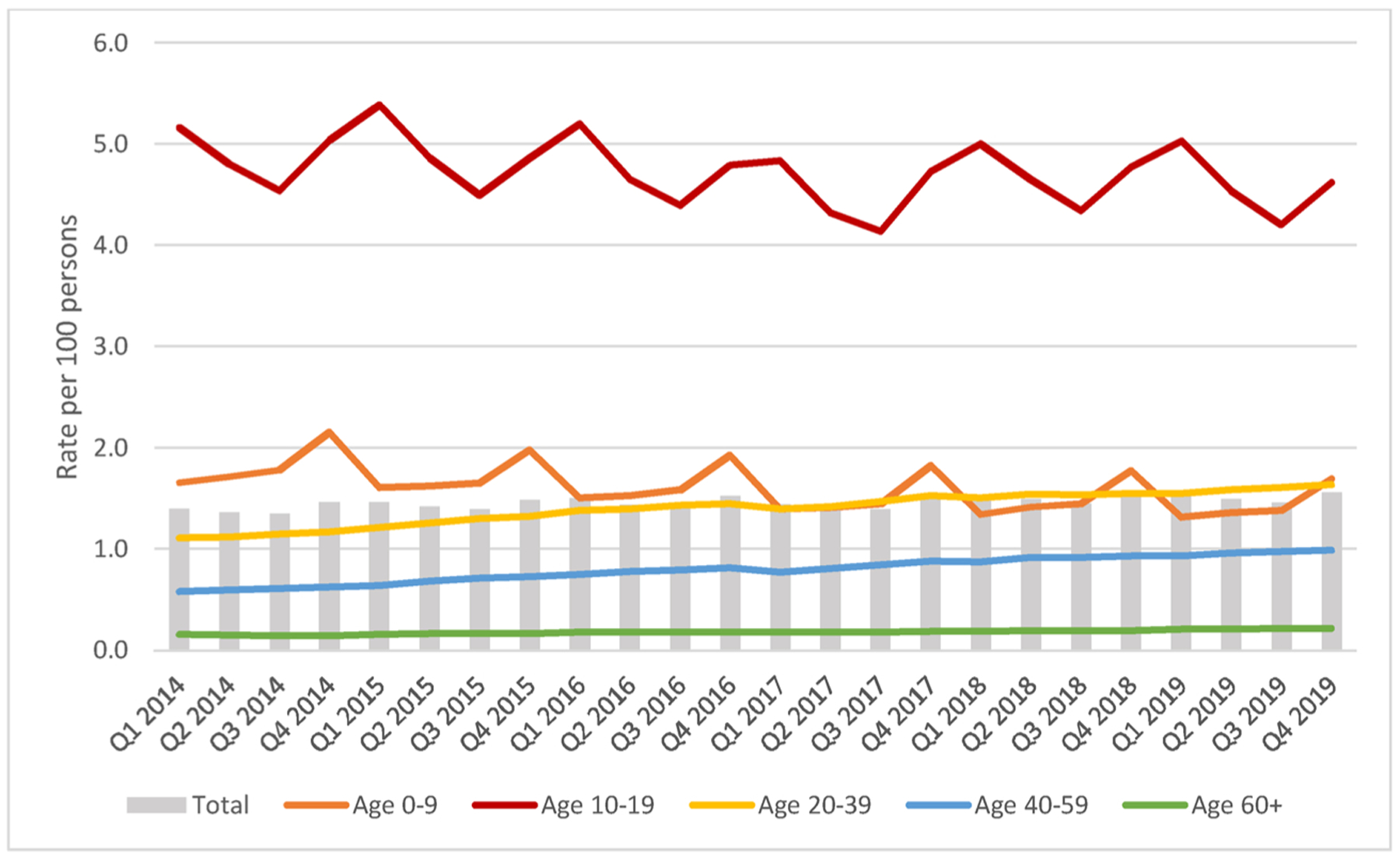
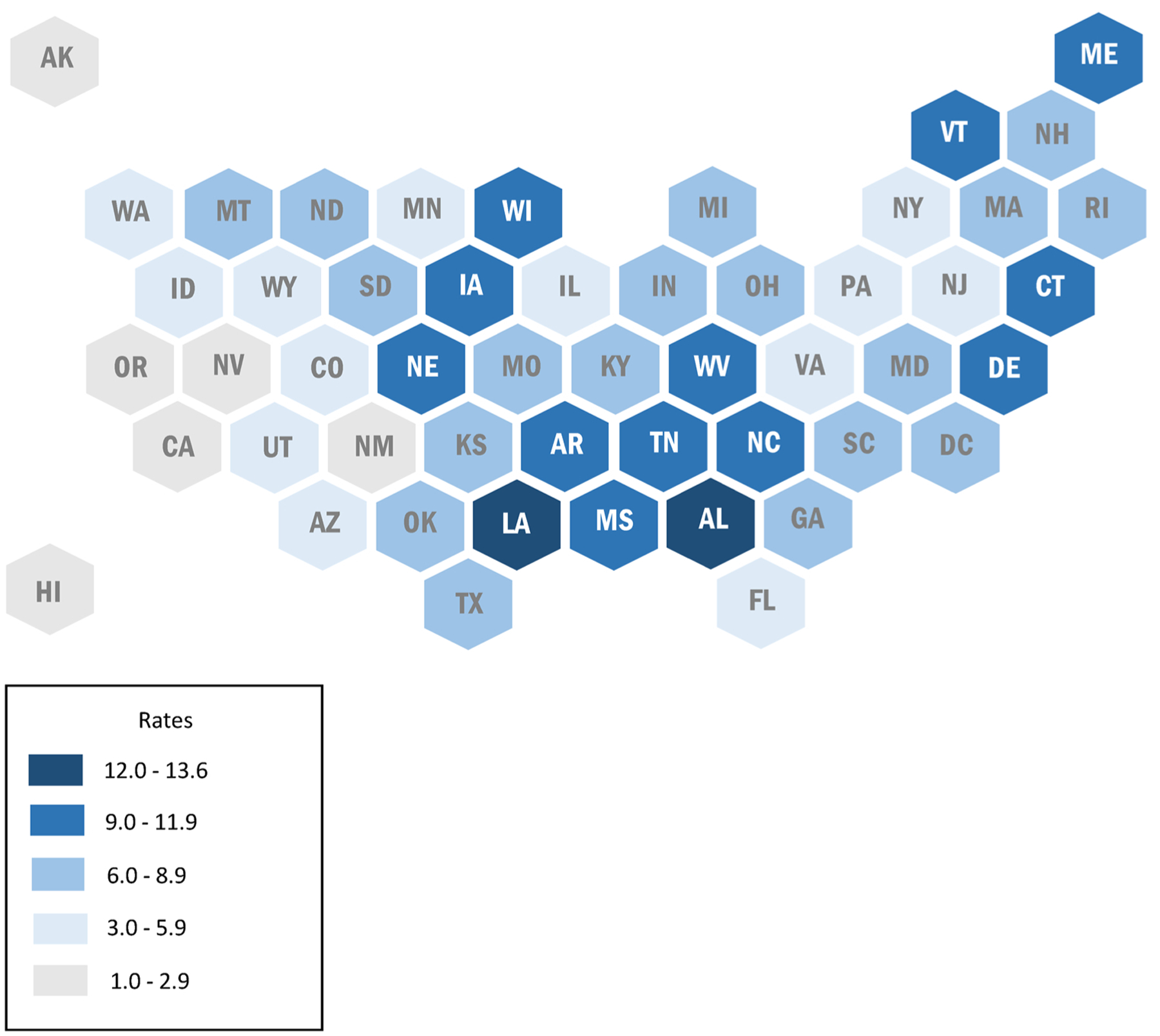
Results: From 2014 to 2019, the national annual rate of stimulant dispensing increased significantly from 5.6 to 6.1 prescriptions per 100 persons. Rates differed by prescription stimulant type, with increases occurring among both amphetamine-type stimulants and long-acting stimulants. Rates among females (AAPC = 3.6 %; P = 0.001) and adults aged 20-39 years (AAPC=6.7 %; P = 0.002), 40-59 years (AAPC=9.7 %; P < 0.001), and ≥60 years (AAPC = 6.9 %; P = 0.001) increased significantly during the study period. Stimulant dispensing rates varied substantially across states, ranging from 1.0 per 100 in Hawaii to 13.6 per 100 in Alabama.
Conclusions: National stimulant dispensing rates increased from 2014 to 2019, driven by notable increases among females and adults aged ≥20 years. These trends should be considered when prescribing stimulants given growing concerns over prescription stimulant diversion, misuse, and related health harms.
Keywords: Amphetamines; Methylphenidates; Prescription stimulants; Stimulant dispensing.
Published by Elsevier B.V.
Conflict of interest statement
Declaration of Competing Interest
The authors have no conflicts of interest to declare.
Figures
References
-
- Aldridge AP, Kroutil LA, Cowell AJ, Reeves DB, Van Brunt DL, 2011. Medication costs to private insurers of diversion of medications for attention-deficit hyperactivity disorder. PharmacoEcon. 29 (7), 621–635. - PubMed
-
- American Psychiatric Association, 2013. Attention deficit/hyperactivity disorder. https://www.psychiatry.org/psychiatrists/practice/dsm/educational-resour.... (Accessed September 2, 2020).
-
- Benson K, Flory K, Humphreys KL, Lee SS, 2015. Misuse of stimulant medication among college students: a comprehensive review and meta-analysis. Clin. Child Fam. Psychol. Rev 18 (1), 50–76. - PubMed
MeSH terms
Substances
Grants and funding
LinkOut - more resources
Full Text Sources
Medical
