


Role of Microglia in Modulating Adult Neurogenesis in Health and Neurodegeneration
- PMID: 32961703
- PMCID: PMC7555074
- DOI: 10.3390/ijms21186875
Role of Microglia in Modulating Adult Neurogenesis in Health and Neurodegeneration
Abstract
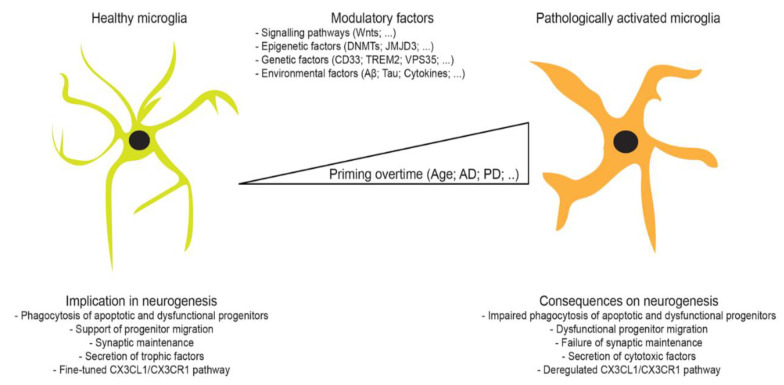
Microglia are the resident immune cells of the brain, constituting the powerhouse of brain innate immunity. They originate from hematopoietic precursors that infiltrate the developing brain during different stages of embryogenesis, acquiring a phenotype characterized by the presence of dense ramifications. Microglial cells play key roles in maintaining brain homeostasis and regulating brain immune responses. They continuously scan and sense the brain environment to detect any occurring changes. Upon detection of a signal related to physiological or pathological processes, the cells are activated and transform to an amoeboid-like phenotype, mounting adequate responses that range from phagocytosis to secretion of inflammatory and trophic factors. The overwhelming evidence suggests that microglia are crucially implicated in influencing neuronal proliferation and differentiation, as well as synaptic connections, and thereby cognitive and behavioral functions. Here, we review the role of microglia in adult neurogenesis under physiological conditions, and how this role is affected in neurodegenerative diseases.
Keywords: microglia; neurodegeneration; neurogenesis.
Conflict of interest statement
The authors declare no conflict of interest.
Figures
References
Publication types
MeSH terms
LinkOut - more resources
Full Text Sources
Medical
