


Perspectives and Impact of a Parent-Child Intervention on Dietary Intake and Physical Activity Behaviours, Parental Motivation, and Parental Body Composition: A Randomized Controlled Trial
- PMID: 32962031
- PMCID: PMC7560045
- DOI: 10.3390/ijerph17186822
Perspectives and Impact of a Parent-Child Intervention on Dietary Intake and Physical Activity Behaviours, Parental Motivation, and Parental Body Composition: A Randomized Controlled Trial
Abstract
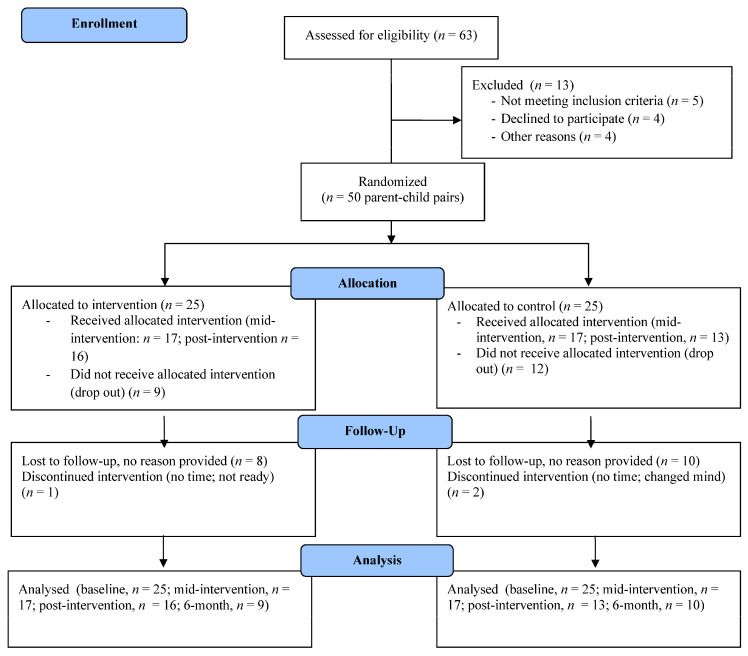
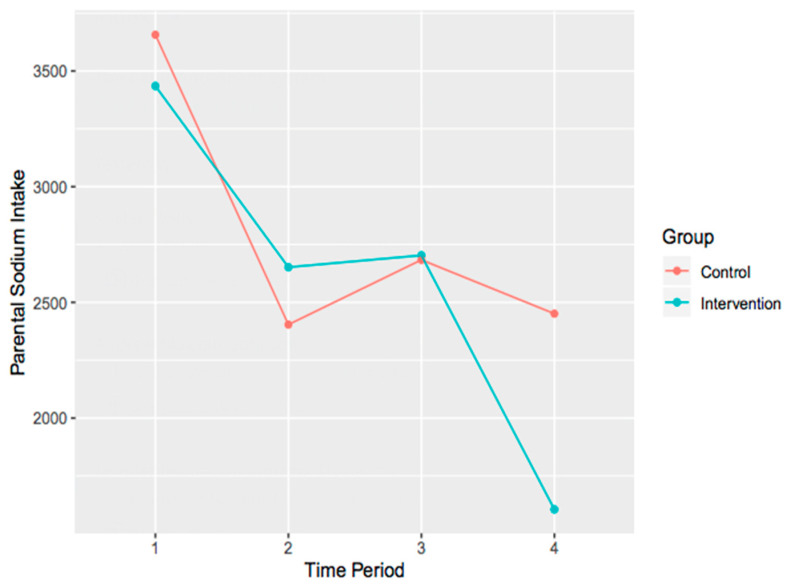
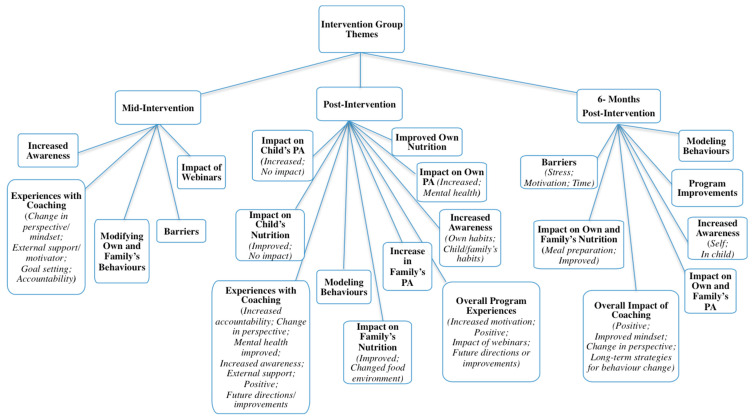
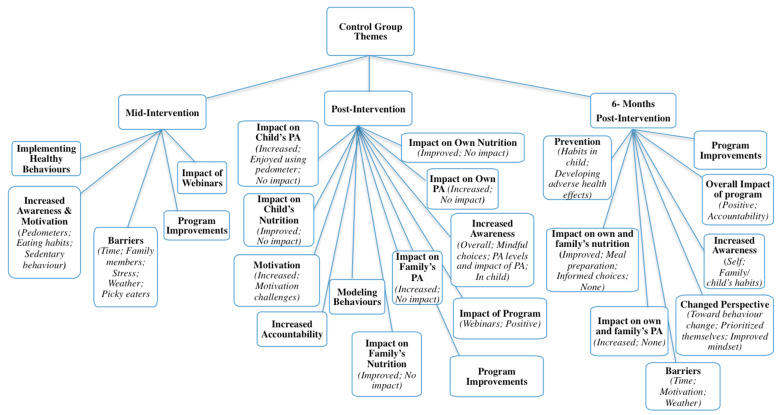
Adults and children in Canada are not meeting physical activity guidelines nor consuming sufficient nutrient-rich foods. High engagement in these unhealthy behaviours can lead to obesity and its associated diseases. Parent-child interventions aimed at obesity prevention/treatment have assisted families with making positive changes to their nutrition and physical activity behaviours. Given that the home environment shapes early health behaviours, it is important to target both parents and children when addressing diet and physical activity. One method that has been shown to improve health outcomes is co-active coaching. The current study explored the impact of a three-month co-active coaching and/or health education intervention on the dietary intake and physical activity behaviours of parents with overweight/obesity and their children (ages 2.5-10; of any weight). Body composition (i.e., body mass index [BMI] and waist circumference), changes in parental motivation with respect to physical activity and dietary behaviours, and parental perceptions of program improvements were collected. A concurrent mixed methods study comprised of a randomized controlled trial and a descriptive qualitative design was utilized. Fifty parent-child dyads were recruited and randomly assigned to the control (n = 25) or intervention (n = 25) group. Assessments were completed at baseline, mid-intervention (six weeks), post-intervention (three months), and six-month follow-up. A linear mixed effects model was utilized for quantitative analysis. Inductive content analysis was used to extract themes from parent interviews. No significant results were observed over time for the dependent measures. Parents in both control and intervention groups reported varied program experiences, including developing changes in perspective, increased awareness of habits, and heightened accountability for making positive changes in themselves, and consequently, their families. Parents also shared barriers they faced when implementing changes (e.g., time, weather, stress). Qualitatively, both groups reported benefitting from this program, with the intervention group describing salient benefits from engaging in coaching. This research expands on the utility of coaching as a method for behaviour change, when compared to education only, in parents with overweight/obesity and their children.
Keywords: coaching; motivation; nutrition; overweight/obesity; parent-child dyad; physical activity.
Conflict of interest statement
The authors declare no conflict of interest.
Figures
References
-
- World Health Organization WHO|Childhood Overweight and Obesity. [(accessed on 16 August 2018)]; Available online: http://www.who.int/dietphysicalactivity/childhood/en/
-
- Lioret S., Campbell K.J., Crawford D., Spence A.C., Hesketh K., Mcnaughton S.A. A parent focused child obesity prevention intervention improves some mother obesity risk behaviors: The Melbourne infant program. Int. J. Behav. Nutr. Phys. Act. 2012;9:1. doi: 10.1186/1479-5868-9-100. - DOI - PMC - PubMed
Publication types
MeSH terms
LinkOut - more resources
Full Text Sources
Medical
