


Mast Cell Regulation and Irritable Bowel Syndrome: Effects of Food Components with Potential Nutraceutical Use
- PMID: 32962285
- PMCID: PMC7570512
- DOI: 10.3390/molecules25184314
Mast Cell Regulation and Irritable Bowel Syndrome: Effects of Food Components with Potential Nutraceutical Use
Abstract
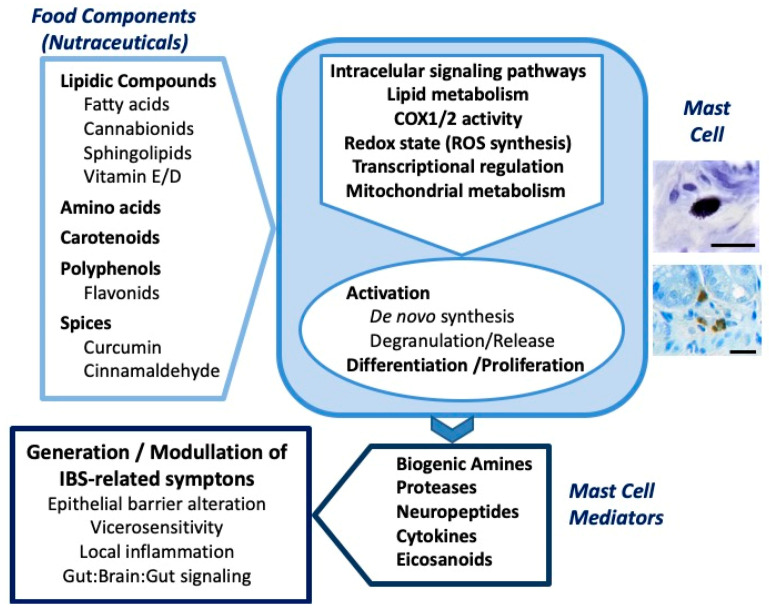
Mast cells are key actors in inflammatory reactions. Upon activation, they release histamine, heparin and nerve growth factor, among many other mediators that modulate immune response and neuron sensitization. One important feature of mast cells is that their population is usually increased in animal models and biopsies from patients with irritable bowel syndrome (IBS). Therefore, mast cells and mast cell mediators are regarded as key components in IBS pathophysiology. IBS is a common functional gastrointestinal disorder affecting the quality of life of up to 20% of the population worldwide. It is characterized by abdominal pain and altered bowel habits, with heterogeneous phenotypes ranging from constipation to diarrhea, with a mixed subtype and even an unclassified form. Nutrient intake is one of the triggering factors of IBS. In this respect, certain components of the daily food, such as fatty acids, amino acids or plant-derived substances like flavonoids, have been described to modulate mast cells' activity. In this review, we will focus on the effect of these molecules, either stimulatory or inhibitory, on mast cell degranulation, looking for a nutraceutical capable of decreasing IBS symptoms.
Keywords: cannabidiol; fatty acids; heparin; histamine; irritable bowel syndrome; mast cells; nerve growth factor; nutraceuticals; polyphenols; visceral pain.
Conflict of interest statement
The authors declare no conflict of interest. The funders had no role in the design of the study; in the collection, analyses, or interpretation of data; in the writing of the manuscript, or in the decision to publish the results.
Figures
References
Publication types
MeSH terms
Substances
Grants and funding
LinkOut - more resources
Full Text Sources
Medical
