


Prevalence of Schistosoma mansoni and S. haematobium in Snail Intermediate Hosts in Africa: A Systematic Review and Meta-analysis
- PMID: 32963554
- PMCID: PMC7492904
- DOI: 10.1155/2020/8850840
Prevalence of Schistosoma mansoni and S. haematobium in Snail Intermediate Hosts in Africa: A Systematic Review and Meta-analysis
Abstract
Background: Schistosomiasis is caused by Schistosoma mansoni and S. haematobium in Africa. These schistosome parasites use freshwater snail intermediate hosts to complete their lifecycle. Varied prevalence rates of these parasites in the snail intermediate hosts were reported from several African countries, but there were no summarized data for policymakers. Therefore, this study was aimed to systematically summarize the prevalence and geographical distribution of S. mansoni and S. haematobium among freshwater snails in Africa.
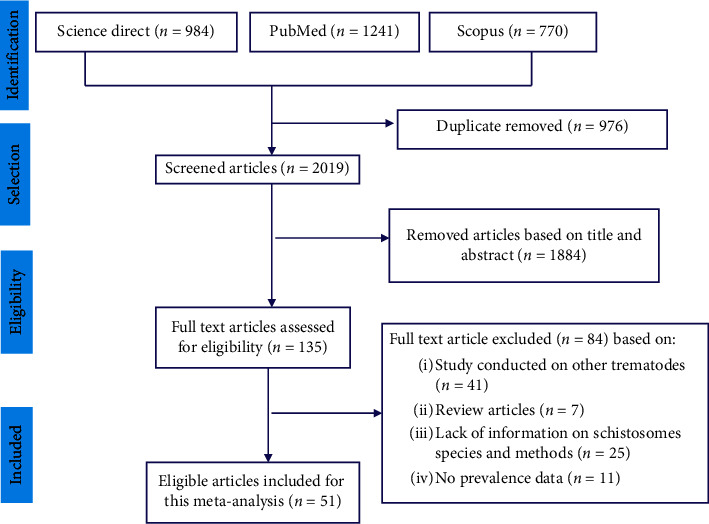
Methods: Literature search was carried out from PubMed, Science Direct, and Scopus which reported the prevalence of S. mansoni and S. haematobium among freshwater snails in Africa. The pooled prevalence was determined using a random-effect model, while heterogeneities between studies were evaluated by I 2 test. The meta-analyses were conducted using Stata software, metan command.
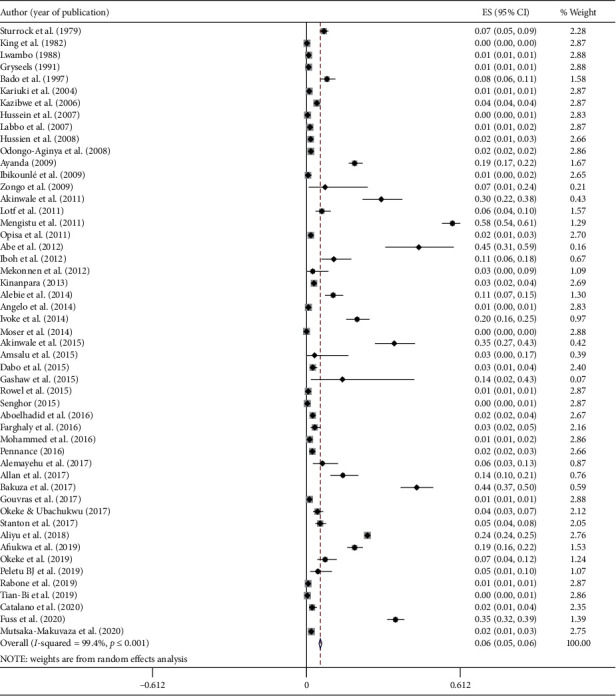
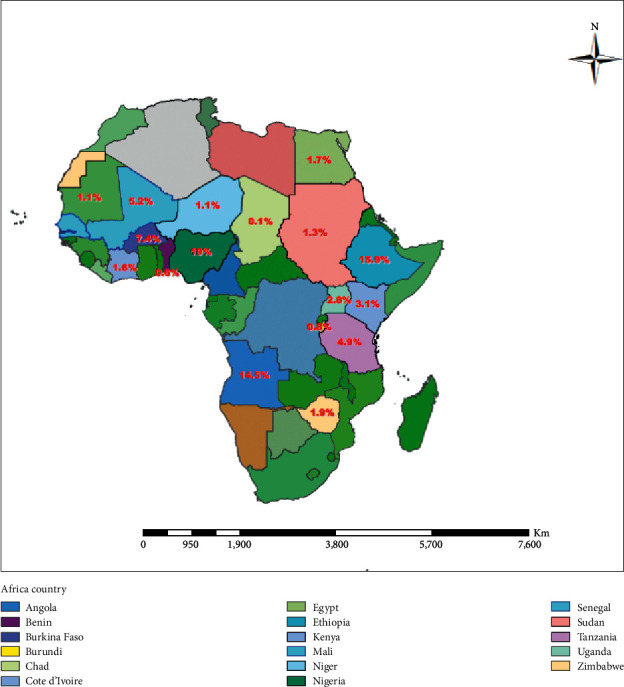
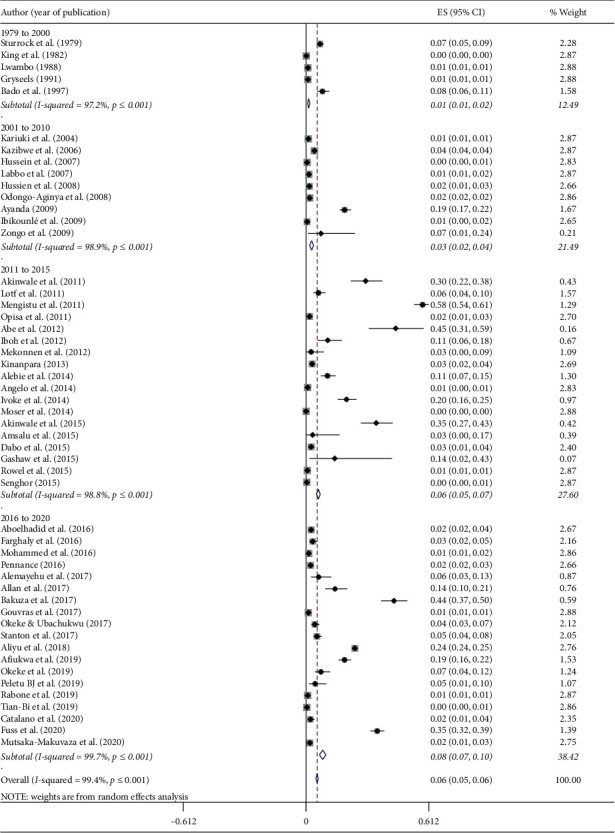
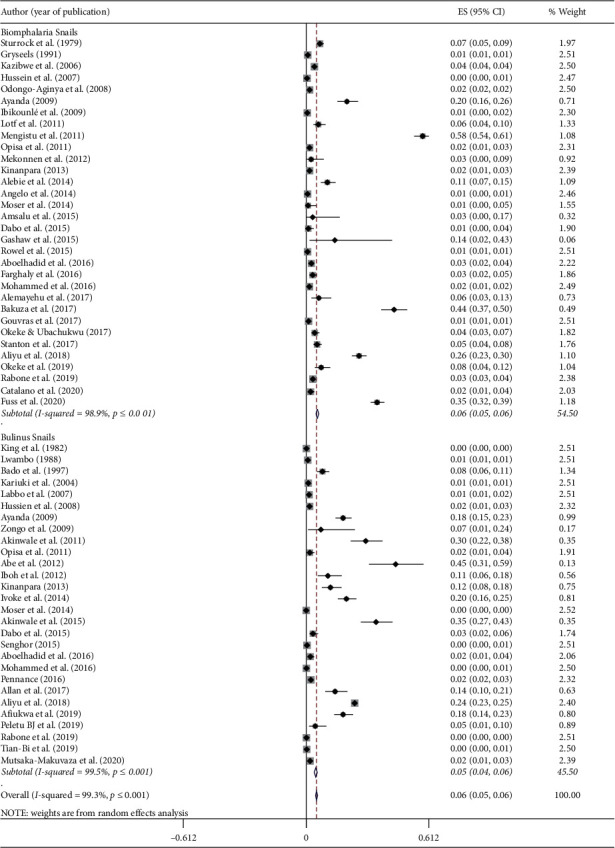
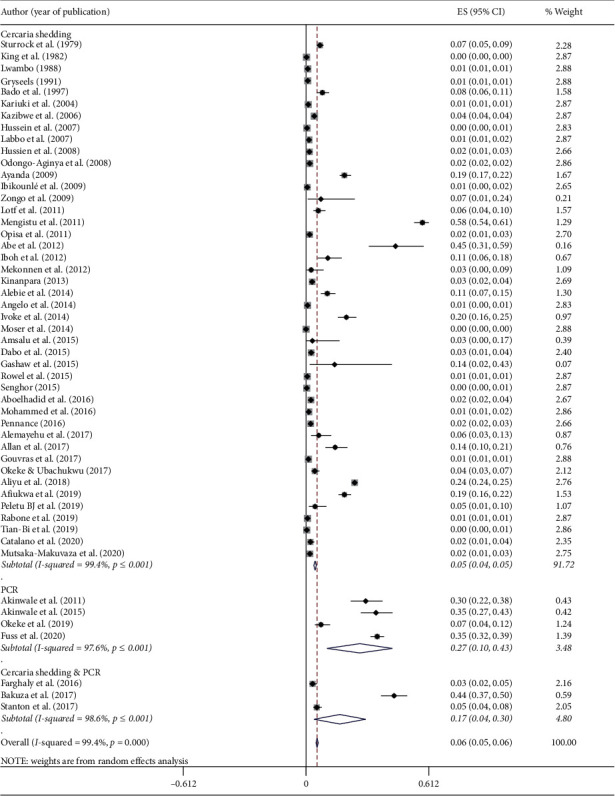
Results: A total of 273,643 snails were examined for the presence of S. mansoni and S. haematobium cercaria in the eligible studies. The pooled prevalence of schistosome cercaria among freshwater snails was 5.5% (95% CI: 4.9-6.1%). The pooled prevalence of S. mansoni and S. haematobium cercaria was 5.6% (95% CI: 4.9-6.3%) and 5.2% (95% CI: 4.6-5.7%), respectively. The highest pooled prevalence was observed from Nigeria (19.0%; 95% CI: 12.7-25.3%), while the lowest prevalence was reported from Chad (0.05%; 95% CI: 0.03-0.13). Higher prevalence of schistosome cercaria was observed from Bulinus globosus (12.3%; 95% CI: 6.2-18.3%) followed by Biomphalaria sudanica (6.7%; 95% CI: 4.5-9.0%) and Biomphalaria pfeifferi (5.1%; 95% CI: 4.1-6.2%). The pooled prevalence of schistosome cercaria obtained using PCR was 26.7% in contrast to 4.5% obtained by shedding cercariae.
Conclusion: This study revealed that nearly 6% of freshwater snails in Africa were infected by either S. haematobium or S. mansoni. The high prevalence of schistosomes among freshwater snails highlights the importance of appropriate snail control strategies in Africa.
Copyright © 2020 Tamirat Hailegebriel et al.
Conflict of interest statement
The authors declare that there are no conflicts of interest.
Figures
References
-
- WHO. Schistosomiasis. 2020. https://www.who.int/news-room/fact-sheets/detail/schistosomiasis.
Publication types
LinkOut - more resources
Full Text Sources
Research Materials
