


An attention-supervised full-resolution residual network for the segmentation of breast ultrasound images
- PMID: 32964449
- PMCID: PMC7905659
- DOI: 10.1002/mp.14470
An attention-supervised full-resolution residual network for the segmentation of breast ultrasound images
Abstract
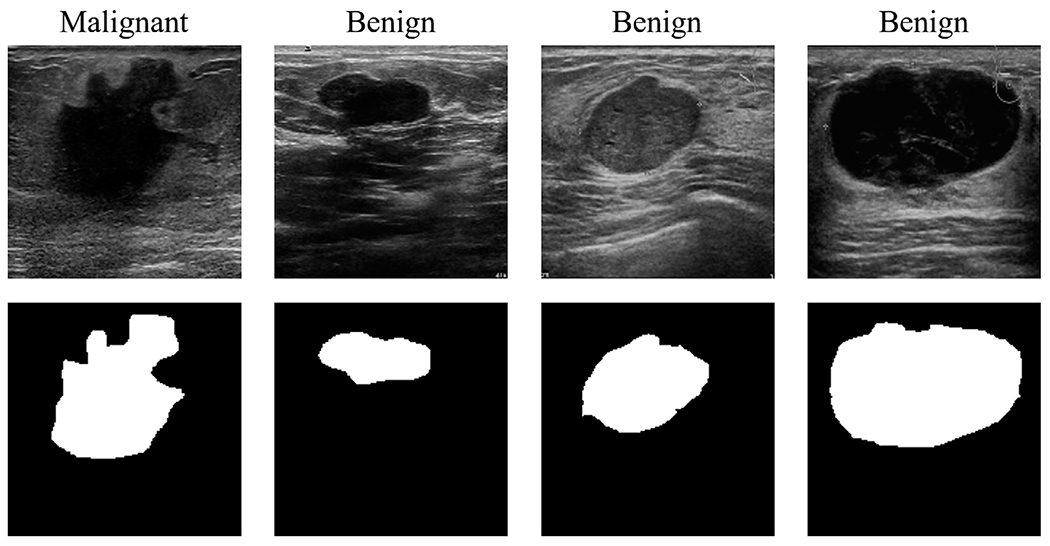
Purpose: Breast cancer is the most common cancer among women worldwide. Medical ultrasound imaging is one of the widely applied breast imaging methods for breast tumors. Automatic breast ultrasound (BUS) image segmentation can measure the size of tumors objectively. However, various ultrasound artifacts hinder segmentation. We proposed an attention-supervised full-resolution residual network (ASFRRN) to segment tumors from BUS images.
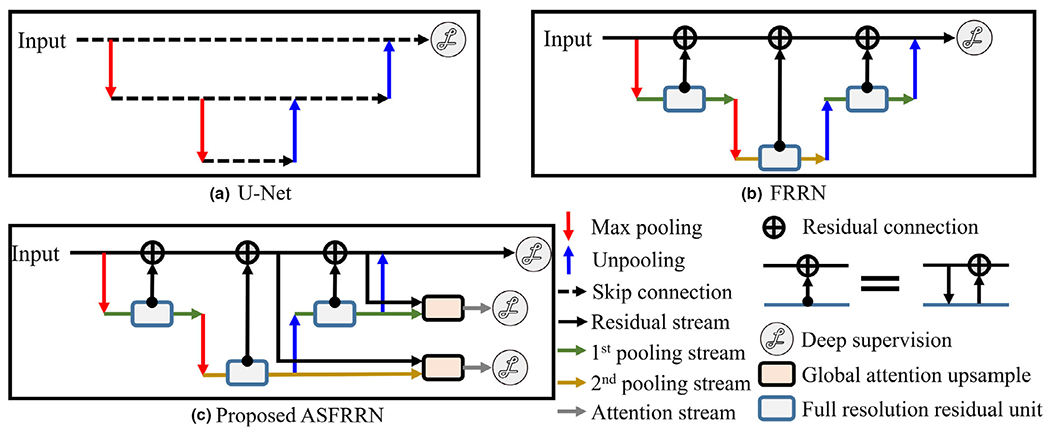
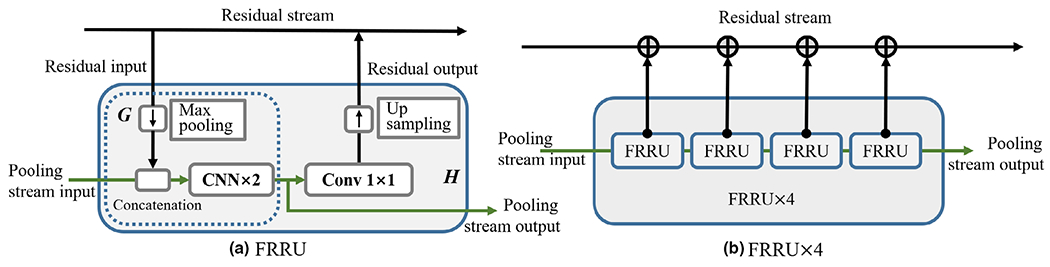
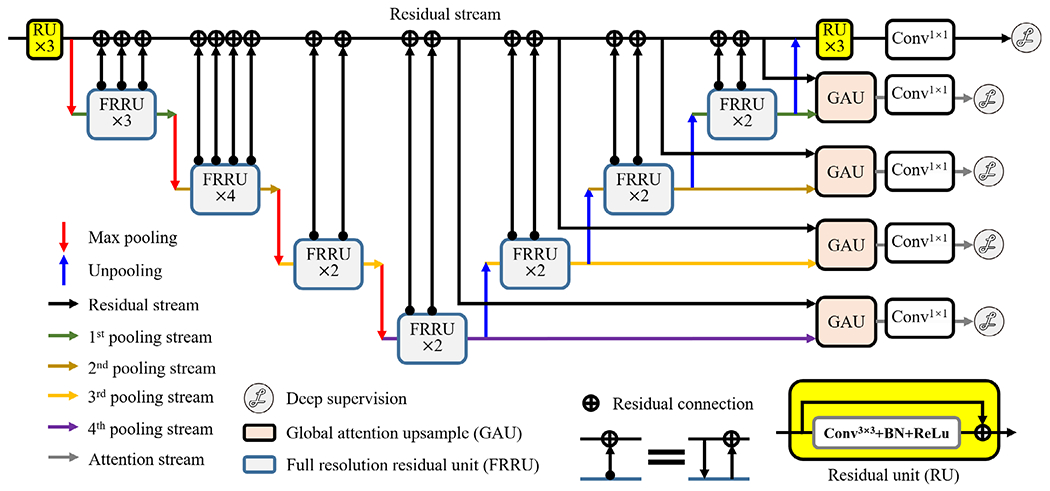
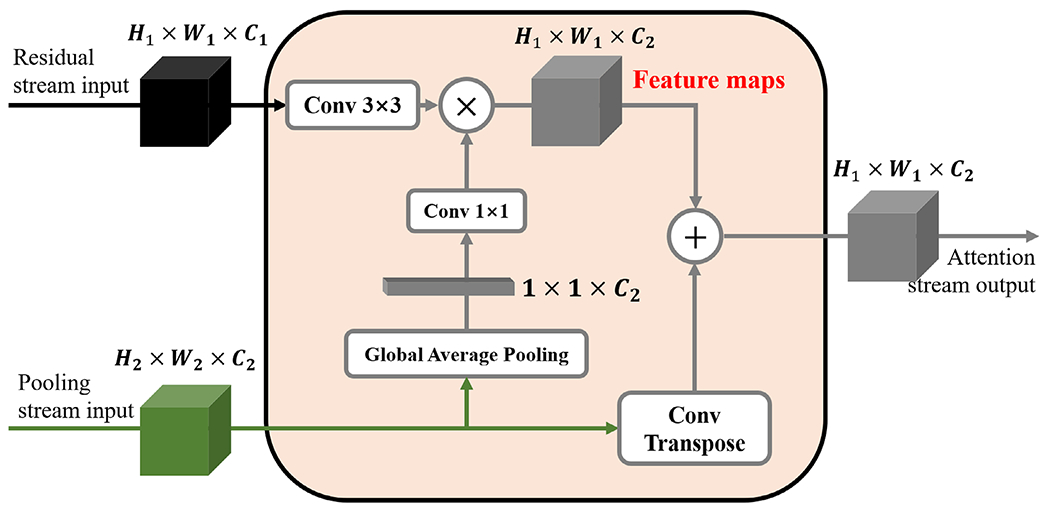
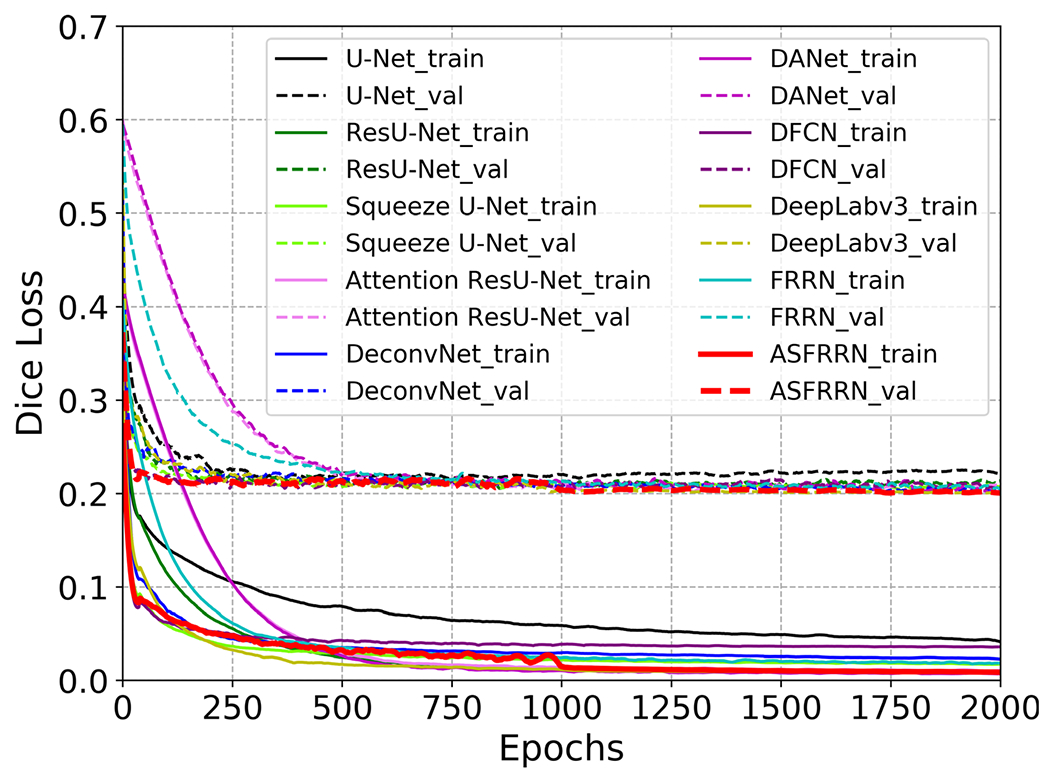
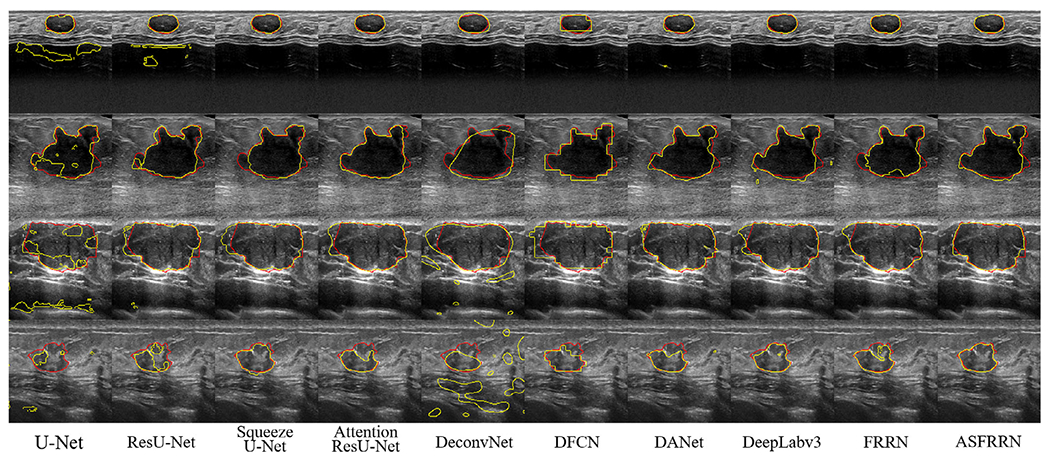
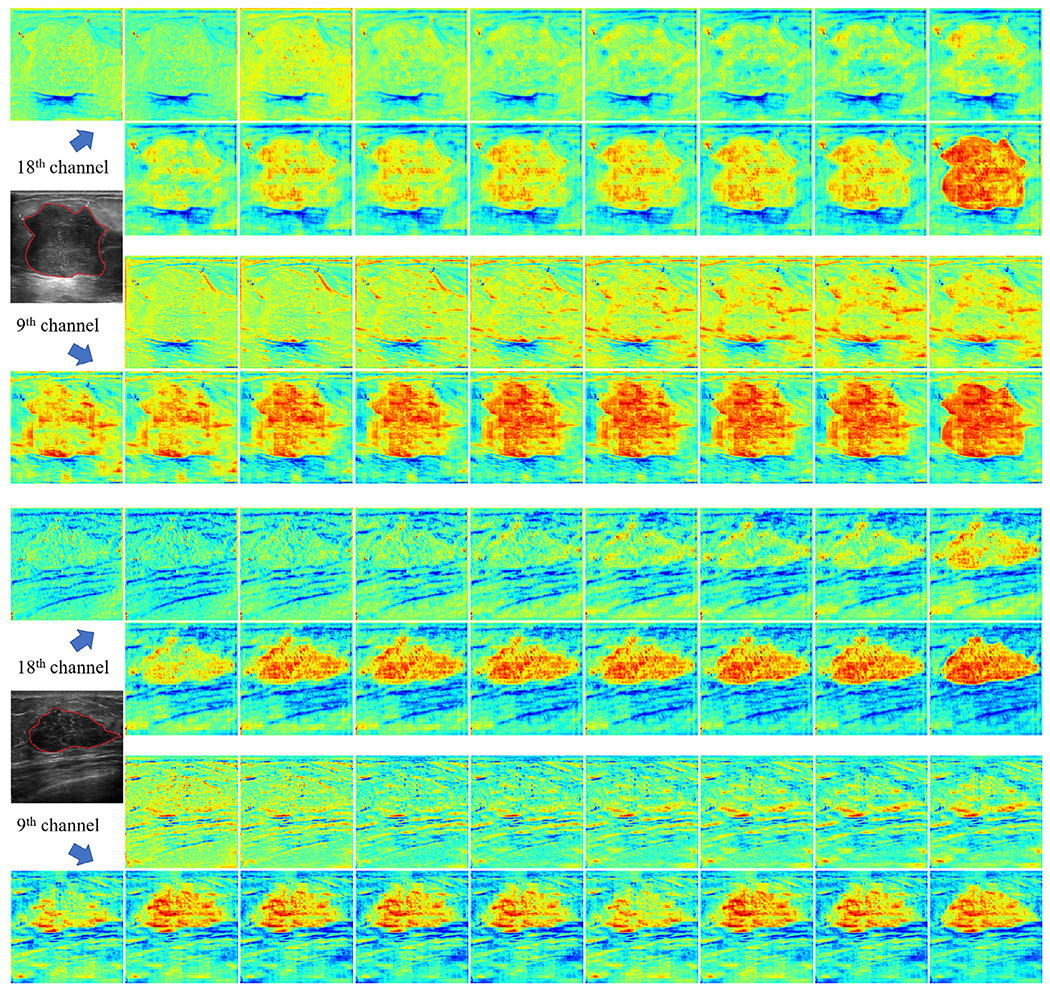
Methods: In the proposed method, Global Attention Upsample (GAU) and deep supervision were introduced into a full-resolution residual network (FRRN), where GAU learns to merge features at different levels with attention for deep supervision. Two datasets were employed for evaluation. One (Dataset A) consisted of 163 BUS images with tumors (53 malignant and 110 benign) from UDIAT Centre Diagnostic, and the other (Dataset B) included 980 BUS images with tumors (595 malignant and 385 benign) from the Sun Yat-sen University Cancer Center. The tumors from both datasets were manually segmented by medical doctors. For evaluation, the Dice coefficient (Dice), Jaccard similarity coefficient (JSC), and F1 score were calculated.
Results: For Dataset A, the proposed method achieved higher Dice (84.3 10.0%), JSC (75.2 10.7%), and F1 score (84.3 10.0%) than the previous best method: FRRN. For Dataset B, the proposed method also achieved higher Dice (90.7 13.0%), JSC (83.7 14.8%), and F1 score (90.7 13.0%) than the previous best methods: DeepLabv3 and dual attention network (DANet). For Dataset A + B, the proposed method achieved higher Dice (90.5 13.1%), JSC (83.3 14.8%), and F1 score (90.5 13.1%) than the previous best method: DeepLabv3. Additionally, the parameter number of ASFRRN was only 10.6 M, which is less than those of DANet (71.4 M) and DeepLabv3 (41.3 M).
Conclusions: We proposed ASFRRN, which combined with FRRN, attention mechanism, and deep supervision to segment tumors from BUS images. It achieved high segmentation accuracy with a reduced parameter number.
Keywords: breast cancer; breast ultrasound image; deep learning; segmentation.
© 2020 American Association of Physicists in Medicine.
Conflict of interest statement
CONFLICT OF INTEREST
The authors have no conflict to disclose.
Figures
References
-
- Siegel RL, Miller KD, Jemal A. Cancer statistics, 2018. CA: Cancer J Clin. 2018;68:7–30. - PubMed
-
- Ohuchi N, Suzuki A, Sobue T, et al. Sensitivity and specificity of mammography and adjunctive ultrasonography to screen for breast cancer in the Japan Strategic Anti-cancer Randomized Trial (J-START) a randomised controlled trial. The Lancet. 2016;387:2381–2382. - PubMed
-
- Di Grezia G, Somma F, Serra N, et al. Reducing costs of breast examination: ultrasound performance and inter-observer variability of expert radiologists versus residents. Cancer Invest. 2016;34:355–360. - PubMed
MeSH terms
Grants and funding
LinkOut - more resources
Full Text Sources
Other Literature Sources
Medical
