


Outdoor air pollution and cancer: An overview of the current evidence and public health recommendations
- PMID: 32964460
- PMCID: PMC7904962
- DOI: 10.3322/caac.21632
Outdoor air pollution and cancer: An overview of the current evidence and public health recommendations
Abstract
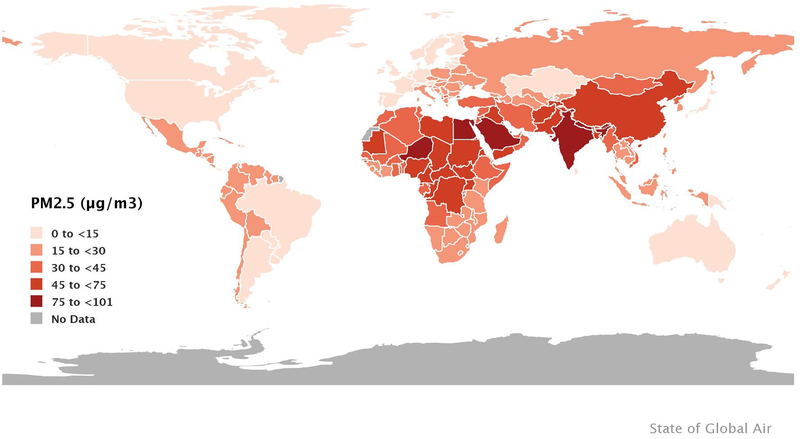
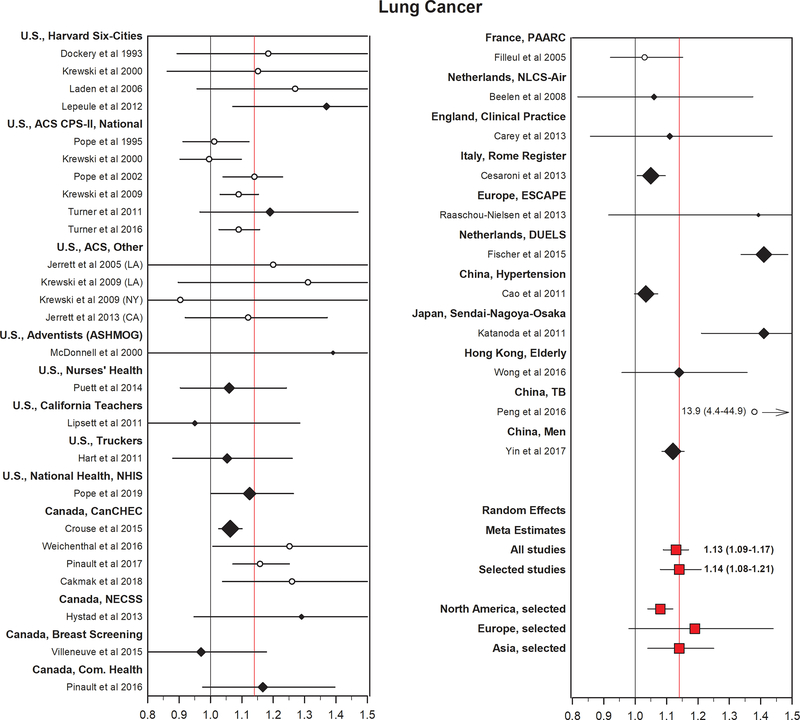
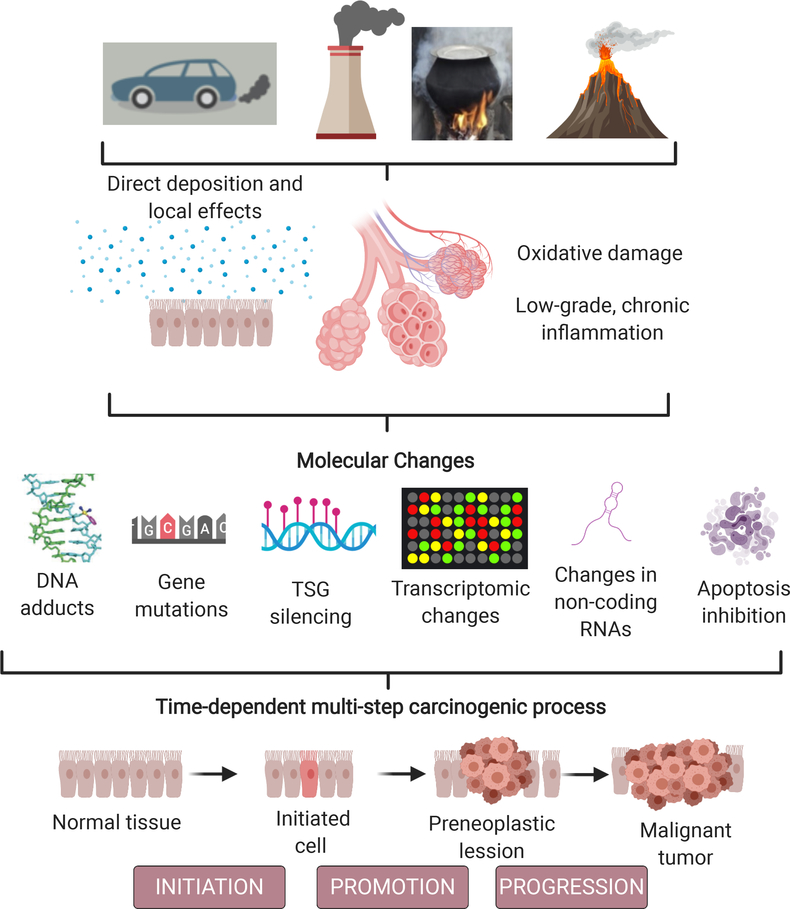
Outdoor air pollution is a major contributor to the burden of disease worldwide. Most of the global population resides in places where air pollution levels, because of emissions from industry, power generation, transportation, and domestic burning, considerably exceed the World Health Organization's health-based air-quality guidelines. Outdoor air pollution poses an urgent worldwide public health challenge because it is ubiquitous and has numerous serious adverse human health effects, including cancer. Currently, there is substantial evidence from studies of humans and experimental animals as well as mechanistic evidence to support a causal link between outdoor (ambient) air pollution, and especially particulate matter (PM) in outdoor air, with lung cancer incidence and mortality. It is estimated that hundreds of thousands of lung cancer deaths annually worldwide are attributable to PM air pollution. Epidemiological evidence on outdoor air pollution and the risk of other types of cancer, such as bladder cancer or breast cancer, is more limited. Outdoor air pollution may also be associated with poorer cancer survival, although further research is needed. This report presents an overview of outdoor air pollutants, sources, and global levels, as well as a description of epidemiological evidence linking outdoor air pollution with cancer incidence and mortality. Biological mechanisms of air pollution-derived carcinogenesis are also described. This report concludes by summarizing public health/policy recommendations, including multilevel interventions aimed at individual, community, and regional scales. Specific roles for medical and health care communities with regard to prevention and advocacy and recommendations for further research are also described.
Keywords: breast cancer; cancer survival; lung cancer; particulate matter.
© 2020 American Cancer Society.
Figures
References
-
- GBD 2017 Risk Factor Collaborators. Global, regional, and national comparative risk assessment of 84 behavioural, environmental and occupational, and metabolic risks or clusters of risks for 195 countries and territories, 1990–2017: a systematic analysis for the Global Burden of Disease Study 2017. Lancet. 2018;392:1923–1994. - PMC - PubMed
-
- Lelieveld J, Evans J, Fnais M, et al. The contribution of outdoor air pollution sources to premature mortality on a global scale. Nature. 2015;525:367–371. - PubMed
-
- Santos LR, Alves-Correia M, Câmara M, et al. Multiple victims of carbon monoxide poisoning in the aftermath of a wildfire: a case series. Acta Med Port. 2018;31:146–151. - PubMed
-
- Thurston G Outdoor air pollution: Sources, atmospheric transport, and human health effects. International Encyclopedia of Public Health (Second Edition). 2017;367–377.
Publication types
Grants and funding
- P30 ES000260/ES/NIEHS NIH HHS/United States
- CEX2018-000806-S/ISGlobal acknowledges support from the Spanish Ministry of Science and Innovation through the "Centro de Excelencia Severo Ochoa 2019-2023" Program (CEX2018-000806-S), and support from the Generalitat de Catalunya through the CERCA Program.
- RYC-2017-01892/MCT is funded by a Ramón y Cajal fellowship (RYC-2017-01892) from the Spanish Ministry of Science, Innovation and Universities and cofunded by the European Social Fund
- ES 00260/GT was supported in part by Center Grant ES 00260 from the National Institute of Environmental Health Sciences (NIEHS).
LinkOut - more resources
Full Text Sources
