Review
. 2020 Oct 5;21(10):e50635.
doi: 10.15252/embr.202050635. Epub 2020 Sep 23.

Nutrient metabolism and cancer in the in vivo context: a metabolic game of give and take

Affiliations
Review

Nutrient metabolism and cancer in the in vivo context: a metabolic game of give and take

Patricia Altea-Manzano et al. EMBO Rep. .

Abstract

Nutrients are indispensable resources that provide the macromolecular building blocks and energy requirements for sustaining cell growth and survival. Cancer cells require several key nutrients to fulfill their changing metabolic needs as they progress through stages of development. Moreover, both cell-intrinsic and microenvironment-influenced factors determine nutrient dependencies throughout cancer progression-for which a comprehensive characterization remains incomplete. In addition to the widely studied role of genetic alterations driving cancer metabolism, nutrient use in cancer tissue may be affected by several factors including the following: (i) diet, the primary source of bodily nutrients which influences circulating metabolite levels; (ii) tissue of origin, which can influence the tumor's reliance on specific nutrients to support cell metabolism and growth; (iii) local microenvironment, which dictates the accessibility of nutrients to tumor cells; (iv) tumor heterogeneity, which promotes metabolic plasticity and adaptation to nutrient demands; and (v) functional demand, which intensifies metabolic reprogramming to fuel the phenotypic changes required for invasion, growth, or survival. Here, we discuss the influence of these factors on nutrient metabolism and dependence during various steps of tumor development and progression.

Keywords: cancer metabolism; diet; microenvironment; nutrients; tumor heterogeneity.


Conflict of interest statement

S.‐M.F. has received funding from Bayer, Merck, and Black Belt Therapeutics and has consulted for Fund+. The other authors have no conflict of interest to declare.

Figures
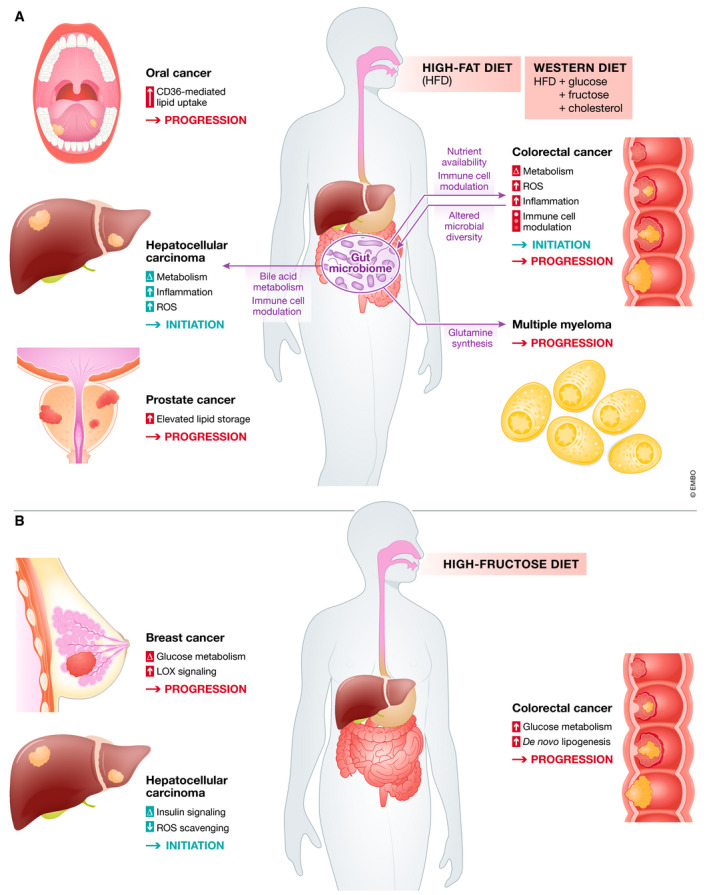
Figure 1
Figure 1. Diet can determine tumor cell metabolism which may have effects on initiation and progression of different type of cancers
Diet intake influences nutrient availability in the body, affecting what nutrients are available during early initiation and tumor progression stages of cancer development. Various mechanisms are involved in diet‐induced cancer growth, primarily due to altered cellular metabolism, ROS production and diminished ROS scavenging, and altered immune cell infiltration or function. (A) Effects of high‐fat diet (HFD) and Western diets on initiation and progression of various cancers. Excess lipids consumed through HFD feeding can drive tumorigenesis and promote tumor growth by changing cellular metabolism to be more glycolytic, increasing levels of inflammation, increasing the production of ROS species that damage DNA and promote cellular stress mechanisms and DNA damage, and by affecting the amounts and types of immune cells that infiltrate the growing tumors. The diet also affects the composition of the gut microbiome, which impacts the growth of colorectal cancer, and also affects immune cell infiltration into tumors. Nutrients produced by microbes in the gut are also associated with promotion of cancer growth. (B) Diets high in fructose can affect initiation of hepatocellular carcinoma, but promote progression of tumors in other sites including colorectal and breast. Mechanisms involved in fructose‐driven cancer development and progression includes metabolic rewiring of cancer cells to be more glycolytic, allowing for increased de novo lipogenesis to sustain uncontrolled cell growth and altered ROS scavenging. Abbreviations and symbols: ROS (Reactive oxygen species), Δ (alterated), ↑ (high influence).
Figure 2
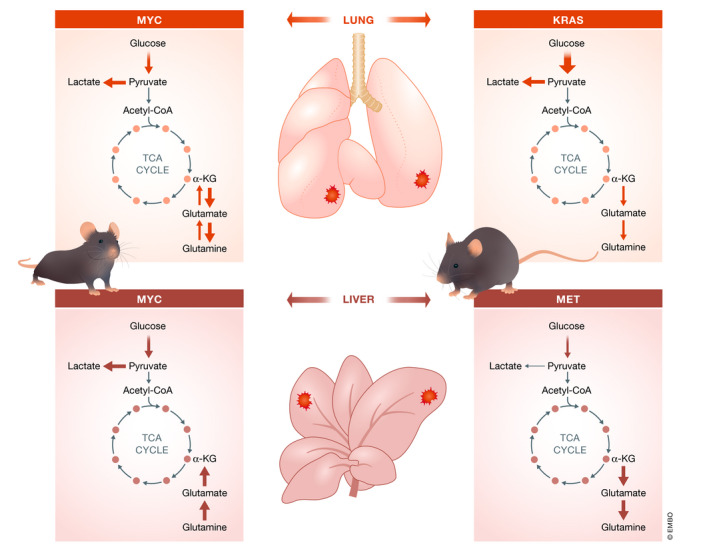
Figure 2. Organ‐specific tumor metabolism is influenced by the tissue of origin and oncogenic driver mutations
MYC‐induced lung tumor (upper left panel) shows lactate production from glucose and catabolism of glucose through the tricarboxylic cycle (TCA). While it is likely these tumors still consume glutamine, the intracellular levels are high, suggesting that glutamine synthesis exceeds consumption. KRAS‐driven lung tumor (upper right panel) resembles the increased oxidative glucose usage feeding the TCA cycle with minimal glutamine utilization. MET‐induced liver tumor (bottom right panel) mainly oxidizes glucose, with apparent net glutamine synthesis. MYC‐induced liver tumors also (bottom left panel) exhibit increased glucose uptake. However, in these tumors is observed an increased lactate production. In addition, these tumors use glutamine to fuel the citric acid cycle.
Figure 3
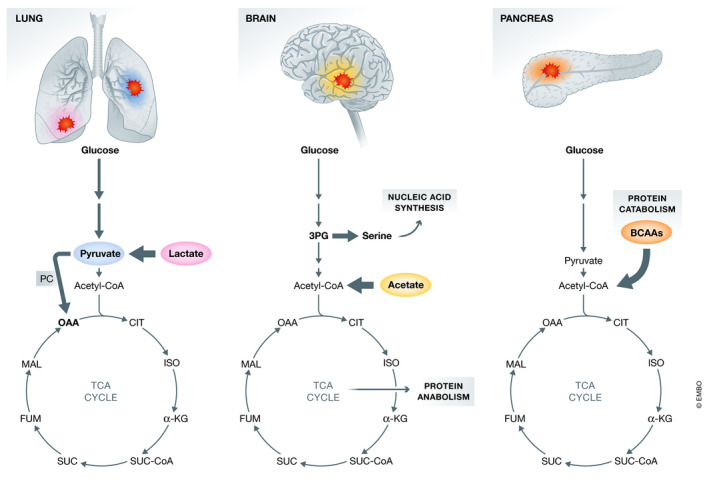
Figure 3. Tumors have the ability to consume multiple nutrients to fuel the central carbon metabolism
The plasticity of tumor cells allows them to adapt to the unique local environment of each organ, as noted in lung, brain, and pancreas. This flexibility allows them to take advantage of the available nutrients to fulfill energetic and biosynthetic demands promoting tumor growth.
Figure 4
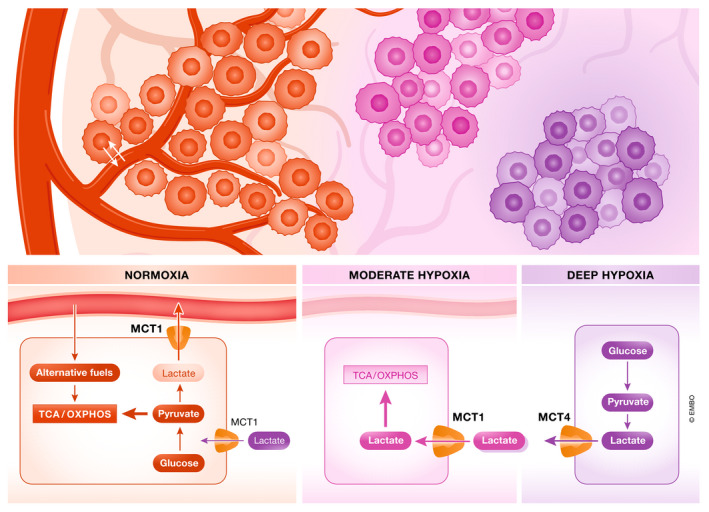
Figure 4. Model of metabolic symbiosis within a tumor mass sustains metabolic limitations due to local variations in nutrient levels
Tumor heterogeneity showed in three different regions within the tumor mass: in regions of deep hypoxia (blood vessels‐distant, in purple), oxidative phosphorylation (OXPHOS) is prevented and substrate availability is reduced. Cancer cells are highly dependent on glycolysis and thus release lactate through monocarboxylate transporter 4 (MCT4). In a moderate hypoxic environment (in pink), various substrates including lactate (exported from highly glycolytic cancer cells) may contribute to fuel the tricarboxylic acid (TCA) cycle and OXPHOS. These cancer cells are characterized by a high expression of MCT1. Under normoxia (surrounding tumor blood vessels, in red), cancer cells can easily exchange nutrients and oxygen into the bloodstream. In this situation, aerobic glycolysis and glucose oxidation in the mitochondria are fully active, and different nutrients (glucose, lactate) can fuel TCA cycle.
Figure 5
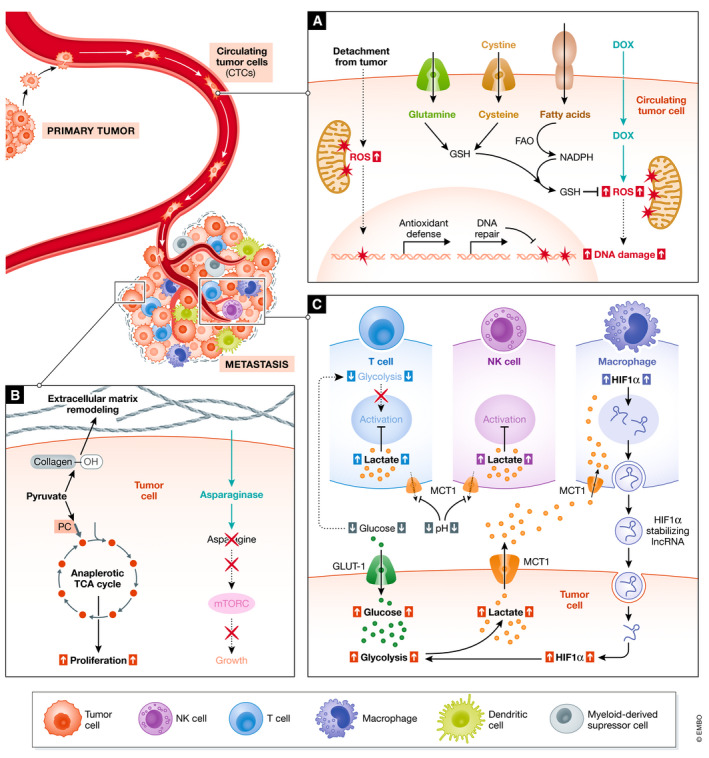
Figure 5. Cancer cell metabolism influences the tumor microenvironment and can support metastasis formation
Cell types are indicated with respect to their location in the tumor microenvironment (labeled in the bottom edge), plus nutrients that have been shown to influence their activity in vivo. (A) The mechanistic consequences of tumor detachment and response to doxorubicin therapy can drive gene expression changes regulating nutrient utilization in circulating tumor cells. Abbreviations: Doxorubicin (DOX), GSH (glutathione), FAO (fatty acid oxidation), ROS (reactive oxygen species). (B) Immunoregulatory interactions can be elicited by metabolic byproducts of the intratumoral metabolism, which can act as immune regulators in the metastatic niche. (C) Nutrients can influence metastatic seeding and outgrowth by modulating immune responses and effector functions. Abbreviations: TCA (Tricarboxylic acid cycle), mTOR (mammalian target of rapamycin).

References

    1. Aguirre‐Ghiso JA, Sosa MS (2018) Emerging topics on disseminated cancer cell dormancy and the paradigm of metastasis. Annu Rev Cancer Biol 2: 377–393
    1. Ahmed N, Escalona R, Leung D, Chan E, Kannourakis G (2018) Tumour microenvironment and metabolic plasticity in cancer and cancer stem cells: perspectives on metabolic and immune regulatory signatures in chemoresistant ovarian cancer stem cells. Semin Cancer Biol 53: 265–281 - PubMed
    1. Alix‐Panabières C, Cayrefourcq L, Mazard T, Maudelonde T, Assenat E, Assou S (2020) Molecular Portrait of Metastasis‐Competent Circulating Tumor Cells in Colon Cancer Reveals the Crucial Role of Genes Regulating Energy Metabolism and DNA Repair. Clin Chem 63: 700–713 - PubMed
    1. Allen E, Miéville P, Warren CM, Saghafinia S, Li L, Peng MW, Hanahan D (2016) Metabolic symbiosis enables adaptive resistance to anti‐angiogenic therapy that is dependent on mTOR signaling. Cell Rep 15: 1144–1160 - PMC - PubMed
    1. Andrzejewski S, Klimcakova E, Johnson RM, Tabariès S, Annis MG, McGuirk S, Northey JJ, Chénard V, Sriram U, Papadopoli DJ et al (2017) PGC‐1α Promotes Breast Cancer Metastasis and Confers Bioenergetic Flexibility against Metabolic Drugs. Cell Metab 26: 778–787.e5 - PubMed

Publication types