


High Frequency of SARS-CoV-2 RNAemia and Association With Severe Disease
- PMID: 32965474
- PMCID: PMC7543277
- DOI: 10.1093/cid/ciaa1054
High Frequency of SARS-CoV-2 RNAemia and Association With Severe Disease
Abstract
Background: Detection of severe acute respiratory syndrome coronavirus 2 (SARS-CoV-2) RNA in blood, also known as RNAemia, has been reported, but its prognostic implications are poorly understood. This study aimed to determine the frequency of SARS-CoV-2 RNA in plasma and its association with coronavirus disease 2019 (COVID-19) clinical severity.
Methods: An analytical cross-sectional study was performed in a single-center tertiary care institution and included consecutive inpatients and outpatients with confirmed COVID-19. The prevalence of SARS CoV-2 RNAemia and the strength of its association with clinical severity variables were examined and included intensive care unit (ICU) admission, invasive mechanical ventilation, and 30-day all-cause mortality.
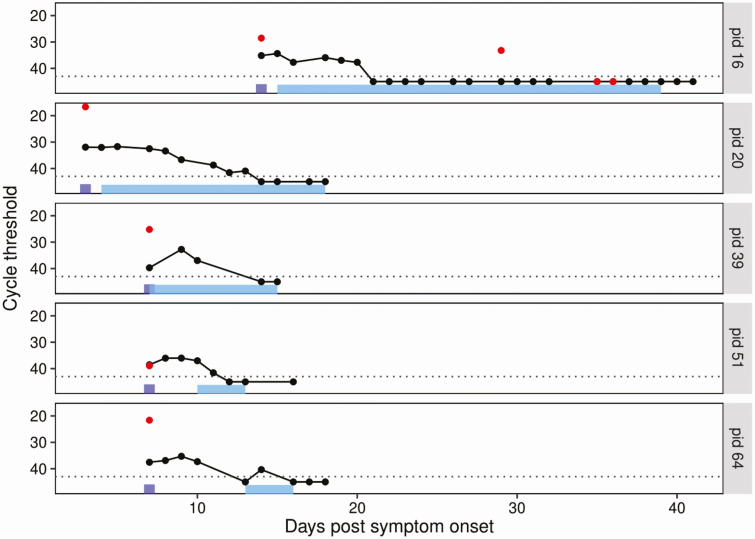
Results: Paired nasopharyngeal and plasma samples were included from 85 patients. The median age was 55 years, and individuals with RNAemia were older than those with undetectable SARS-CoV-2 RNA in plasma (63 vs 50 years; P = .04). Comorbidities were frequent including obesity (37.6%), hypertension (30.6%), and diabetes mellitus (22.4%). RNAemia was detected in 28/85 (32.9%) of patients, including 22/28 (78.6%) who required hospitalization. In models adjusted for age, RNAemia was detected more frequently in individuals who developed severe disease including ICU admission (32.1 vs 14.0%; P = .04) and invasive mechanical ventilation (21.4% vs 3.5%; P = .02). All 4 deaths occurred in individuals with detectable RNAemia. An additional 121 plasma samples from 28 individuals with RNAemia were assessed longitudinally, and RNA was detected for a maximum duration of 10 days.
Conclusions: This study demonstrated a high proportion of SARS-CoV-2 RNAemia, and an association between RNAemia and clinical severity suggesting the potential utility of plasma viral testing as a prognostic indicator for COVID-19.
Keywords: COVID-19; RNAemia; SARS-CoV-2; blood; severity.
© The Author(s) 2020. Published by Oxford University Press for the Infectious Diseases Society of America. All rights reserved. For permissions, e-mail: journals.permissions@oup.com.
Figures
References
-
- U.S. Food and Drug Administration. Stanford health care clinical virology laboratory SARS-CoV-2 test EUA summary Available at: https://www.fda.gov/media/136818/download. Accessed 7 May 2020.
MeSH terms
Substances
LinkOut - more resources
Full Text Sources
Medical
Miscellaneous
