Association of Sarcopenia and Body Composition With Short-term Outcomes After Liver Resection for Malignant Tumors
- PMID: 32965483
- PMCID: PMC7512123
- DOI: 10.1001/jamasurg.2020.3336
Association of Sarcopenia and Body Composition With Short-term Outcomes After Liver Resection for Malignant Tumors
Abstract
Importance: Previous retrospective studies have shown that sarcopenia substantially alters the postoperative and oncological outcomes after liver resection for malignant tumors. However, the evidence is limited to small retrospective studies with heterogeneous results and the lack of standardized measurements of sarcopenia.
Objective: To investigate the role of sarcopenia as a risk factor associated with 90-day morbidity after liver resection for malignant tumors.
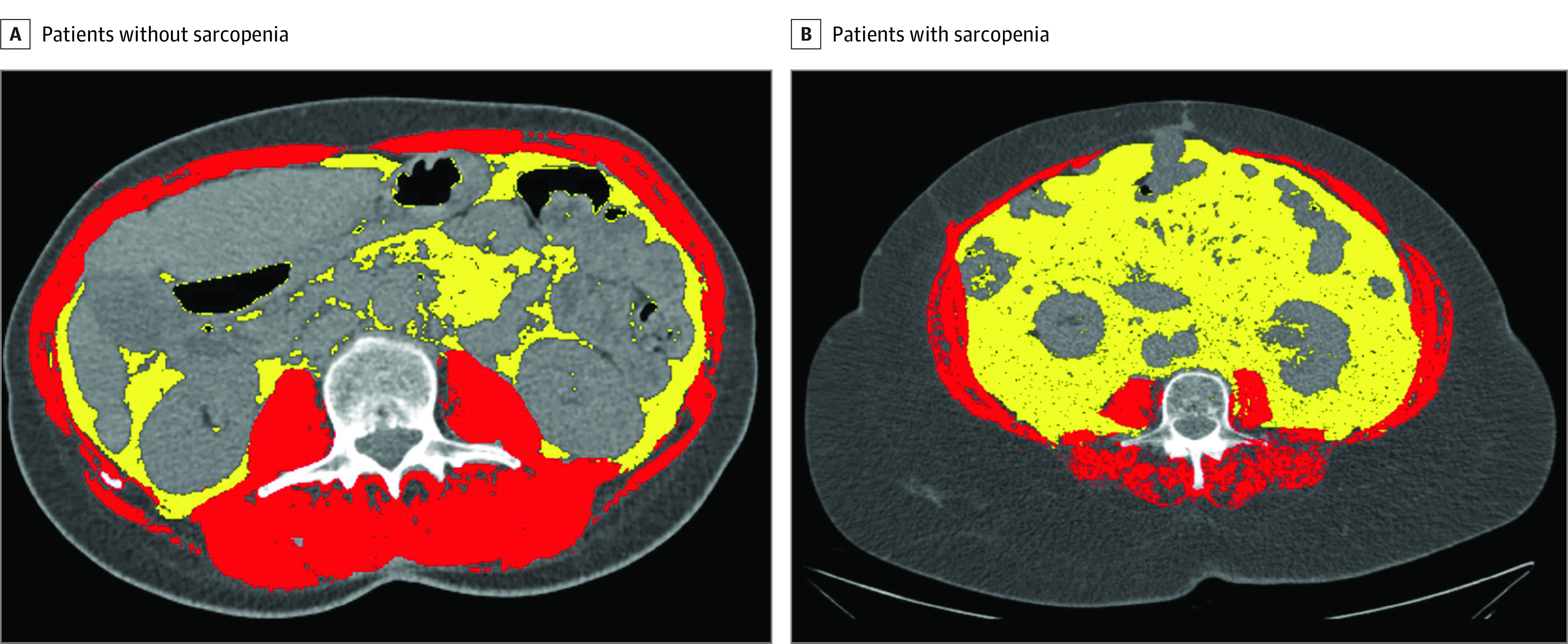
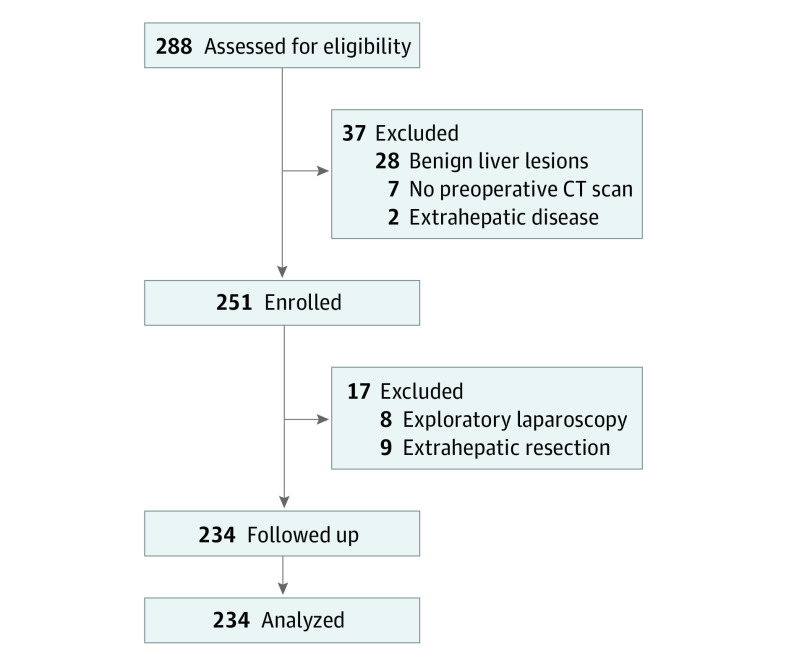
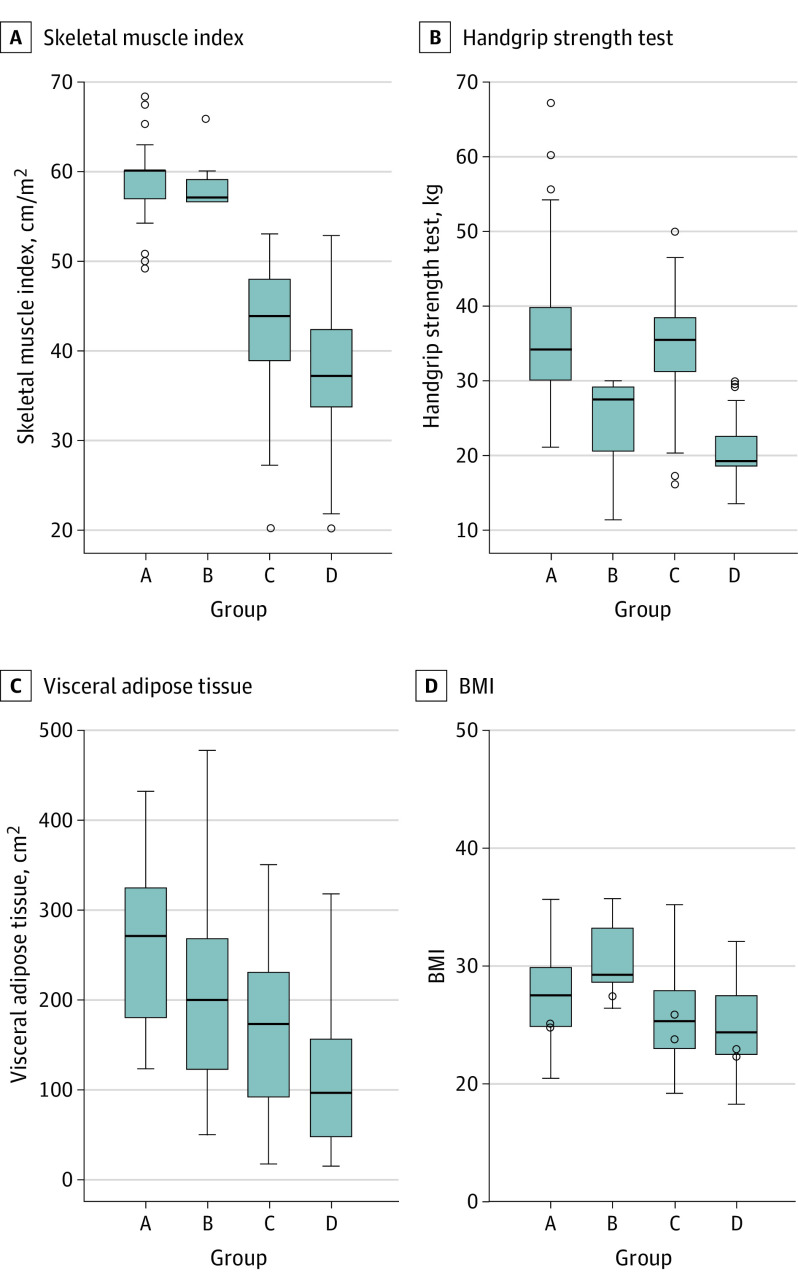
Design, setting, and participants: This cohort study included 234 consecutive patients undergoing liver resection for malignant tumors at San Camillo Forlanini Hospital, Rome, Italy, between June 1, 2018, and December 15, 2019. Muscle mass and strength were assessed using the skeletal muscle index (SMI) on preoperative computed tomographic scans and the handgrip strength test, respectively. Patients were then divided into the following 4 groups: group A (normal muscle mass and strength), group B (reduced muscle strength), group C (reduced muscle mass), and group D (reduced muscle mass and strength).
Main outcomes and measures: The primary outcome of the study was 90-day morbidity. The following secondary outcomes were investigated: 90-day mortality, hospital stay, and readmission rate.
Results: Sixty-four major and 170 minor hepatectomies were performed in 234 patients (median age, 66.50 [interquartile range, 58.00-74.25] years; 158 men [67.5%]). The median SMI of the entire population was 46.22 (interquartile range, 38.60-58.20) cm/m2. The median handgrip strength was 30.80 (interquartile range, 22.30-36.90) kg. Patients in group D had a statistically significantly higher rate of 90-day morbidity than patients in the other groups (51.5% [35 of 68] vs 38.7% [29 of 75] in group C, 23.1% [3 of 13] in group B, and 6.4% [5 of 78] in group A; P < .001). Compared with patients in the other groups, those in group D had a longer hospital stay (10 days vs 8 days in group C, 9 days in group B, and 6 days in group A; P < .001), and more patients in this group were readmitted to the hospital (8.8% [6 of 68] vs 5.3% [4 of 75] in group C, 7.7% [1 of 13] in group B, and 0% [0 of 78] in group A; P = .02). Sarcopenia, portal hypertension, liver cirrhosis, and biliary reconstruction were independent risk factors associated with 90-day morbidity.
Conclusions and relevance: Sarcopenia appears to be associated with adverse outcomes after liver resection for malignant tumors. Both muscle mass measurements on computed tomographic scans and muscle strength assessments with the handgrip strength test should be performed at the first clinical encounter to better classify patients and to minimize the risk of morbidity.
Conflict of interest statement
Figures
Comment in
-
Association of Sarcopenia and Body Composition With Postoperative 90-Day Morbidity After Liver Resection for Malignant Tumors-Reply.JAMA Surg. 2021 Jun 1;156(6):590-591. doi: 10.1001/jamasurg.2021.0234. JAMA Surg. 2021. PMID: 33760017 No abstract available.
-
Association of Sarcopenia and Body Composition With Postoperative 90-Day Morbidity After Liver Resection for Malignant Tumors.JAMA Surg. 2021 Jun 1;156(6):590. doi: 10.1001/jamasurg.2021.0231. JAMA Surg. 2021. PMID: 33760048 No abstract available.
References
MeSH terms
LinkOut - more resources
Full Text Sources
Medical