Assessment of Neonatal Intensive Care Unit Practices and Preterm Newborn Gut Microbiota and 2-Year Neurodevelopmental Outcomes
- PMID: 32965499
- PMCID: PMC7512059
- DOI: 10.1001/jamanetworkopen.2020.18119
Assessment of Neonatal Intensive Care Unit Practices and Preterm Newborn Gut Microbiota and 2-Year Neurodevelopmental Outcomes
Abstract
Importance: In very preterm newborns, gut microbiota is highly variable with major dysbiosis. Its association with short-term health is widely studied, but the association with long-term outcomes remains unknown.
Objective: To investigate in preterm newborns the associations among practice strategies in neonatal intensive care units (NICUs), gut microbiota, and outcomes at 2 years.
Design, setting, and participants: EPIFLORE is a prospective observational cohort study that includes a stool sample collection during the fourth week after birth. Preterm newborns of less than 32 weeks of gestational age (GA) born in 2011 were included from 24 NICUs as part of the French nationwide population-based cohort, EPIPAGE 2. Data were collected from May 2011 to December 2011 and analyzed from September 2016 to December 2018.
Exposures: Eight NICU strategies concerning sedation, ventilation, skin-to-skin practice, antibiotherapy, ductus arteriosus, and breastfeeding were assessed. A NICU was considered favorable to a practice if the percentage of that practice in the NICU was more than the expected percentage.
Main outcomes and measures: Gut microbiota was analyzed by 16S ribosomal RNA gene sequencing and characterized by a clustering-based method. The 2-year outcome was defined by death or neurodevelopmental delay using a Global Ages and Stages questionnaire score.
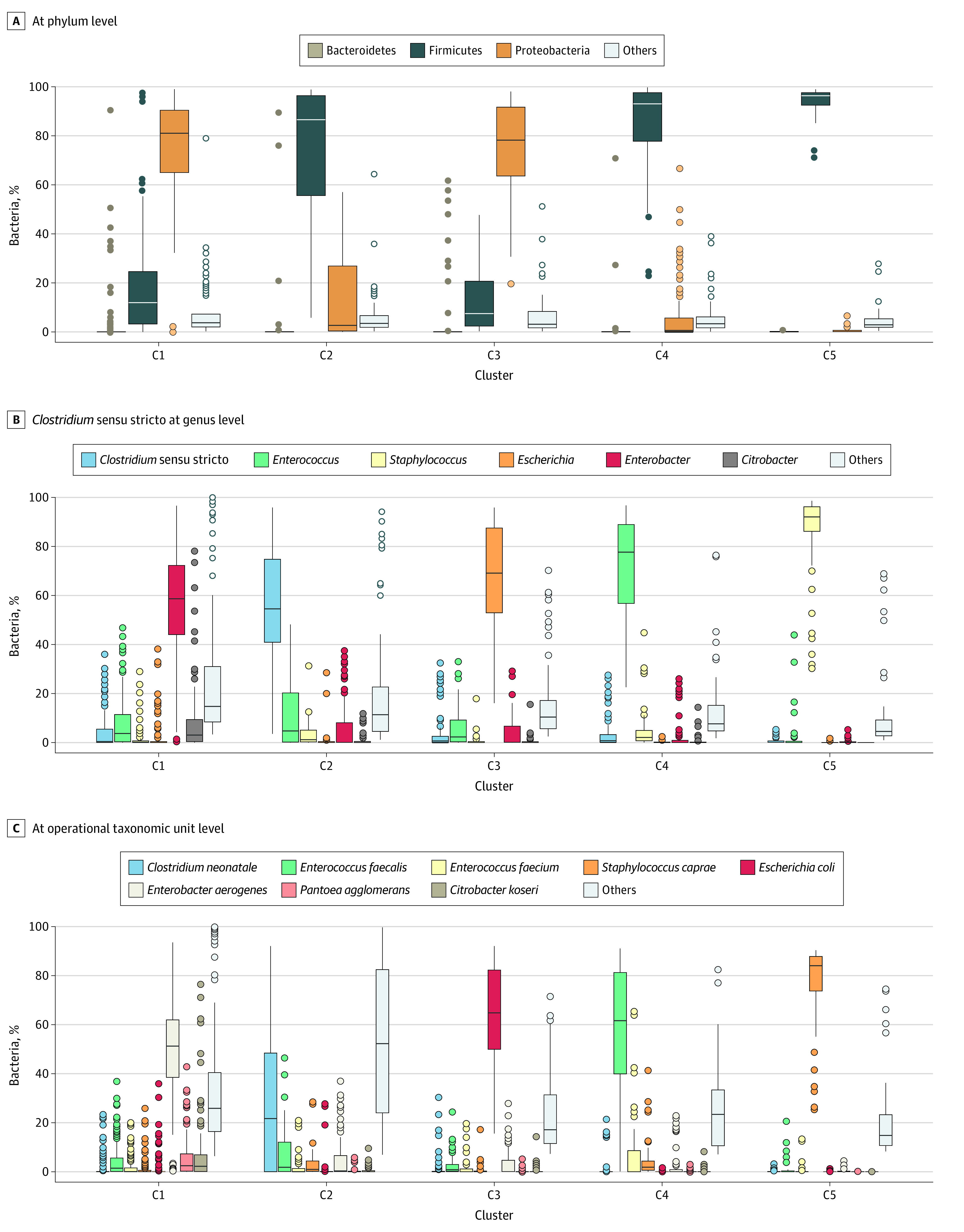
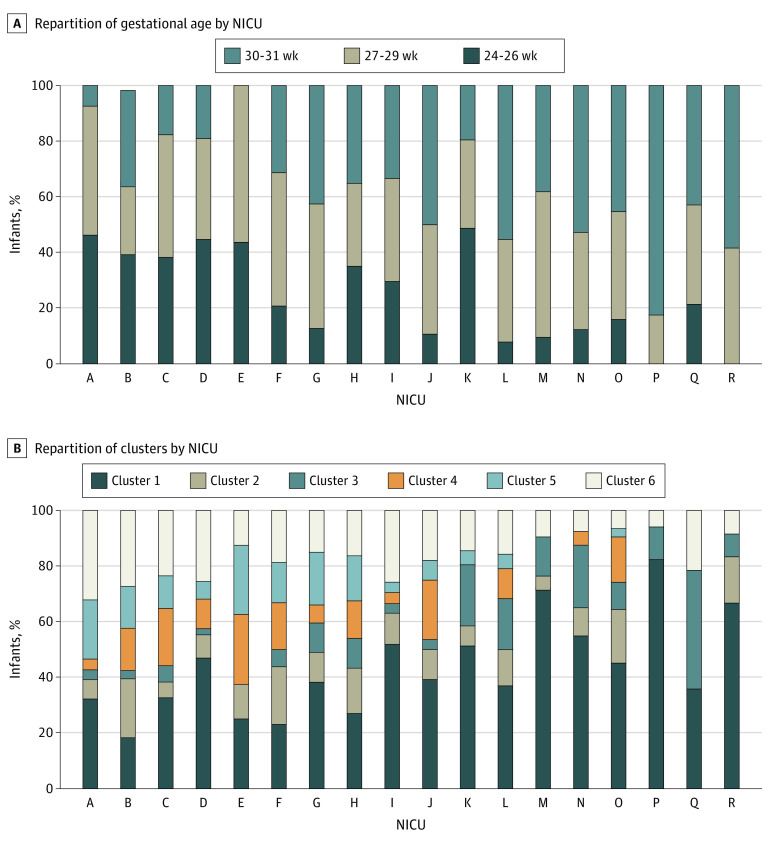
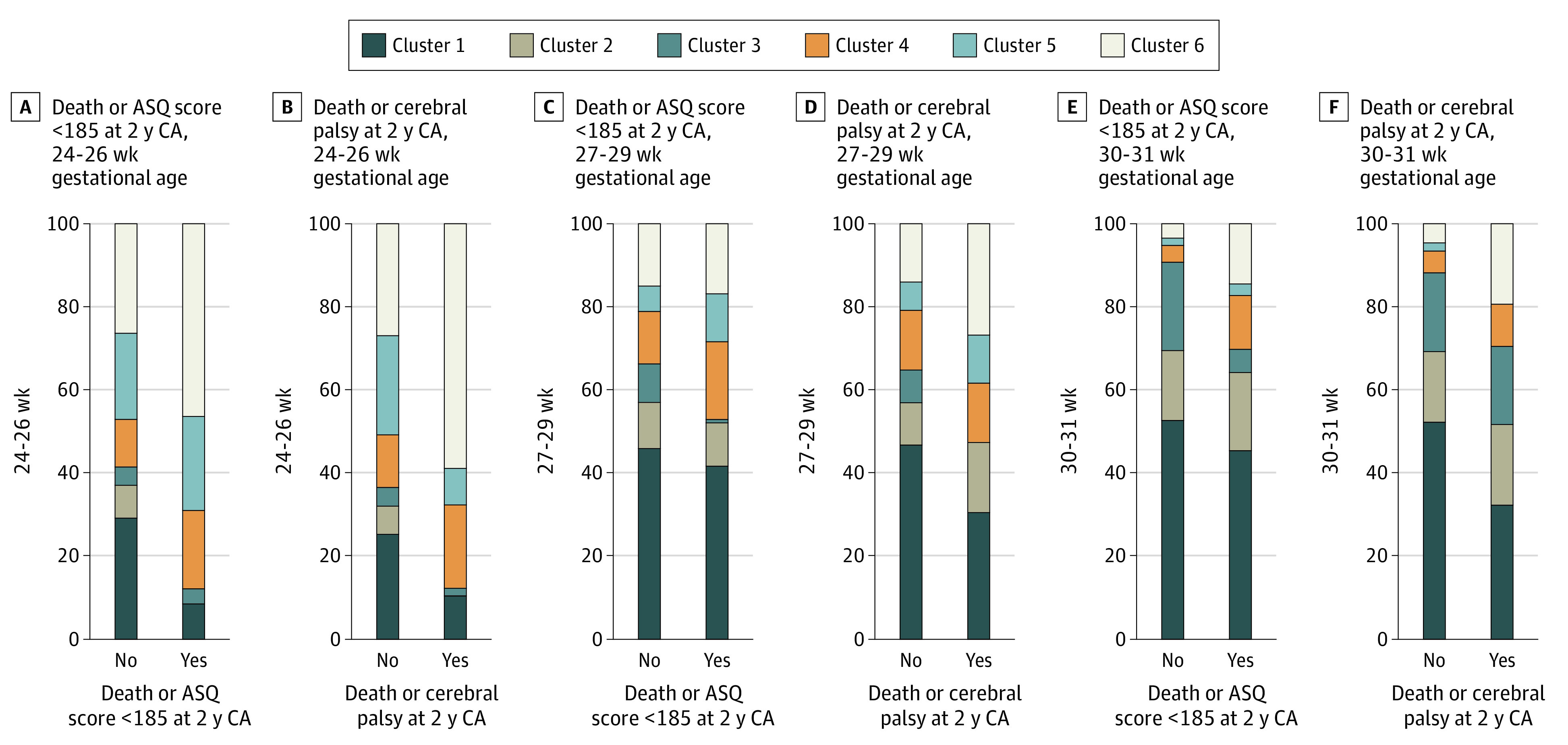
Results: Of 577 newborns included in the study, the mean (SD) GA was 28.3 (2.0) weeks, and 303 (52.5%) were male. Collected gut microbiota was grouped into 5 discrete clusters. A sixth cluster included nonamplifiable samples owing to low bacterial load. Cluster 4 (driven by Enterococcus [n = 63]), cluster 5 (driven by Staphylococcus [n = 52]), and cluster 6 (n = 93) were significantly associated with lower mean (SD) GA (26.7 [1.8] weeks and 26.8 [1.9] weeks, respectively) and cluster 3 (driven by Escherichia/Shigella [n = 61]) with higher mean (SD) GA (29.4 [1.6] weeks; P = .001). Cluster 3 was considered the reference. After adjustment for confounders, no assisted ventilation at day 1 was associated with a decreased risk of belonging to cluster 5 or cluster 6 (adjusted odds ratio [AOR], 0.21 [95% CI, 0.06-0.78] and 0.19 [95% CI, 0.06-0.62], respectively) when sedation (AOR, 10.55 [95% CI, 2.28-48.87] and 4.62 [1.32-16.18], respectively) and low volume of enteral nutrition (AOR, 10.48 [95% CI, 2.48-44.29] and 7.28 [95% CI, 2.03-26.18], respectively) was associated with an increased risk. Skin-to-skin practice was associated with a decreased risk of being in cluster 5 (AOR, 0.14 [95% CI, 0.04-0.48]). Moreover, clusters 4, 5, 6 were significantly associated with 2-year nonoptimal outcome (AOR, 6.17 [95% CI, 1.46-26.0]; AOR, 4.53 [95% CI, 1.02-20.1]; and AOR, 5.42 [95% CI, 1.36-21.6], respectively).
Conclusions and relevance: Gut microbiota of very preterm newborns at week 4 is associated with NICU practices and 2-year outcomes. Microbiota could be a noninvasive biomarker of immaturity.
Conflict of interest statement
Figures
References
Publication types
MeSH terms
LinkOut - more resources
Full Text Sources
Medical