


Neither ACEIs nor ARBs are associated with respiratory distress or mortality in COVID-19 results of a prospective study on a hospital-based cohort
- PMID: 32965603
- PMCID: PMC7508677
- DOI: 10.1007/s11739-020-02500-2
Neither ACEIs nor ARBs are associated with respiratory distress or mortality in COVID-19 results of a prospective study on a hospital-based cohort
Abstract
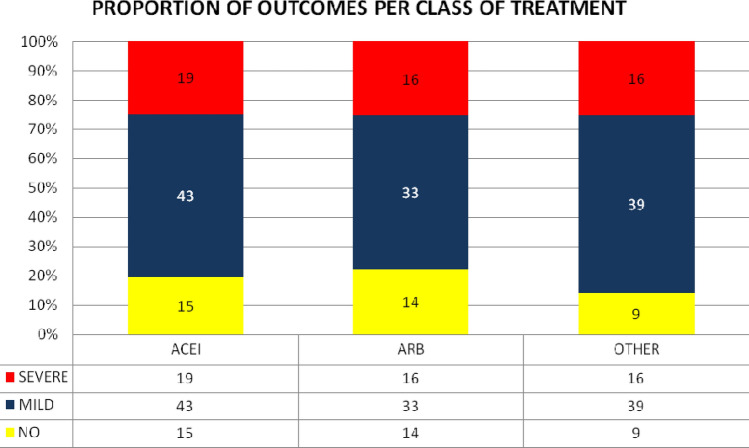
Considerable concern has emerged for the potential harm in the use of angiotensin-converting enzyme inhibitors (ACEIs) and angiotensin receptor inhibitors (ARBs) in COVID-19 patients, given that ACEIs and ARBs may increase the expression of ACE2 receptors that represent the way for coronavirus 2 to entry into the cell and cause severe acute respiratory syndrome. Assess the effect of ACEI/ARBs on outcome in COVID-19 patients. Hospital-based prospective study. A total of 431 patients consecutively presenting at the Emergency Department and found to be affected by COVID-19 were assessed. Relevant clinical and laboratory variables were recorded, focusing on the type of current anti hypertensive treatment. Outcome variables were NO, MILD, SEVERE respiratory distress (RD) operationally defined and DEATH. Hypertension was the single most frequent comorbidity (221/431 = 51%). Distribution of antihypertensive treatment was: ACEIs 77/221 (35%), ARBs 63/221 (28%), OTHER than ACEIs or ARBs 64/221 (29%). In 17/221 (8%) antihypertensive medication was unknown. The proportion of patients taking ACEIs, ARBs or OTHERs who developed MILD or SEVERE RD was 43/77 (56%), 33/53 (52%), 39/64 (61%) and 19/77 (25%), 16/63 (25%) and 16/64 (25%), respectively, with no statistical difference between groups. Despite producing a RR for SEVERE RD of 2.59 (95% CI 1.93-3.49), hypertension was no longer significant in a logistic regression analysis that identified age, CRP and creatinine as the sole independent predictors of SEVERE RD and DEATH. ACEIs and ARBs do not promote a more severe outcome of COVID-19. There is no reason why they should be withheld in affected patients.
Keywords: Angiotensin converting enzyme inhibitor; Angiotensin receptor blocker; COVID-19.
Conflict of interest statement
All authors declare that they have no conflict of interest.
Figures
References
MeSH terms
Substances
LinkOut - more resources
Full Text Sources
Research Materials
Miscellaneous
